Emergency radios with flashlights provide critical information and basic power when storms, outages, or other disruptions leave you without reliable electricity. The models in this roundup combine weather-band alerts with features such as hand-crank charging, solar panels, LED lighting, and USB power banks.
Our selections cover compact radios for simple preparedness as well as higher-capacity options for charging phones and powering multiple lights. Use the guide below to match capacity, charging options, alert features, and portability to your emergency plan.
Best 10 Emergency Radios with Flashlight Picks for 2026
Best Overall Value
Compact RunningSnail Emergency Radio

- AM/FM/NOAA reception
- 2,000mAh phone charger
- Hand crank and solar power
Best For: Portable emergency kits and everyday outage preparedness
Best for Multi-Function Preparedness

- NOAA weather scan and alerts
- SOS flashlight and dog whistle
- Six included AA batteries
Best For: Comprehensive home and outdoor emergency preparedness
Best Lighting Features
RunningSnail 4000mAh Emergency Radio

- Three-mode flashlight
- Motion-sensor reading lamp
- 4,000mAh battery and four power options
Best For: Extended outages, family kits, and camping
Best for Emergency Signaling

- 140-lumen three-LED flashlight
- 80+ dB SOS alarm
- Hand crank, solar, and Type-C charging
Best For: Lightweight go-bags and signaling during emergencies
Most Versatile
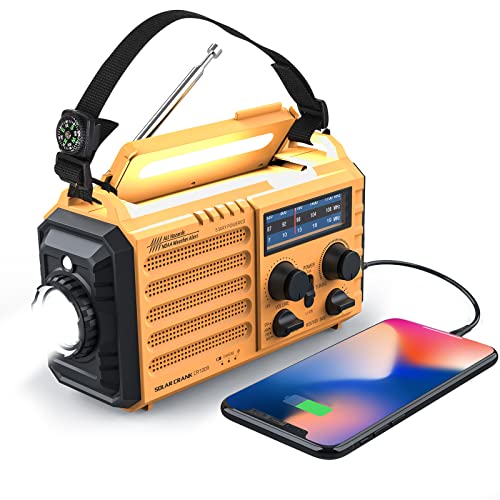
- Five backup power sources
- 3W flashlight and reading lamp
- AM/FM/SW and NOAA reception
Best For: Home kits and outdoor use
Longest Battery Backup
Leaton 10000mAh Emergency Radio

- Large 10000mAh rechargeable battery
- Three charging methods and USB-C
- Three-mode flashlight with reading lamp
Best For: Extended outages and outdoor kits
Best Compact Option
FosPower A1 NOAA Emergency Radio

- 7400mWh emergency power bank
- Flashlight and four-LED reading light
- Includes solar, crank, and AAA power
Best For: Compact home and outdoor emergency kits
Best High-Capacity Pick
Large Solar Panel Emergency Radio

- 12,000mAh battery for phone charging and backup power
- 5W flashlight plus 12-LED reading lamp
- IPX6 waterproof with AM/FM/NOAA alerts
Best For: Home preparedness, blackouts, hurricanes, and outdoor use
Best Compact Value
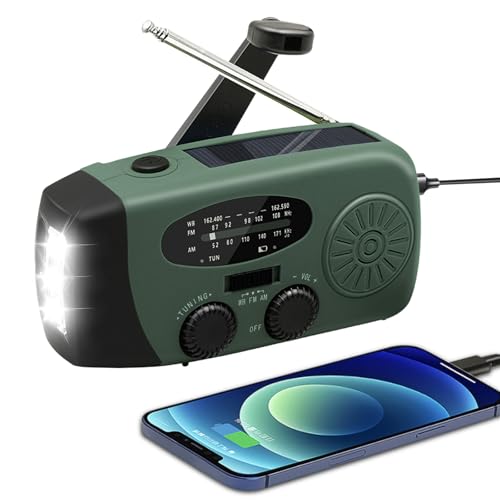
- Lightweight 231g portable design
- Hand crank, solar, and rechargeable power
- Flashlight, reading lamp, SOS alarm, and phone charger
Best For: Portable kits, camping, vehicles, and everyday carry
Best Pocket-Friendly Classic

- Lightweight 7.55-ounce portable design
- 140-lumen three-LED flashlight
- USB, solar, and hand-crank charging
Best For: Camping, vehicle kits, travel, and basic storm preparedness
Best Overall Value – Compact RunningSnail Emergency Radio
For shoppers comparing emergency radios with flashlight, this compact RunningSnail model combines NOAA, AM, and FM reception with several backup-power options. Its 2,000mAh battery, hand crank, solar charging, USB-C connectivity, and 1W LED flashlight make it a practical choice for outages, camping, and emergency kits.
Best For: Households and outdoor users wanting a lightweight, versatile emergency radio with phone-charging capability.
Pros:
- Receives AM, FM, and NOAA broadcasts with a retractable antenna.
- Supports hand-crank, solar, and rechargeable-battery power.
- Includes a 2,000mAh emergency charger and bright LED flashlight.
- Compact 5 x 1.8 x 2.4-inch design weighs just 7.84 ounces.
Cons:
- Its 2,000mAh battery is smaller than some higher-capacity alternatives.
- The water resistance is listed as water repellent rather than fully waterproof.
This is a well-rounded pick when portability and multiple charging methods matter most. It offers the essential communication, lighting, and backup-power features without taking much space in a go-bag.
Best for Multi-Function Preparedness – Midland ER310 Emergency Radio
The Midland ER310 is a sturdy-feeling option among emergency radios with flashlight, offering multiple power sources, an SOS emergency flashlight, and NOAA weather scan and alert functionality. It also adds an ultrasonic dog whistle, making it useful for broader emergency-preparedness needs.
Best For: Preparedness-minded buyers who want weather alerts, emergency signaling, and flexible power options in one device.
Pros:
- Includes NOAA weather scan and alert capability.
- Features multiple power sources and six included AA batteries.
- Built-in flashlight includes an SOS emergency function.
- Ultrasonic dog whistle adds another signaling feature.
Cons:
- Supports AM/FM bands according to the supplied details, without a listed NOAA tuner band specification.
- It is not water resistant.
- At 16 ounces, it is heavier than the smallest models in this roundup.
The ER310 stands out for its preparedness-oriented features rather than its smallest footprint. It is a sensible choice if signaling tools and included replaceable batteries are more important than maximum portability.
Best Lighting Features – RunningSnail 4000mAh Emergency Radio
For buyers who want emergency radios with flashlight functions that go beyond basic illumination, this upgraded RunningSnail model adds a three-mode flashlight and motion-sensor reading lamp. Its 4,000mAh battery, NOAA/AM/FM reception, and four charging methods make it especially capable for extended outages and outdoor use.
Best For: Families, campers, and outage kits that need higher battery capacity plus versatile lighting.
Pros:
- Large 4,000mAh battery can provide emergency smartphone charging.
- Offers micro-USB, solar, hand-crank, and built-in-battery power options.
- Three-mode flashlight provides illumination over 10 meters.
- Motion-sensor reading lamp supplies softer automatic night lighting.
Cons:
- Its larger battery and added lighting features may be more than minimalist kits need.
- The supplied details list micro-USB charging rather than USB-C.
This model is a strong fit when lighting versatility and battery capacity take priority. The reading lamp is a useful household extra, while NOAA reception and multiple charging options support emergency readiness.
Best for Emergency Signaling – Emgykit Pocket Crank Radio
This Emgykit model is one of the more portable emergency radios with flashlight features, adding a high-output three-LED light and an SOS siren. It receives AM, FM, and NOAA broadcasts and can run through hand cranking, solar charging, or Type-C charging.
Best For: Lightweight go-bags and users who value bright emergency lighting and audible signaling.
Pros:
- Three 3W LED beads provide up to 140 lumens of stated brightness.
- SOS alarm sounds at more than 80 decibels when activated.
- Supports hand-crank, solar, and Type-C charging.
- Pocket-sized 5.16 x 2.09 x 2.6-inch design weighs about 0.51 pound.
Cons:
- Its 2,000mAh battery offers less capacity than the 4,000mAh alternative in this roundup.
- The supplied details list a 1W speaker output, which may be modest for larger spaces.
The Emgykit is a practical compact choice for emergency bags where visibility and signaling are priorities. Its SOS alarm and brighter multi-LED flashlight distinguish it from simpler crank radios.
Most Versatile – Raynic 5-Way Emergency Radio
The Raynic emergency radio with flashlight combines several backup power options with AM/FM/SW and NOAA reception. Its hand crank, solar panel, AC power, and AAA-battery support make it a practical choice for outages, while the integrated flashlight and reading lamp add useful illumination.
Best For: Home emergency kits, outdoor trips, and users who want multiple charging and lighting options.
Pros:
- Five power sources, including hand crank, solar, AC, rechargeable battery, and AAA batteries.
- Includes a 3W flashlight, 2.5W reading lamp, SOS siren, compass, and USB phone-charging output.
- Receives AM/FM/SW and seven preset NOAA weather channels.
- Portable, water-resistant design with a headphone jack and included carabiner.
Cons:
- NOAA alerts require the radio to be powered on and manually tuned to a local station.
- The listed dimensions vary between the product description and specifications.
- USB charging is intended for brief calls or texts rather than extended device use.
Choose this model if flexibility is your priority. The combination of five power sources, strong lighting, and broad radio-band support gives it more utility than a basic crank radio, though NOAA listening still requires manual setup.
Longest Battery Backup – Leaton 10000mAh Emergency Radio
The Leaton emergency radio with flashlight stands out for its built-in 10000mAh rechargeable battery and USB-C input. It also provides AM/FM and NOAA reception, a three-mode flashlight, a reading lamp, and splash resistance for emergency kits, camping, and vehicle storage.
Best For: Buyers prioritizing a larger internal battery and compact outdoor-ready construction.
Pros:
- 10000mAh battery can provide approximately 1–1.5 iPhone 14 charges, depending on conversion and device efficiency.
- Supports USB-C, solar, and hand-crank charging.
- Three-mode flashlight includes high, low, and SOS settings, plus a 1.3W reading lamp.
- IPX6 water resistance, built-in compass, and compact 1.1-pound design suit go-bags and outdoor use.
Cons:
- NOAA operation requires manual tuning and does not support SAME or automatic alerts.
- IPX6 protection is for splashes and water spray, not immersion or heavy rain.
- Actual phone-charging capacity varies with conversion loss and device efficiency.
This is a strong fit when battery capacity matters most. Its charging flexibility and lighting modes are useful during outages, while the manual NOAA tuning and splash-only protection should be understood before relying on it for severe-weather preparedness.
Best Compact Option – FosPower A1 NOAA Emergency Radio
The FosPower A1 is a compact emergency radio with flashlight that pairs a 7400mWh power bank with solar, hand-crank, and AAA-battery power. It offers AM/FM/NOAA weather broadcasts, a 1W flashlight, a four-LED reading light, and an SOS alarm for power outages and outdoor emergencies.
Best For: Compact emergency kits, households wanting simple lighting, and buyers who value a long warranty.
Pros:
- 7400mWh (2000mAh) power bank can provide emergency power for a phone or small tablet.
- Three primary charging sources plus four AAA batteries provide added power flexibility.
- Combines a 1W flashlight with a four-LED reading light.
- Includes NOAA, AM, and FM reception and a limited lifetime warranty.
Cons:
- Its power bank is smaller than the 10000mAh battery in the Leaton model.
- The product notes do not specify automatic NOAA alert or SAME support.
- AAA batteries are required separately if using that power option.
The FosPower A1 is a sensible, lightweight choice for basic preparedness. It covers the essential radio, lighting, alarm, and backup-charging functions in a relatively small package, with the limited lifetime warranty adding reassurance for long-term storage.
Best High-Capacity Pick – Large Solar Panel Emergency Radio
For shoppers comparing emergency radios with flashlight, this rugged Roxicosly model stands out for its large solar panel, 12,000mAh battery, and multiple charging options. It combines weather alerts, phone charging, a bright adjustable-beam flashlight, and a reading lamp in a compact IPX6 waterproof design.
Best For: Home emergency kits, blackouts, hurricane preparation, and outdoor use where extra battery capacity and lighting versatility matter.
Pros:
- Real 12,000mAh battery supports phone charging and extended backup power.
- Large 8500mm² monocrystalline solar panel and efficient hand crank provide multiple recharging options.
- Includes a 5W adjustable-beam flashlight and 12-LED reading lamp with multiple brightness levels.
- Offers AM/FM/NOAA bands, a 9-second alert alarm, SOS alarm, and IPX6 waterproofing.
Cons:
- Larger and potentially less pocket-friendly than compact emergency radios.
- Requires three AAA batteries for its battery backup option.
Choose this model if reliable backup power and flexible lighting are higher priorities than minimal size. Its combination of NOAA alerts, waterproof construction, and high-capacity battery makes it a strong all-around preparedness option.
Best Compact Value – WVL 7400mWh Emergency Radio
If you want emergency radios with flashlight functionality without much bulk, the WVL is a lightweight option measuring 130 × 50 × 60mm and weighing 231g. It provides AM/FM/weather-band listening, a 2,000mAh phone charger, three power sources, and separate flashlight and reading-light functions.
Best For: Portable emergency kits, camping, car storage, and shoppers who prefer a lightweight radio with essential lighting and charging features.
Pros:
- Compact, pocket-sized design with a stated weight of 231g.
- Supports hand-crank, solar, and built-in rechargeable-battery power.
- Includes a 1.5W LED flashlight, motion-sensor reading lamp, and SOS alarm.
- Provides a 2,000mAh charger for emergency phone or small-tablet power.
Cons:
- Its 2,000mAh charging capacity is substantially lower than high-capacity alternatives.
- Product details differ on the listed bands, so buyers should verify the exact tuning configuration.
The WVL makes sense when portability is central to your buying decision. It covers the core emergency functions—weather listening, lighting, charging, and alerts—while remaining easy to pack in a bag or vehicle.
Best Pocket-Friendly Classic – Esky Hand Crank Radio
The Esky is a straightforward choice among emergency radios with flashlight, pairing a small, lightweight body with AM/FM/NOAA reception, three charging methods, and a built-in 2,000mAh battery. Its 140-lumen three-LED flashlight and lanyard make it practical for camping, travel, and emergency storage.
Best For: Buyers seeking a simple, portable emergency radio for camping, vehicle kits, storm preparation, or keeping in a pocket or suitcase.
Pros:
- USB, solar, and hand-crank charging provide three ways to restore power.
- 140-lumen three-LED flashlight offers useful emergency illumination.
- Compact 7.55-ounce design with attached lanyard is easy to carry or store.
- AM/FM/NOAA radio, SOS alarm, and 2,000mAh battery cover essential preparedness needs.
Cons:
- Its 2,000mAh battery offers less backup capacity than larger emergency radios.
- Only one lithium-ion battery is specified, with no separate AAA backup option listed.
This Esky model is best for buyers who value simplicity and portability over maximum battery capacity. It delivers the core radio, flashlight, charging, and SOS features in a notably lightweight package.
How We Picked the Best Emergency Radios with Flashlights
We focused on the features that matter most during outages and severe weather: NOAA weather-band reception, AM/FM access, dependable backup charging, useful lighting, battery capacity, phone-charging support, and portability. We also considered whether each radio offers multiple charging methods, since solar charging and hand cranking can be valuable when wall power is unavailable.
The selection includes established emergency-radio designs and models with larger batteries, reading lamps, or multiple flashlight modes. Because specifications can vary by seller and production version, check the current listing for exact battery capacity, charging ports, included cables, and dimensions before buying.
Quick Comparison
- Best for basic preparedness: Choose a compact AM/FM/NOAA radio with a simple crank, flashlight, and rechargeable battery.
- Best for severe-weather alerts: Prioritize clear NOAA reception, weather-band access, and an audible alert function when listed.
- Best for phone charging: Look for a higher-capacity battery, USB output, and several charging methods.
- Best for campsite or shelter use: Consider models with a reading lamp, multiple LED modes, and solar charging.
- Best for portability: Favor a lighter radio with an integrated handle, compact body, and straightforward controls.
Key Buying Factors for Emergency Radios with Flashlight
Radio Reception and Alerts
NOAA weather-band support is especially useful in the United States, but reception depends on location and conditions. AM/FM capability adds everyday news and local information. If you want warnings without continuously monitoring the radio, verify that the model includes an alert feature rather than only weather-band tuning.
Charging Flexibility
Hand cranks are an emergency fallback, not a fast replacement for a full wall charge. Solar panels can extend runtime outdoors, while USB or wall charging is more practical before an expected storm. A model with at least two charging methods offers better redundancy.
Battery Capacity and Device Charging
Battery ratings are commonly expressed in mAh or mWh. Larger capacities generally provide more runtime, but actual phone-charging performance depends on conversion losses and the radio’s USB output. Treat phone charging as an emergency boost, not a substitute for a dedicated power bank.
Lighting and Durability
Compare a forward flashlight with side or reading lamps if you need hands-free illumination. Multiple brightness or lighting modes can help conserve power. A sturdy handle, visible controls, and water resistance are useful, but confirm the specific protection rating because many radios are only splash resistant.
Who Should Buy Which Emergency Radios with Flashlight?
For a household emergency kit, select a balanced model with NOAA, AM/FM, a rechargeable battery, and both crank and solar charging. For frequent camping or outdoor use, choose a lighter radio with a strong lamp and convenient carrying design. If your priority is keeping a phone usable during a prolonged outage, select one of the higher-capacity models and keep it fully charged before severe weather arrives.
Whichever radio you choose, store it where everyone can find it, test the flashlight and charging cable periodically, and keep spare batteries or another power source available. No emergency radio replaces a broader preparedness kit, but the right model can provide timely information, light, and limited backup power when normal services fail.