The best running hydration belts for marathons keep water, electrolytes, gels, and essentials accessible without the bulk of a vest. The right fit should stay stable through long miles while remaining comfortable enough for race day.
We compared 10 options across bottle capacity, storage, adjustability, flask and bottle design, and bounce control to help you choose a belt that matches your distance, fueling plan, and preferred carry style.
Best 10 Running Hydration Belts for Marathons Picks for 2026
Best Value Dual-Bottle Pick
Neon Green 2-Bottle Hydration Belt

- Two 10-ounce bottles provide 20 ounces total
- Phone storage fits many large devices
- 15- to 24-inch fit with one-year warranty
Best For: Runners wanting two hands-free bottles and broad phone compatibility
Best Lightweight Storage Design

- 600 ml insulated bottle included
- Angled bottle holder for easy access
- Large zippered pocket with key holder
Best For: Runners needing one bottle plus storage for gels and small essentials
Best Phone-and-Fueling Setup
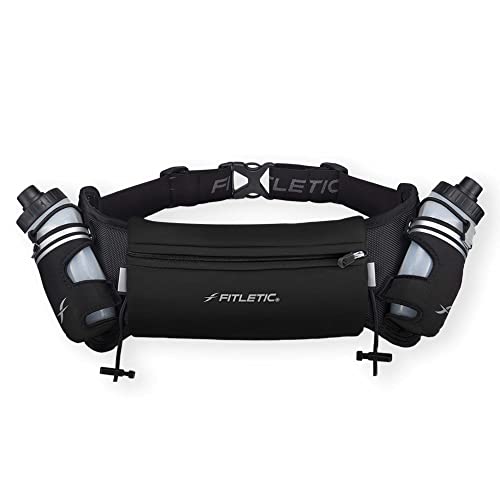
- Two quick-flow 8-ounce bottles included
- Large water-resistant phone pouch
- Gel holders, bib toggles, and reflective accents
Best For: Race-focused runners carrying a phone, gels, and 16 ounces of water
Best High-Capacity Stability Pick

- Two 10.5-ounce bottles provide 21 ounces
- Two-compartment pocket organizes essentials
- Adjustable, breathable, low-profile design
Best For: Distance and ultra runners needing stable hydration and organized storage
Fully Loaded Race Belt

- 12oz Quick Flow BPA-free bottle
- Phone pocket, gel holders, and bib toggles
- Adjustable 24–34in bounce-free fit
Best For: Race-day runners needing organized storage and hydration
Ultra-Light Pick
Nathan Swift Plus 10oz Hydration Belt

- 7oz belt with a 10oz flask
- Zip phone pocket and gel storage
- Angled holster for quick access
Best For: Lightweight training runs and races with frequent aid stations
Two-Bottle Value
Running Belt with Dual 175ml Bottles

- Two BPA-free 6.5oz bottles
- Large phone-friendly zip storage
- Adjustable 27–59in anti-slip waistband
Best For: Budget-conscious runners wanting dual bottles and broad sizing
Best High-Capacity Value
AiRunTech Dual-Bottle Running Belt

- Two 10-ounce BPA-free bottles
- 6.5-inch phone-friendly pocket
- Race bib toggles and adjustable fit
Best For: Marathon training and races requiring extra water and organized storage
Best Minimalist Flask Belt
Nathan Peak Hydration Waist Pack

- 18-ounce Speed Draw Flask
- Angled holder for one-handed access
- Expandable zippered stretch pocket
Best For: Runners wanting simple hydration with quick bottle access
Best Value Dual-Bottle Pick – Neon Green 2-Bottle Hydration Belt
If you want straightforward running hydration belts for marathons, this unisex belt provides two 10-ounce bottles plus a phone-storage solution. Its neoprene construction, water-resistant finish, and 15- to 24-inch fit make it a practical option for shorter training runs and race-day fueling.
Best For: Runners who want two hands-free bottles, broad phone compatibility, and a compact waist fit.
Pros:
- Includes two 10-ounce water bottles for 20 ounces of total capacity.
- Phone belt is designed to fit a wide range of devices, including large Samsung and iPhone models.
- Neoprene material and water-resistant construction help protect essentials from sweat and light moisture.
- Includes a one-year warranty and free replacement support for product problems.
Cons:
- The 15- to 24-inch listed size range may not suit every runner.
- Hand-wash-only care requires extra maintenance.
This is a simple, capacity-focused choice for runners who prefer two smaller bottles over one larger reservoir. Confirm the waist measurement before buying, especially if you need a fit outside the listed range.
Best Lightweight Storage Design – Salomon Active Bottle Belt
The Salomon Active Bottle Belt is a lightweight option among running hydration belts for marathons, combining a single 600 ml bottle with a zippered storage pocket. Its angled bottle position and adjustable closure are designed to keep hydration accessible without adding unnecessary bulk.
Best For: Runners, hikers, and skiers who prefer one insulated bottle and room for gels, keys, and other small essentials.
Pros:
- Includes a 600 ml 3D bottle with thermic PE foam insulation designed to maintain temperature longer.
- The 45-degree bottle position supports quick access while moving.
- Large zippered pocket includes space for nutrition and a key holder.
- Lightweight 0.09 kg design with an adjustable closure and water-resistant construction.
Cons:
- Provides one bottle and 0.6 liters of capacity rather than dual-bottle hydration.
- Only one pocket is listed, so storage organization is more limited than multi-pocket belts.
- The universal-size design may require careful adjustment for the best fit.
Choose this belt if easy bottle access and organized essentials matter more than maximum fluid capacity. It is especially versatile for runners who also hike or ski and want one weather-resistant belt for multiple activities.
Best Phone-and-Fueling Setup – Fitletic Hydra 16 Belt
The Fitletic Hydra 16 is built for runners who want phone storage, quick hydration, and race-day fueling in one package. Among running hydration belts for marathons, its two 8-ounce bottles, bounce-free hip-hugging fit, gel holders, and race-bib toggles make it particularly suited to organized training and events.
Best For: Runners who need 16 ounces of quick-access hydration along with a large phone pouch and dedicated gel storage.
Pros:
- Includes two 8-ounce bottles with quick-flow caps for drinking without stopping.
- Water-resistant 8-by-4-inch pouch fits large phones such as iPhone Pro Max and Samsung Galaxy Ultra models.
- Hip-hugging design is intended to reduce bouncing during runs.
- Includes two external gel holders, race-bib toggles, and reflective accents.
Cons:
- The S/M size is listed for 24- to 34-inch waists, limiting fit flexibility.
- Sixteen ounces of total hydration may be modest for longer marathon stretches without refill access.
- Hand-wash-only care adds maintenance.
This is a well-rounded race-oriented belt for runners who carry a large phone and nutrition as well as water. The S/M sizing and 16-ounce capacity should be checked against your waist and planned course support before purchase.
Best High-Capacity Stability Pick – Amphipod RunLite Xtech 10K
The Amphipod RunLite Xtech 10K is a storage-forward choice for runners comparing running hydration belts for marathons, ultras, and endurance training. It combines two 10.5-ounce bottles with a two-compartment pocket, adjustable 1.5-inch webbing, and a breathable mesh back panel.
Best For: Distance runners who want 21 ounces of hydration, organized storage, and bottles that can be repositioned vertically or horizontally.
Pros:
- Includes two 10.5-ounce bottles for 21 ounces of total hydration.
- Xtech squeeze-and-release system and Jett-Lock caps are designed for quick access and secure closure.
- Two internal pocket compartments accommodate a phone, nutrition, keys, cards, and ID.
- Adjustable 1.5-inch belt, hip-hugging feature, and breathable 3D mesh support stable, cooler wear.
Cons:
- At 9.2 ounces, it is heavier than some lightweight belt options.
- Hand-wash-only care may be less convenient after sweaty runs.
- The listed 21-ounce size and dimensions should be checked for preferred fit and storage needs.
This belt stands out when stability and organization are as important as fluid access. Its modular bottle placement is useful for customizing the carry, while the 21-ounce capacity gives it more range than many compact single-bottle designs.
Fully Loaded Race Belt – Fitletic 12oz Hydration Belt
For runners comparing running hydration belts for marathons, the Fitletic Fully Loaded combines 12-ounce hydration with race-day storage and bib attachment points. Its adjustable, hip-hugging design is intended to reduce bounce, while the water-resistant neoprene construction helps manage sweat and light moisture.
Best For: Marathon and race-day runners who want hydration, phone storage, gel holders, and bib toggles in one belt.
Pros:
- Includes a 12-ounce BPA-free Quick Flow bottle with a leak-preventing cap.
- Large 8-by-4-inch pocket fits an iPhone-sized phone and includes an organizer for small essentials.
- Four energy gel holders, race bib toggles, and reflective accents add practical race features.
- Adjustable S/M waist fit covers 24 to 34 inches and is designed for bounce-free comfort.
Cons:
- The S/M version is limited to 24- to 34-inch waists.
- Hand washing is recommended rather than machine washing.
- It carries one bottle with 12 ounces of capacity.
This is a feature-rich choice for organized races, especially if you rely on gels and need a secure place for a phone and credentials. The single-bottle capacity may be less suitable for runners who need substantial hydration between aid stations.
Ultra-Light Pick – Nathan Swift Plus 10oz Hydration Belt
The Nathan Swift Plus is a streamlined option for runners choosing running hydration belts for marathons and everyday workouts. It carries a 10-ounce flask in an angled holster, with a zip pocket for a large phone and essentials while keeping the overall design lightweight.
Best For: Runners who prioritize a light, low-profile belt for shorter training runs, workouts, or races with frequent aid stations.
Pros:
- Lightweight 7-ounce design with a 10-ounce flask for quick access to water.
- Angled holster and push-pull cap support drinking without stopping.
- Zip pocket accommodates large phones and running essentials.
- Includes gel loops and a separate gel trash stash pocket.
Cons:
- The 10-ounce capacity is smaller than many marathon-oriented hydration setups.
- It is listed as one size fits most, which offers less specific sizing detail.
- Hand washing and line drying are required for care.
Choose this belt when minimal weight and quick access matter more than carrying a large hydration reserve. Its storage is thoughtfully arranged, but runners planning long stretches between aid stations may want more capacity.
Two-Bottle Value – Running Belt with Dual 175ml Bottles
For runners shopping running hydration belts for marathons on a budget, this waist pack offers two removable 6.5-ounce bottles and a roomy storage compartment. Its adjustable elastic waistband fits 27 to 59 inches, while the neoprene material is designed to resist sweat and water.
Best For: Runners who want dual-bottle flexibility, broad waist adjustability, and separate organization for a phone and small valuables.
Pros:
- Includes two BPA-free 175ml bottles for a combined 12.99 ounces of listed capacity.
- Large zippered 20-by-11cm compartment fits large smartphones and separates smaller items with layered pockets.
- Adjustable waistband fits 27 to 59 inches and uses an anti-slip design to help limit movement.
- Three pockets provide more organization than a simple single-compartment belt.
Cons:
- The two small bottles may require more frequent refills than a larger reservoir.
- The product is listed in size M despite its broad adjustable waist range.
- The supplied details list a button closure rather than a zipper for the belt itself.
This belt is a practical value pick when you prefer splitting water between two bottles and need room for everyday essentials. It can work well for training and shorter events, though marathoners should consider their planned refill access.
Best Lightweight Pick – CamelBak Ultra Hydration Belt
For runners seeking running hydration belts for marathons without adding much bulk, the CamelBak Ultra pairs a collapsible 17-ounce flask with a lightweight waist pack. Its breathable construction, reflective details, phone storage, and trekking-pole carry make it suited to longer efforts where streamlined organization matters.
Best For: Marathon training and long runs where low weight, compact hydration, and essential gear storage are priorities.
Pros:
- Includes a collapsible 17-ounce Quick Stow flask.
- 3D Micro Mesh promotes airflow and cushioning.
- Zippered phone pocket and 2.5-liter cargo capacity support essential storage.
- Reflective details and integrated trekking-pole carry add useful trail-oriented features.
Cons:
- Only one 17-ounce flask is included.
- Its minimalist design may provide less hydration capacity than larger systems.
This is a practical choice for runners who want a light, breathable belt with room for fuel and gear. The single-flask setup is best for routes with access to refills or runners who prefer to keep hydration minimal.
Best High-Capacity Value – AiRunTech Dual-Bottle Running Belt
The AiRunTech is a useful option among running hydration belts for marathons when carrying more water and race-day essentials is important. It includes two 10-ounce BPA-free bottles, a large phone-friendly pocket, race bib toggles, and an adjustable hook-and-loop fit for hips from 18 to 51.2 inches.
Best For: Marathon runners who want two bottles, bib storage, and space for a phone, keys, cards, and energy gels.
Pros:
- Includes two 300 ml bottles with push-pull drinking nozzles.
- Adjustable fit is designed for hips from 18 to 51.2 inches.
- Large 6.5-inch pocket fits many smartphones and running essentials.
- Race bib toggles, a headphone hole, and reflective detailing support event use.
Cons:
- The bottles’ nozzle colors are supplied randomly.
- Hand-wash care is required.
- At 0.26 kg, it is heavier than some minimalist single-flask belts.
With two bottles and a more generous storage layout, this belt is built around convenience rather than the lightest possible setup. Its adjustable closure and race-focused features make it especially practical for organized events and training sessions.
Best Minimalist Flask Belt – Nathan Peak Hydration Waist Pack
The Nathan Peak keeps running hydration belts for marathons streamlined with an 18-ounce Speed Draw Flask and a single expandable zippered stretch pocket. Its angled holder is designed for one-handed access, while extended side panels and reflective trim help balance comfort, visibility, and easy hydration.
Best For: Runners who prefer one larger flask, quick access, and compact storage for essentials on runs, walks, or hikes.
Pros:
- Includes an 18-ounce flask with a push-pull race cap.
- Angled bottle holder supports one-handed access and helps limit bouncing.
- Expandable zippered pocket protects essentials.
- Reflective detail and trim improve visibility in dim light.
Cons:
- Has one pocket, limiting organization.
- Provides one bottle rather than a dual-bottle hydration setup.
- At 6.72 ounces, it is heavier than the CamelBak option listed here.
This belt suits runners who value a simple, accessible flask system over extensive storage. The 18-ounce capacity is a modest step up from smaller handheld-style options, while the single-pocket layout keeps the design straightforward.
How We Picked the Best Running Hydration Belts for Marathons
We focused on the features that matter most during extended road and trail efforts: usable fluid capacity, secure fit, low bounce, accessible storage, and ease of refilling or drinking while moving. The selection includes minimalist belts, bottle-based designs, flask systems, and models with room for a phone, gels, keys, or identification.
We also considered adjustability and versatility. A belt that works for training runs may not be ideal for a marathon if it shifts when loaded or lacks enough space for race-day nutrition. Product claims such as “bounce-free” or “ultra-light” should still be evaluated alongside capacity, construction, and fit.
Quick Comparison
| Best For | Look For |
|---|---|
| Minimal carry | One soft flask or compact bottle |
| Long races | At least 17–21 ounces, or access to reliable aid stations |
| Phone and fuel | Stretch or zippered storage with easy access |
| Race bibs and gels | Dedicated loops, toggles, or gel holders |
| Maximum stability | Adjustable waist fit and distributed weight |
Key Buying Factors for Marathon Hydration Belts
Capacity and Refill Strategy
Choose capacity based on your sweat rate, weather, pace, and aid-station plan. A 10- to 12-ounce setup can work for runners who regularly use course stations, while 17 to 21 ounces offers more independence between stops. Carrying more water also adds weight, so avoid overpacking.
Fit and Bounce Control
The belt should sit securely around your natural waist or hips without restricting breathing. Look for broad, adjustable bands and a bottle or flask position that does not pull the belt sideways. Test the belt fully loaded before race day; an empty belt can feel very different once water and gels are added.
Storage and Access
Check whether the pocket fits your phone with its case, plus keys, cards, and nutrition. Zippers provide security, while stretch pockets can offer quicker access. For marathon fueling, dedicated gel holders or loops are useful because they reduce rummaging during the race.
Bottle and Flask Design
Hard bottles are easy to grip and refill, while soft flasks become less bulky as they empty. Push-pull or bite-style caps can make drinking easier during motion. Confirm that replacement bottles or flasks are available if the included containers wear out.
Who Should Buy Which Running Hydration Belts for Marathons?
Choose a compact one-bottle belt if you run with frequent water access and mainly need hydration plus a phone. A two-bottle belt suits runners who want balanced weight distribution and fewer stops. Higher-capacity belts are better for hot conditions, longer training routes, or races where aid stations are crowded or widely spaced.
Runners carrying substantial nutrition should prioritize expandable or zippered storage, while minimalist racers may prefer the lightest flask-based design. Whichever model you choose, load it with your intended race supplies and complete several long runs before relying on it for a marathon.