Cold temperatures can make navigation more demanding, especially when gloves, snow glare, short daylight, and changing weather complicate route finding. The right compass should remain readable, easy to handle, and dependable when conditions turn harsh.
We selected 10 compasses for cold weather across several categories, from simple recreational models and lightweight orienteering compasses to rugged lensatic designs and multifunction instruments with altimeters or weather tools.
Best 10 Compasses for Cold Weather Picks for 2026
Rugged Navigator
AOFAR AF-4074 Military Compass

- Waterproof zinc die-cast metal body
- Luminous liquid-filled dial
- Sighting, inclinometer, and slope tools
Best For: Rugged hiking, camping, mapping, and boating
Simple Trail Guide
SUUNTO A-10 Compact Hiking Compass

- Lightweight 1.1-ounce design
- Liquid-filled capsule and steel needle
- Battery-free map navigation
Best For: Simple hiking, trekking, and orienteering
Night-Ready Tactician
Eyeskey Tactical Survival Compass

- Waterproof, impact-resistant metal body
- Lensatic sighting and level bubble
- Fluorescent markings for dark reading
Best For: Tactical hiking, survival, and low-light navigation
All-Weather Data Tool
8-in-1 Digital Altimeter Compass

- Compass, altimeter, barometer, and thermometer
- Backlit display with weather forecasting
- Altitude range to 29,500 feet
Best For: Mountaineering and data-focused outdoor trips
Rugged Lensatic Pick

- Metal, weatherproof construction
- Glow-in-the-dark interface
- Optical eyepiece for bearings
Best For: Rough-weather and low-light navigation
Lightweight Scout Choice

- Liquid-filled magnetic capsule
- Magnifier and 1:24000 scale
- Lightweight plastic body
Best For: Beginner hikers, scouts, and map readers
Group Adventure Value
Four-Pack Orienteering Compasses

- Four compasses included
- Adjustable declination and bezel
- Waterproof, lightweight design
Best For: Groups, classes, and backup navigation
Best Kid-Friendly Pick
TurnOnSport Orienteering Compass
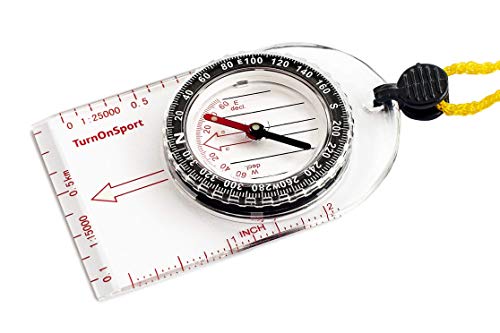
- Waterproof, fall-resistant acrylic body
- Lightweight with included neck strap
- Rotating bezel for map navigation
Best For: Kids, Scouts, and beginner hikers
Best Clip-On Option

- Liquid-filled for smooth readings
- Clips to packs or belts
- Luminous markings aid low-light use
Best For: Lightweight backup navigation on the go
Best Map-Reading Set
Trcosenp Waterproof Compass 4-Pack

- Includes four lightweight compasses
- Magnifying glass and 1:24000 scale
- Waterproof acrylic construction
Best For: Groups, families, and Scout instruction
Rugged Navigator – AOFAR AF-4074 Military Compass
For shoppers comparing compasses for cold weather, the AOFAR AF-4074 stands out as a rugged, liquid-filled lensatic model with waterproof construction and a luminous dial. Its metal body and multiple navigation features suit demanding outdoor use.
Best For: Hiking, camping, mapping, boating, geology activities, and users who want a durable compass for variable weather.
Pros:
- Waterproof, shakeproof zinc die-cast construction
- Liquid-filled luminous dial supports stable, readable operation
- Includes sighting, magnifier, inclinometer, slope measurement, and tripod mounting features
- Backed by a two-year warranty and lifetime customer support
Cons:
- Its multifunction military design may be more involved than needed for casual navigation
- Supplied specifications list an unusually high 74-pound item weight, so verify the current listing details
The AF-4074 is a feature-rich choice for users who prioritize ruggedness, weather resistance, and sighting capability over a minimalist baseplate design.
Simple Trail Guide – SUUNTO A-10 Compact Hiking Compass
The SUUNTO A-10 is a compact, straightforward option among compasses for cold weather. Its liquid-filled capsule, steel needle, and battery-free design make it practical for recreational hiking and map-based navigation.
Best For: Hiking, trekking, orienteering, alpine skiing, trail running, and users who prefer a lightweight compass with simple controls.
Pros:
- Compact 1.1-ounce design with lanyard mounting
- Liquid-filled capsule helps provide stable operation
- High-grade steel needle with jewel bearing
- Includes inch and centimeter scales and fixed declination
Cons:
- Designed for recreational navigation rather than advanced lensatic functions
- Balanced for northern hemisphere use, which may limit suitability elsewhere
- Plastic construction may offer less ruggedness than metal-bodied alternatives
Choose the A-10 when portability and ease of use matter most. It is a sensible everyday hiking compass, especially for map reading and uncomplicated route finding.
Night-Ready Tactician – Eyeskey Tactical Survival Compass
The Eyeskey Multifunctional Tactical Compass combines a liquid-filled dial, lensatic sighting system, and fluorescent markings, making it a strong contender among compasses for cold weather and low-light outdoor navigation. Its metal construction is also listed as waterproof and impact resistant.
Best For: Hiking, survival kits, tactical navigation, and users who need bearing features with clearer nighttime readability.
Pros:
- Waterproof and impact-resistant metal construction
- Optical eyepiece, sighting window, and level bubble support bearing accuracy
- Fluorescent north arrow and display aid reading in darkness after exposure to light
- Rotating bezel helps lock in a bearing
Cons:
- More feature-heavy than a basic recreational compass
- Fluorescent markings require prior exposure to enough light
- Supplied notes do not specify a warranty
The Eyeskey is a practical pick for users who value sighting precision, rugged construction, and low-light readability in a traditional mechanical compass.
All-Weather Data Tool – 8-in-1 Digital Altimeter Compass
For hikers who want more than directional guidance, this 8-in-1 digital instrument combines an electronic compass with altitude, pressure, temperature, weather-forecast, clock, timer, and backlight functions. It is a versatile alternative among compasses for cold weather, though its stated temperature range is limited to 14°F through 140°F.
Best For: Hiking, mountaineering, camping, and fishing where altitude, barometric pressure, temperature, and navigation data are useful.
Pros:
- Combines eight outdoor functions in one compact device
- Measures altitude from -2,300 to 29,500 feet
- Tracks barometric pressure and pressure trends for weather planning
- Backlit display and Celsius/Fahrenheit switching support varied viewing conditions
Cons:
- Temperature measurement is specified only from 14°F to 140°F
- ABS plastic and rubber construction may be less rugged than metal compasses
- No warranty is listed in the supplied details
This device is best for data-oriented adventurers who want multiple instruments together. Its digital functions add useful context, but users should consider the stated temperature range before relying on it in severe cold.
Rugged Lensatic Pick – Tactical Survival Compass
For cold-weather navigation, this tactical survival compass emphasizes durability, clear sighting, and low-light readability. Its metal base and cover, weatherproof construction, and glow-in-the-dark interface make it a practical option for demanding outdoor trips.
Best For: Hikers, climbers, cyclists, and explorers who want a rugged compass with lensatic sighting and nighttime visibility.
Pros:
- Optical eyepiece supports quick forward and reverse bearings.
- Glow-in-the-dark design helps with low-light readings.
- Metal construction and weatherproofing suit rough conditions.
- Includes a prism lens, bubble level, and clear scales.
Cons:
- At 0.18 kg, it is heavier than lightweight plastic models.
- Its tactical design may be more feature-rich than casual users need.
Choose this model if cold-weather reliability, a protective metal build, and nighttime readability matter more than minimizing pack weight.
Lightweight Scout Choice – Orienteering Compass
When choosing compasses for cold weather, a lightweight model can be useful for hikers and scouts who want to keep navigation gear accessible. This handheld orienteering compass combines a liquid-filled capsule, map-reading tools, and a compact plastic design.
Best For: Beginners, scouts, hikers, campers, and backpackers who need a portable compass for route mapping and general land navigation.
Pros:
- Liquid-filled capsule is designed to help the needle swing freely toward north.
- Rotating 360-degree bezel and azimuth bearing support basic navigation.
- Magnifying glass and 1:24000 ruler scale assist with map reading.
- Lightweight 0.06 kg body is easy to carry in a pocket or pack.
Cons:
- Plastic construction may be less rugged than a metal compass.
- The listed warranty is limited to 30 days.
This is a sensible cold-weather companion for users who prioritize low weight and map-reading features, provided the compass is protected from the harsher treatment a metal model can handle.
Group Adventure Value – Four-Pack Orienteering Compasses
For group trips in cold weather, this four-pack provides multiple compact compasses for shared navigation or backup use. Each compass includes a rotating bezel, ruler, metric scale, lanyard, and waterproof design for outdoor map reading.
Best For: Families, scout groups, instructors, and outdoor teams that need several lightweight compasses for hiking and navigation practice.
Pros:
- Four compasses provide useful group or backup coverage.
- Adjustable declination and rotating bezel support navigation.
- Built-in ruler and 1:50,000 map scale help with route planning.
- Compact, lightweight design includes lanyards for accessibility.
Cons:
- Plastic construction may not offer the same impact resistance as metal.
- The 1:50,000 scale may not match every map.
This pack is a practical choice when quantity matters, especially for group instruction or shared cold-weather outings where each participant needs a basic navigation tool.
Best Kid-Friendly Pick – TurnOnSport Orienteering Compass
For families looking for compasses for cold weather, this lightweight acrylic orienteering model offers a practical, easy-to-read option for hiking, camping, and map work. Its waterproof, fall-resistant design and included neck lanyard make it convenient for younger users and outdoor beginners.
Best For: Kids, beginner hikers, Cub Scouts, and casual outdoor navigation.
Pros:
- Waterproof and fall-resistant acrylic construction suits rough, inclement-weather use.
- Rotating 360-degree bezel and clear markings support basic map navigation.
- Lightweight, compact design includes a paracord strap for hands-free carrying.
Cons:
- Designed primarily for basic navigation rather than advanced fieldwork.
- The compact size may be less convenient for users who prefer larger compass faces.
This is a sensible starter compass when ease of use, portability, and weather resistance matter more than specialized navigation features.
Best Clip-On Option – Coghlan's Carabiner Compass
For compact compasses for cold weather, Coghlan’s carabiner model keeps navigation close at hand without adding much bulk. Its liquid-filled design, aluminum body, and luminous directional markers make it a useful accessory for hiking, camping, and low-light excursions.
Best For: Hikers and campers who want a small compass that clips directly to their gear.
Pros:
- Built-in carabiner attaches to backpacks, belts, or other outdoor gear.
- Liquid-filled design supports smooth directional readings.
- Glow-in-the-dark markings improve visibility in low-light conditions.
- Compact 0.6-ounce aluminum construction is easy to carry.
Cons:
- Its small format offers fewer map-reading features than a full baseplate compass.
- The notes do not specify a waterproof rating.
This model is best treated as an accessible backup or quick-reference compass for users who value clip-on convenience and nighttime visibility.
Best Map-Reading Set – Trcosenp Waterproof Compass 4-Pack
For groups comparing compasses for cold weather, this four-piece waterproof acrylic set provides multiple handheld units for outdoor instruction, family trips, or shared emergency kits. Each compass includes a rotating bezel, orienting lines, a magnifying glass, and a 1:24000 ruler scale for more detailed map work.
Best For: Families, Scout groups, classrooms, and teams that need several map-reading compasses.
Pros:
- Four-compass pack is practical for groups or distributing among emergency kits.
- Waterproof acrylic construction supports outdoor use.
- Magnifying glass and 1:24000 scale assist with topographic map reading.
- Lanyards and lightweight handheld designs improve portability.
Cons:
- A four-pack may be unnecessary for individual users.
- The plastic construction may not feel as substantial as metal-bodied alternatives.
This set stands out when shared navigation practice and map-reading features are priorities, especially for Scouts, families, or organized outdoor activities.
How We Picked These Compasses for Cold Weather
We focused on features that matter during winter hiking, camping, backpacking, and emergency navigation. The lineup includes liquid-filled compasses, lensatic sighting models, map-reading designs, and compact tools suited to different skill levels. We considered cold-weather practicality, including waterproof or impact-resistant construction, dial readability, portability, declination adjustment, lanyards, protective pouches, and ease of use with limited dexterity.
Multifunction instruments were included for shoppers who want an altimeter, barometer, thermometer, or backlight in addition to a basic directional tool. However, extra features do not replace navigation skills or a properly marked map.
Quick Comparison
| Compass type | Best for | Main advantage |
|---|---|---|
| Lensatic | Experienced hikers and survival users | Sighting accuracy and rugged handling |
| Orienteering | Map reading and beginner navigation | Clear baseplate and straightforward operation |
| Compact carabiner or pocket | Day hikes and emergency kits | Low weight and easy carrying |
| Multifunction | Mountaineering and trip planning | Extra elevation and weather information |
Key Buying Factors for Compasses for Cold Weather
Readability and Glove-Friendly Controls
Choose a dial with clear markings, strong contrast, and enough size to read in low light or snow glare. Large adjustment controls and a lanyard can make a compass easier to use while wearing gloves.
Weather Resistance and Durability
Waterproof or water-resistant construction helps protect the housing from snow, rain, and condensation. Impact-resistant cases are useful when a compass is carried outside a pack or used in rough terrain. A protective cover or pouch adds another layer of protection.
Navigation Features
For map work, look for a transparent baseplate, ruler or scales, a direction-of-travel arrow, and an adjustable declination feature. Lensatic models can improve sighting precision but generally require more practice. Liquid-filled compasses reduce needle movement, though extreme cold can affect any liquid-damped instrument.
Size, Weight, and Extra Instruments
A compact model is convenient for day hikes and backup kits, while a larger baseplate may be easier to read and align with a map. Altimeter, barometer, thermometer, and backlight functions can be useful, but check battery requirements and treat weather forecasts as supplemental information.
Who Should Buy Which Compasses for Cold Weather?
Beginners and families: Choose a simple orienteering compass with a clear baseplate and uncomplicated markings. These models are easier to learn with and work well for hiking, scouting, and basic map exercises.
Experienced hikers and survival users: A durable lensatic compass with a sighting system, lanyard, and protective case is a better fit when precision and ruggedness matter more than minimal weight.
Backpackers and day hikers: Prioritize a lightweight, pocket-sized compass that is easy to keep accessible as a backup to electronic navigation.
Mountaineers and weather-conscious users: A multifunction model may be worthwhile if elevation and atmospheric readings support your planning. Regardless of the model, practice with it before a winter trip, carry a reliable map, and avoid depending on a phone or GPS alone in cold conditions.