Beach days are easier with a dedicated shelter that gives children a cooler, shaded place to rest, play, or nap. The best beach tents for children combine reliable sun protection with fast setup, useful ventilation, and enough room for your child’s age and activity level.
These 10 picks include compact infant shelters, pop-up play tents, and larger family canopies. Use the guide below to match the right design to your beach routine, packing space, and supervision needs.
Best 10 Beach Tents for Children Picks for 2026
Best Infant Pool-Side Pick

- UPF 50+ canopy with mesh panels
- Built-in mini pool for baby water play
- Automatic pop-up design with carry bag
Best For: Infants and toddlers under three
Best for Multiple Kids

- Roomy shelter for two to three children
- UPF 50+ protection with ventilated mesh
- Sandbags, stakes, and guy lines aid stability
Best For: Toddlers and young children who play together
Best Quick-Setup Travel Tent
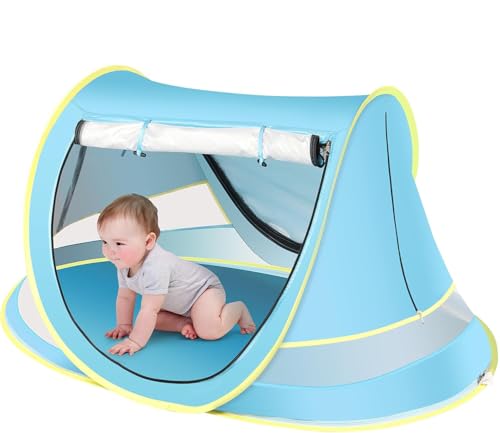
- Folds in about three seconds
- UPF 50+ protection with mesh ventilation
- Double zipper and included pegs
Best For: Parents needing a compact shelter for travel
Best Compact Infant Shelter

- UPF 50+ protection in a compact footprint
- Mesh panels for airflow and visibility
- Water-repellent fabric with plastic frame
Best For: Infants on beach, park, or backyard outings
Cool-Down Comfort Pick
Fan-Integrated Baby Beach Tent

- Solar-powered fan with 4000mAh battery
- UPF 50+ fabric and breathable mesh
- Sandbags, stakes, and pegs for stability
Best For: Babies and toddlers needing extra cooling and shade
Easy-Access Favorite

- Fast pop-up setup with carry bag
- UPF 50+ canopy and mesh ventilation
- Easy-open door and kid-height visibility
Best For: Infants and toddlers on beach or picnic outings
Family-Space Choice

- Roomy 86.6-by-59-inch family footprint
- UPF 50+ fabric with three mesh windows
- Compact fold and lightweight carry design
Best For: Families sharing shade with children at the beach
Best Infant Shade

- UPF 50+ fabric with claimed 98% UVA/UVB blocking
- Mesh sides, dual openings, and roll-up curtain
- Lightweight pop-up design with four stabilizing pegs
Best For: Infants and toddlers needing a portable beach shelter
Best Family-Size Canopy

- Spacious three-person shelter with extended floor
- Four-sided ventilation and three privacy curtains
- Includes fiberglass poles, stakes, and carry bag
Best For: Families needing a roomy, versatile outdoor canopy
Best Compact Infant Tent

- Lightweight 1.3-pound, one-person design
- Free-standing polyester shelter with carry bag
- Water-repellent fabric for beach and outdoor use
Best For: One child needing a compact, easy-to-carry shelter
Best Infant Pool-Side Pick – Monobeach Baby Beach Tent
Monobeach Baby Beach Tent Pop Up Portable Shade Pool UV Protection Sun Shelter for Infant
Check Price On AmazonFor parents shopping for beach tents for children under three, the Monobeach Baby Beach Tent combines a compact pop-up design with a small built-in pool area. Its UPF 50+ canopy, mesh panels, and lightweight carry setup make it practical for beach trips where a baby needs a shaded place to play or cool off.
Best For: Infants and toddlers under three who need a compact shaded play space with a mini pool.
Pros:
- UPF 50+ protection helps shield against harmful sunlight.
- Mini pool lets a baby play in water away from the seaside.
- Automatic pop-up setup, carry bag, and included pegs simplify transport and use.
- Mesh wall panels support ventilation and visibility.
Cons:
- One-person occupancy and small floor area limit use to a single child.
- Designed specifically for children under three, so it may be outgrown quickly.
This is a focused choice for baby beach days rather than a roomy family shelter. Its strongest advantage is the combination of sun protection and contained water play in a portable format.
Best for Multiple Kids – WhiteFang Kids Beach Tent
Among beach tents for children, the WhiteFang model stands out for its generous interior and child-oriented design. Measuring 70.9 by 45.3 by 43.3 inches, it accommodates two to three young children and adds mesh ventilation, a wide door, and a tunnel port for more interactive play.
Best For: Families who want room for two or three toddlers to play, rest, or snack together.
Pros:
- Spacious dimensions provide room for two to three children.
- UPF 50+ silver-coated interior helps reduce sun exposure and heat buildup.
- Mesh windows, wide door, and adjustable covers support airflow and supervision.
- Sandbags, stakes, and guy lines help stabilize the shelter outdoors.
Cons:
- Manual setup is less immediate than a pop-up design.
- Larger dimensions may be less convenient to pack than compact infant tents.
- Its play-tunnel connection is most useful when paired with a compatible tunnel.
This is the most play-space-focused option in the group. Choose it when interior room and supervised activity matter more than the smallest possible packed size.
Best Quick-Setup Travel Tent – Pop-Up Baby Beach Tent
For families prioritizing fast setup, this pop-up baby beach tent folds in about three seconds and packs compactly for travel. It provides UPF 50+ protection, ventilated mesh panels, adjustable shade, and a double-zipper design for easier access to a baby.
Best For: Parents who need a lightweight, quick-deploy shelter for beach trips, parks, yards, or indoor use.
Pros:
- Pop-up frame folds quickly and is easy to carry.
- UPF 50+ silver-coated fabric helps protect from sunlight.
- Mesh panels and a roll-up curtain allow airflow and adjustable shade.
- Double zipper provides two access options, while pegs help prevent movement.
Cons:
- Its 48-by-32-by-23-inch size is intended for a baby rather than multiple children.
- The included warranty is limited to 30 days.
- Although listed as waterproof, outdoor use still benefits from proper anchoring.
This model is a practical travel-oriented pick for parents who value convenience. Its compact dimensions and rapid folding make it especially suitable when luggage space and setup time are limited.
Best Compact Infant Shelter – Tiny Land Baby Beach Tent
The Tiny Land Baby Beach Tent is a compact option for parents comparing beach tents for children with a focus on infant-sized coverage. Its 35.4-by-27.6-by-31.5-inch footprint uses a plastic frame, UPF 50+ fabric, mesh panels, and water-repellent material for outdoor activities.
Best For: Infants who need a small shaded space for beach vacations, picnics, backyard play, or camping.
Pros:
- UPF 50+ canopy helps provide strong sun protection.
- Compact dimensions suit limited outdoor space and easy transport.
- Mesh wall panels support airflow and visibility.
- Water-repellent fabric offers added coverage for light moisture.
Cons:
- The small floor area is not suitable for multiple children.
- Plastic frame and poles may offer less structural rigidity than fiberglass designs.
- The supplied notes do not specify a carry bag, pegs, or setup mechanism.
This is a straightforward compact shelter for infant-focused outings. It makes sense when a small footprint and UPF 50+ coverage are more important than extra play space or a detailed accessory package.
Cool-Down Comfort Pick – Fan-Integrated Baby Beach Tent
Among beach tents for children, this model stands out for families who want shade plus active cooling. It combines a UPF 50+ shelter, solar-powered fan, mesh ventilation, and a splash-pool-style play area in one portable tent.
Best For: Babies and toddlers who need a cooler, enclosed play or rest space on hot beach days.
Pros:
- Built-in fan uses a solar panel and 4000mAh battery for two power options.
- UPF 50+ fabric, silver coating, and breathable mesh help reduce heat and UV exposure.
- Mesh sides improve airflow while helping block sand, mosquitoes, and small debris.
- Three built-in sandbags, stakes, and pegs provide added stability on soft or breezy ground.
Cons:
- The fan and battery add features and components beyond a basic beach shelter.
- The product is primarily sized and positioned for babies and toddlers rather than older children.
This is a feature-rich choice when keeping a young child cool is a priority. Its combination of shade, airflow, visibility, and sand anchoring makes it more versatile than a simple pop-up tent.
Easy-Access Favorite – NXONE Pop-Up Baby Beach Tent
For shoppers comparing beach tents for children, the NXONE focuses on quick setup and kid-friendly access. Its 50-by-50-inch floor, openable door, mesh panels, and UPF 50+ canopy create a practical shaded area for infants and toddlers.
Best For: Parents who want a roomy, easy-to-spot shelter for beach days, picnics, travel, or backyard play.
Pros:
- Opens in seconds and folds down for transport in the included carry bag.
- Easy-open door avoids a zipper at the entrance, while the window height improves visibility.
- Silver-coated interior, UPF 50+ protection, and mesh panels support shaded, breathable play.
- Built-in sandbags, stakes, and guy lines help keep the tent steady in breezy conditions.
Cons:
- The water-repellent fabric is intended for light splashes rather than heavy rain.
- Its infant-and-toddler design may be less suitable for larger children.
The NXONE is a straightforward option for families who value fast deployment and easy supervision. The large floor area and storage pocket add everyday convenience, while the anchoring system helps with beach use.
Family-Space Choice – Gorich 3-Person Beach Shelter
Families looking beyond compact beach tents for children may prefer this larger Gorich shelter. Its 86.6-by-59-inch footprint fits three to four people, giving children room to play while adults share the shaded space.
Best For: Families needing a roomy beach canopy for shared shade, play, and relaxing.
Pros:
- Large interior accommodates three to four people and includes an extended floor for activity space.
- UPF 50+ silver-coated fabric helps provide sun protection.
- Three mesh windows and four-sided ventilation promote airflow.
- Folds to a compact travel size and weighs about 3.5 to 3.9 pounds according to the supplied details.
Cons:
- It is water-repellent for light rain, not intended for heavy rain.
- Setup takes minutes and requires more assembly than an instant pop-up design.
- The larger footprint may be less convenient for very crowded beaches.
This model makes sense when shared space matters more than a baby-specific enclosure. Its ventilation, curtains, extended floor, and lightweight fold-down design support beach trips, camping, and other outdoor outings.
Best Infant Shade – Kapeazo Baby Beach Tent
For parents comparing beach tents for children, the Kapeazo Baby Beach Tent is designed specifically for infants and toddlers. Its 54-by-35-inch interior provides room to play or rest, while the pop-up frame and included carry bag support convenient travel.
Best For: Infants and toddlers who need a portable, ventilated sun shelter for beach trips, camping, parks, or picnics.
Pros:
- UPF 50+ fabric is designed to block 98% of harmful UVA/UVB rays.
- Full mesh sides promote airflow and help keep insects away.
- Double-zipper and roll-up curtain designs make checking on a child easier.
- Includes four pegs and weighs about 1.3 pounds.
Cons:
- The 26-inch height is intended for sitting, resting, and crawling rather than standing.
- It is sized for one infant or toddler, not several children.
The Kapeazo stands out when infant-focused shade, airflow, and portability matter most. Its water-resistant, sandproof fabric and quick pop-up setup make it a practical choice for short outdoor outings.
Best Family-Size Canopy – Venustas Beach Tent
The Venustas Beach Tent is a spacious option for families shopping for beach tents for children. With an 86.6-by-59-inch footprint, a 48-inch height, and an extended floor area, it offers more room than compact infant shelters while remaining portable at 3.5 pounds.
Best For: Families or groups wanting a roomy, ventilated beach canopy for beach days, parks, camping, sporting events, or backyard use.
Pros:
- Large three-person design provides 46.22 square feet of floor area.
- Four-sided ventilation helps improve airflow in warm conditions.
- Four-layer silver-coated polyester is designed for UV protection, shading, and heat insulation.
- Includes poles, stakes, and a portable carry bag, with a one-year warranty listed.
Cons:
- At 3.5 pounds, it is heavier than the infant-focused alternatives.
- The setup requires assembling the fiberglass poles rather than simply relying on a pop-up frame.
- Its larger footprint may be less convenient for very compact beach spaces.
Choose the Venustas when usable space and ventilation are higher priorities than minimum pack size. The extended floor and privacy curtains add flexibility for longer family outings.
Best Compact Infant Tent – Tiny Land Baby Beach Tent
The Tiny Land Baby Beach Tent is a compact, free-standing shelter for parents considering beach tents for children. Measuring 35.4 by 27.6 by 31.5 inches and weighing 1.3 pounds, it is sized for one occupant and is easy to carry with the included bag.
Best For: One infant or young child using a lightweight shelter for beach trips, backyard playtime, picnics, or camping.
Pros:
- Lightweight 1.3-pound design is convenient for travel.
- Free-standing construction does not require a listed complex installation.
- Water-repellent polyester fabric supports use during outdoor activities.
- Includes a carry bag for storage and transport.
Cons:
- The supplied details list UV protection as “No,” so it is not the strongest choice when sun shielding is the main priority.
- The compact interior accommodates one person rather than multiple children.
- Plastic poles may offer less robust support than fiberglass frames.
The Tiny Land is best viewed as a lightweight, compact shelter rather than a dedicated high-UV sun shade. Consider it for portability and basic outdoor coverage, but verify your sun-protection needs before choosing it for extended beach use.
How We Picked the Best Beach Tents for Children
We focused on features that matter during real family outings: stated UPF or UV protection, portable pop-up construction, ventilation, interior space, stability, and ease of packing. We also considered whether each shelter is better suited to infants, toddlers, independent play, naps, or group shade.
Product claims such as UPF 50+ describe the fabric’s stated protection, not complete protection from sunlight. Children still need sunscreen, clothing, hats, hydration, and close supervision.
Quick Comparison
| Type | Best For | What to Check |
|---|---|---|
| Compact baby tent | Infants, naps, and short beach visits | Interior dimensions, ventilation, and stability |
| Tunnel or play tent | Toddlers who need a little activity space | Openings, floor area, and easy access |
| Cooling-fan model | Hot, still conditions | Fan power, battery requirements, and airflow |
| Large beach canopy | Families or multiple children | Capacity, anchoring, setup, and packed size |
Key Buying Factors for Beach Tents for Children
Sun Protection and Coverage
Look for clearly stated UPF or UV-protection information and a canopy that blocks direct overhead sunlight. A larger covered area can remain useful as children grow, while a compact infant tent may be easier to position and carry.
Ventilation and Heat Management
Mesh panels, windows, and open sides help air circulate. In very warm weather, avoid treating a tent as a sealed nursery or leaving a child unattended. Fan-equipped shelters can add airflow, but confirm how the fan is powered and keep cords or battery compartments inaccessible to children.
Size, Age, and Supervision
Check the listed dimensions rather than relying on product photos. Infant models are generally intended for resting or contained shade; tunnel and play designs offer more movement. A larger canopy may suit siblings and adults but can require stronger anchoring.
Setup, Stability, and Portability
Pop-up construction saves time, but every shelter should be secured with stakes, sand pockets, or other included anchors. Consider packed dimensions, carrying handles, folding instructions, and whether one adult can set it up reliably.
Cleaning and Beach Practicality
Sand-resistant flooring, wipe-clean fabric, and removable or accessible panels make post-trip cleanup easier. A shelter that folds compactly is more likely to be used regularly, especially when traveling with a stroller or full beach bag.
Who Should Buy Which Beach Tents for Children?
- For infants and naps: Choose a compact baby tent with strong stated sun protection, a stable floor, and generous ventilation.
- For active toddlers: Consider a tunnel or play-oriented model with easy entry and enough height to sit or move comfortably.
- For especially hot locations: A well-ventilated design, or a model with a properly managed cooling fan, may be more practical than a tightly enclosed shelter.
- For families and siblings: Select a larger beach canopy with dependable anchoring and enough covered floor area for everyone.
- For frequent travelers: Prioritize fast setup, a compact folded size, and a carry bag over extra features you may rarely use.