Finding a running watch that fits a smaller wrist can be surprisingly difficult. Oversized cases may feel bulky, while tiny basic watches can lack the GPS, workout guidance, or health tracking you want.
We compared 10 compact and slim options across GPS accuracy, case size, comfort, battery life, workout features, and price to help you choose a practical fit for training and daily wear.
Best 10 Running Watches for Small Wrists Picks for 2026
Best GPS Training Value

- Compact 37 g design with a 1.04-inch display
- GPS, GLONASS, and Galileo tracking
- Training plans, PacePro, and recovery guidance
Best For: Runners wanting structured training features in a lightweight GPS watch
Best Minimalist Training Watch
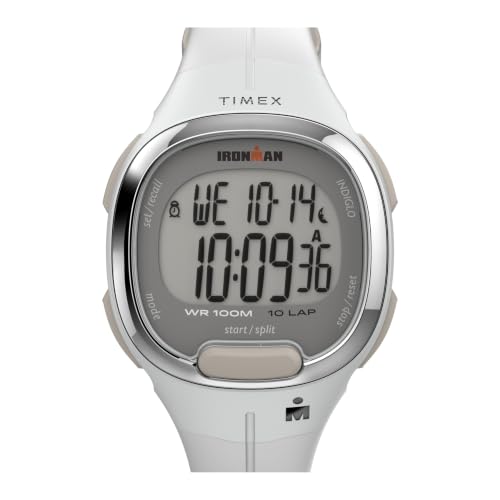
- Compact 33 mm case with a 12 mm adjustable strap
- 100-hour chronograph with 10-lap memory
- INDIGLO display, alarm, timer, and two time zones
Best For: Runners who prefer simple lap timing in a small digital watch
Best AMOLED Features

- Lightweight 43 mm design with AMOLED touchscreen
- GPS, wrist-based heart rate, and 25+ activity profiles
- Adaptive workouts, recovery insights, and smart notifications
Best For: Runners wanting a bright display and comprehensive training tools
Best Lap-Memory Value

- 38 mm resin case with adjustable 18 mm strap
- 100-hour chronograph with 30-lap memory
- 100-meter water resistance and INDIGLO backlight
Best For: Runners who prioritize lap timing and durable simplicity
Best Stylish Pick

- Compact 35mm, 0.8-ounce design
- Connected-phone GPS tracks outdoor runs
- Up to five days of battery life
Best For: Small-wrist runners seeking a stylish wellness smartwatch
Best Simple Timer
Armitron Sport Digital Chronograph

- Chronograph includes lap-time tracking
- 100-meter water resistance
- Battery-powered digital display with backlight
Best For: Runners wanting basic workout timing without smartwatch features
Best Training Features

- Built-in GPS for phone-free run tracking
- More than 30 sports apps
- Up to 11 days of smartwatch battery life
Best For: Runners wanting GPS, training guidance and recovery insights
Best Slim Everyday Tracker

- 1.47-inch slim touchscreen with 100+ watch faces
- Tracks running metrics plus sleep and health indicators
- Uses smartphone GPS and requires no subscription
Best For: Everyday fitness tracking and casual runners who carry a phone
Best Dedicated Running Watch
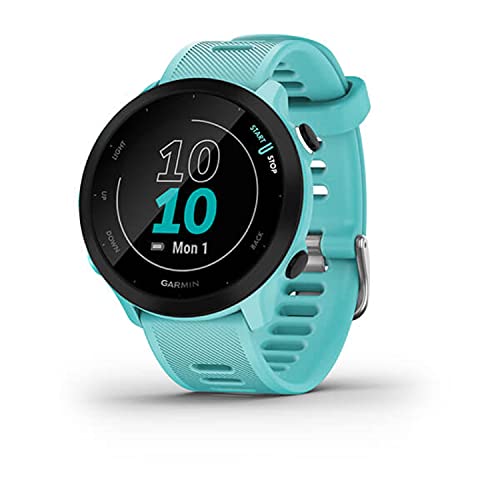
- Built-in GPS and wrist-based heart-rate monitoring
- Up to 20 hours in GPS mode or two weeks in smartwatch mode
- Includes suggested workouts, recovery tools, and PacePro
Best For: Structured runners who want standalone GPS and training guidance
Best Budget Slim Band

- Slim 0.96-inch design with one-size-fits-most band
- Tracks activity, sleep, heart rate, and blood oxygen
- IP68-rated design with up to five days of battery life
Best For: Basic activity tracking and casual runners on a budget
Best GPS Training Value – Garmin Forerunner 55
The Garmin Forerunner 55 is a strong choice for runners seeking running watches for small wrists with GPS, structured training support, and a lightweight 37 g design. Its 1.04-inch display, 20 mm band, and button controls keep key metrics accessible without adding unnecessary complexity.
Best For: Runners who want GPS tracking, training guidance, and long battery life in a compact smartwatch.
Pros:
- Built-in GPS, GLONASS, and Galileo support helps track position, pace, and distance.
- Offers personalized daily suggestions plus free 5K, 10K, and half-marathon training plans.
- Includes PacePro, recovery time, 17 activity profiles, and all-day activity tracking.
- Provides up to 20 hours of stated battery life and 50-meter water resistance.
Cons:
- The display is smaller and less vivid than the AMOLED screen on the Forerunner 165.
- Its smart features are more fitness-focused than full smartwatch-oriented.
For runners prioritizing training tools and dependable GPS in a relatively compact package, the Forerunner 55 offers a practical balance of features, weight, and battery life.
Best Minimalist Training Watch – Timex IRONMAN Transit 33mm
The Timex IRONMAN Transit 33mm is a straightforward option among running watches for small wrists. Its 33 mm case, adjustable 12 mm strap, and 27.22 g weight suit runners who prefer a compact digital watch without GPS or smartphone-dependent features.
Best For: Runners who need lap timing, countdowns, alarms, and an easy-to-read digital display.
Pros:
- The 33 mm case and adjustable strap fit wrists up to 7.5 inches.
- 100-hour chronograph with 10-lap memory supports interval and lap tracking.
- Includes a 24-hour countdown timer, customizable alarm, and two time zones.
- INDIGLO illumination and 50-meter water resistance add everyday practicality.
Cons:
- Does not provide GPS, wrist-based heart-rate tracking, or connected training plans.
- Its acrylic lens may be less scratch-resistant than some alternatives.
This is a good fit for runners who value simple, button-based timing and a small profile over connected metrics or smartwatch functions.
Best AMOLED Features – Garmin Forerunner 165
The Garmin Forerunner 165 combines a lightweight 43 mm case with an AMOLED touchscreen and traditional buttons, making it a feature-rich pick among running watches for small wrists. Built-in GPS, wrist-based heart rate, and adaptive training tools support runners who want more detailed guidance.
Best For: Runners seeking a bright display, advanced training feedback, and connected smartwatch features.
Pros:
- AMOLED touchscreen pairs with buttons for flexible operation during workouts.
- Built-in GPS and wrist-based heart-rate tracking support running metrics.
- Offers personalized workouts, Garmin Coach plans, recovery time, and training effect.
- Up to 11 days in smartwatch mode and 19 hours in GPS mode, according to the supplied notes.
Cons:
- The 43 mm case is larger than the Forerunner 55 and the 33 mm Timex Transit.
- Safety features and notifications require pairing with a compatible smartphone.
- Some connected features depend on phone compatibility and network availability.
Choose the Forerunner 165 if a vivid screen and broader training ecosystem matter more than having the smallest possible case.
Best Lap-Memory Value – Timex Ironman Classic 30
The Timex Ironman Classic 30 is a practical choice for runners comparing running watches for small wrists and wanting traditional digital timing. Its 38 mm resin case, adjustable 18 mm strap, and simple controls provide dedicated workout functions without GPS or app setup.
Best For: Runners who want generous lap memory, countdown timing, and a durable everyday sports watch.
Pros:
- 100-hour chronograph stores up to 30 laps for detailed workout timing.
- Includes a 24-hour countdown timer, three customizable alarms, and two time zones.
- INDIGLO backlight keeps the digital display readable in low light.
- 100-meter water resistance supports running and swimming use.
Cons:
- Its 38 mm case is larger than the 33 mm Timex Transit.
- It lacks GPS, heart-rate monitoring, and connected smartwatch features.
- The supplied 8-inch band length may not suit every small wrist without adjustment.
For runners who mainly need dependable lap tracking and durable, water-resistant construction, the Ironman Classic 30 is a capable no-frills option.
Best Stylish Pick – Garmin Lily 2
The Garmin Lily 2 is a compact choice among running watches for small wrists. Its 35mm case and 0.8-ounce weight keep the design light, while connected-phone GPS can track outdoor runs and walks. It also adds useful everyday health and safety features.
Best For: Runners who want a small, fashion-forward smartwatch with basic run tracking and broad wellness tools.
Pros:
- Small 35mm case with a lightweight 0.8-ounce design
- Connected-phone GPS supports outdoor run and walk tracking
- Up to five days of battery life and health features including heart rate, stress, sleep score and Body Battery
- Safety features such as LiveTrack, incident detection and Assistance when paired with a compatible phone
Cons:
- GPS requires a compatible smartphone connection
- Battery life is shorter than some larger fitness-focused smartwatches
- Health and activity data are intended as close estimates rather than medical measurements
The Lily 2 stands out when wrist comfort and appearance matter as much as training basics. Choose it for connected-phone run tracking and everyday wellness monitoring rather than advanced standalone GPS training.
Best Simple Timer – Armitron Sport Digital Chronograph
The Armitron Sport Digital Chronograph is a straightforward option among running watches for small wrists. Its 37.5mm resin case offers a digital display with chronograph and lap-time functions, while the 100-meter water resistance rating suits swimming and snorkeling.
Best For: Runners who prefer an uncomplicated, battery-powered digital watch for timing laps and workouts.
Pros:
- Chronograph includes lap time, alarm, dual time and military time
- Backlight supports viewing the digital display in dim conditions
- 100-meter water resistance is suitable for swimming and snorkeling
- Resin strap with stainless steel buckle closure
Cons:
- No GPS, heart-rate monitoring or smartwatch connectivity is listed
- At 37.5mm, it is larger and thicker than the compact Garmin Lily 2
- Water resistance is not intended for diving
This watch is best for runners who only need accessible timing functions rather than route tracking or training analytics. Its larger case may still work for small wrists, but shoppers should compare the 13mm thickness and 18mm band width with their comfort preferences.
Best Training Features – Garmin vívoactive 5
The Garmin vívoactive 5 combines a 42mm case with built-in GPS, making it a feature-rich choice among running watches for small wrists. It offers running and other sports apps, recovery guidance, adaptive Garmin Coach plans, and up to 11 days of battery life in smartwatch mode.
Best For: Small-wrist runners who want a full fitness smartwatch with standalone GPS, training guidance and long battery life.
Pros:
- Built-in GPS supports running and other outdoor activities without relying on a phone
- More than 30 indoor and GPS sports apps, including running, cycling and swimming
- Up to 11 days of smartwatch-mode battery life
- Garmin Coach adaptive plans, workout benefit and recovery-time features support training
Cons:
- Its 42mm case is larger than the 35mm Garmin Lily 2
- Always-on display use reduces stated battery life to up to five days
- The supplied notes do not specify a dedicated small-wrist fit or case weight
The vívoactive 5 is the strongest training-oriented option in this group because it combines built-in GPS with structured workout and recovery features. Its 42mm size may be less discreet on a smaller wrist, but it offers substantially more running functionality than a basic digital watch.
Best Slim Everyday Tracker – FITVII Slim Fitness Tracker
For shoppers comparing running watches for small wrists, the FITVII Slim Fitness Tracker offers a compact 1.47-inch design with running and other sports modes. It tracks steps, distance, speed, calories, heart rate, blood oxygen, and sleep, while using smartphone GPS for location data.
Best For: Runners who want a slim, general-purpose fitness tracker with health monitoring and phone notifications.
Pros:
- Slim profile with a 1.47-inch HD touchscreen and more than 100 watch faces.
- Running mode records calories, steps, distance, and speed in real time.
- Includes heart-rate, blood-oxygen, sleep, and blood-pressure trend monitoring.
- No subscription or monthly fees are required for its fitness-tracking features.
Cons:
- GPS is provided through a connected smartphone rather than built into the watch.
- The supplied notes do not specify battery life or water-resistance rating.
This is a practical choice if a slim wrist-friendly form factor and broad wellness tracking matter more than standalone GPS. Keep your phone with you for route tracking during runs.
Best Dedicated Running Watch – Garmin Forerunner 55
Among running watches for small wrists, the Garmin Forerunner 55 is the most training-focused option in this lineup. Its 37-gram case, built-in GPS, wrist-based heart-rate monitoring, suggested workouts, and race-planning tools are designed specifically for structured running.
Best For: Runners who want standalone GPS, training guidance, and long battery life in a lightweight watch.
Pros:
- Built-in GPS tracks distance, pace, and route without relying on phone GPS.
- Up to 20 hours of GPS battery life or up to two weeks in smartwatch mode.
- Daily suggested workouts, recovery guidance, race predictions, and PacePro support running goals.
- Lightweight 37-gram design with multiple sports profiles beyond running.
Cons:
- The 1.04-inch display is smaller than the screens on the other listed trackers.
- It uses buttons rather than a touchscreen.
- PacePro is not compatible with on-device courses.
The Forerunner 55 is the strongest pick for runners who prioritize training tools and reliable route tracking. Its smaller display and lightweight build may also suit smaller wrists, although the supplied information does not provide a specific wrist-size range.
Best Budget Slim Band – C68L Fitness Tracker
The C68L is a slim, straightforward option for shoppers seeking running watches for small wrists without a complex training system. Its 0.96-inch display and slim-style design track steps, distance, calories, exercise time, heart rate, blood oxygen, and sleep through the KuPoo app.
Best For: Budget-minded users who want basic run and activity tracking, notifications, and a lightweight slim band.
Pros:
- Slim-style design with a 0.96-inch display and one-size-fits-most band.
- Tracks steps, distance, calories, exercise time, heart rate, blood oxygen, and sleep.
- IP68 water resistance supports daily hand washing and swimming according to the supplied notes.
- Includes call and message notifications plus up to five days of battery life.
Cons:
- The notes do not list a dedicated running mode or built-in GPS.
- It should not be worn for hot baths, saunas, or prolonged soaking.
- Its health readings are for general tracking rather than medical use.
This tracker makes sense for basic activity monitoring on a smaller wrist, especially when slim dimensions and simple notifications are priorities. It is less suitable for runners who need detailed workout programming or standalone route data.
How We Picked the Best Running Watches for Small Wrists
We focused on watches and fitness trackers with compact cases, slimmer profiles, adjustable bands, or designs commonly suited to smaller wrists. The lineup includes dedicated running watches, everyday smartwatches, traditional digital timers, and affordable activity trackers.
Our comparison emphasizes the features that matter during actual use: GPS availability, workout tracking, display readability, button or touchscreen controls, battery expectations, comfort, durability, and compatibility with your phone. Because needs vary, the list includes both advanced Garmin models and simpler Timex, Armitron, and budget tracker alternatives.
Quick Comparison
- Best overall training features: Garmin Forerunner 165
- Best value GPS option: Garmin Forerunner 55
- Best compact stylish smartwatch: Garmin Lily 2
- Best health and fitness balance: Garmin vívoactive 5
- Best simple running timer: Timex IRONMAN Transit 33mm
- Best budget tracking: FITVII Slim Fitness Tracker
Key Buying Factors for Running Watches for Small Wrists
Case Size and Comfort
Case diameter is only part of the fit. Pay attention to thickness, lug-to-lug length, band flexibility, and how far the watch extends over the wrist. A lightweight case and a soft, adjustable strap are usually more comfortable for daily wear and longer runs.
GPS and Workout Features
If you run outdoors regularly, built-in GPS can record pace, distance, route, and time without requiring your phone. Entry-level GPS watches generally provide essential run metrics, while more advanced models may add suggested workouts, recovery guidance, training status, interval tools, and multisport profiles.
Battery Life and Charging
Check battery estimates in both smartwatch and GPS modes. A watch that lasts for days between charges is convenient, but frequent GPS use can reduce runtime substantially. Traditional digital watches typically avoid charging altogether, making them useful for runners who want simple reliability.
Display, Controls, and Phone Compatibility
Buttons can be easier to use with sweaty hands, gloves, or during intervals. Touchscreens offer familiar navigation but may be less convenient in rain. Confirm Android or iPhone compatibility, app requirements, and whether notifications or music controls matter to you.
Who Should Buy Which Running Watches for Small Wrists?
Choose the Forerunner 165 if you want a compact but feature-rich training watch with a modern display and room to progress as a runner. Choose the Forerunner 55 for dependable GPS, coaching features, and strong value without paying for every advanced smartwatch function.
Choose the Lily 2 if appearance and everyday comfort are as important as fitness tracking. Choose the vívoactive 5 if you want broader health, wellness, workout, and smartwatch features in a moderately compact design.
Choose a Timex or Armitron if you prefer straightforward buttons, durable simplicity, and minimal charging. Choose a FITVII or basic fitness tracker if you mainly need steps, distance, calories, and basic activity data at a lower price.
Before buying, measure your wrist, compare the manufacturer’s case dimensions, and check the return policy. The best choice is the smallest model that remains easy to read and comfortable enough to wear consistently.