The best compact camera gimbals make handheld footage noticeably smoother without forcing you to carry a large, complicated rig. The right model depends on whether you shoot with a smartphone, action camera, compact camera, or lightweight mirrorless body.
We compared these 10 options by camera compatibility, payload capacity, stabilization features, tracking tools, portability, and control options so you can choose a gimbal that fits your equipment and shooting style.
Best 10 Compact Camera Gimbals Picks for 2026
Most Versatile

- Supports cameras, phones, and action cameras
- 18 m AI tracking with 360-degree follow
- 2 kg payload and detachable remote handle
Best For: Creators using several camera types
Best Phone Alternative

- 3-axis stabilization for iPhone and Android
- Tracking, lighting, extension rod, and tripod module
- Up to 10 hours of operating time
Best For: Smartphone-first vloggers and mobile creators
Best Lightweight Camera Pick

- 549 g body for portable filming
- Built-in 1000-lumen adjustable fill light
- Supports lightweight mirrorless, action cameras, and phones
Best For: Run-and-gun shooters with lightweight setups
Best Complete Kit

- 2 kg support across phones, action cameras, and mirrorless cameras
- AI tracking for solo shooting and livestreaming
- Includes tripod, cooling-fan phone holder, rails, and cables
Best For: Creators wanting one ready-to-use multi-camera kit
Best Compact Phone Gimbal

- Lightweight 300g foldable design
- ActiveTrack 7.0 subject tracking
- Built-in tripod and up to 10-hour operation
Best For: Smartphone creators and solo vloggers
Best Mirrorless Camera Gimbal

- Handles camera setups up to 6.6 lb
- Native vertical shooting switch
- Bluetooth shutter control and sling mode
Best For: DSLR and mirrorless camera operators
Best Versatile Tracking Gimbal

- Works with phones, GoPros, and select compact cameras
- AI face and body subject tracking
- Integrated fill light and interchangeable mounts
Best For: GoPro and smartphone vloggers
Best Lightweight Pick
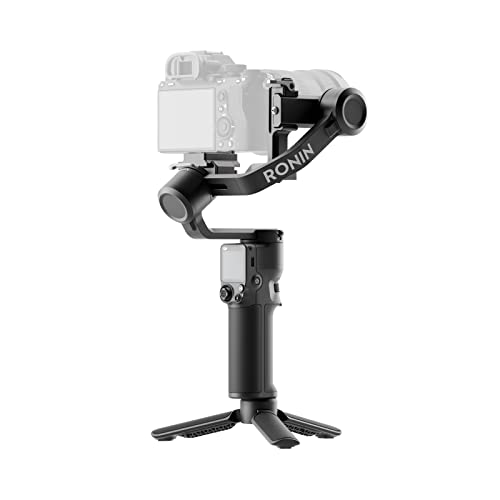
- 795g lightweight design for travel
- Supports up to 2kg of camera gear
- Native vertical shooting and Bluetooth shutter control
Best For: Travel shooters and solo creators using compatible mirrorless cameras
Best Higher-Payload Option

- Handles up to 3kg of camera equipment
- Extended tilt axis eases balancing
- Native vertical shooting and RSA accessory support
Best For: Advanced creators using larger mirrorless camera and lens combinations
Best Renewed Value
- 795g lightweight travel-friendly design
- Supports up to 2kg of camera gear
- Includes Bluetooth control and vertical shooting
Best For: Budget-conscious creators comfortable with renewed gear and a 90-day warranty
Most Versatile – FeiyuTech SCORP Mini 3 Pro
For creators comparing compact camera gimbals, the FeiyuTech SCORP Mini 3 Pro stands out for its broad device support and 2 kg payload. It can handle compatible mirrorless, compact, smartphone, and action cameras while adding AI tracking and flexible shooting options.
Best For: Solo creators who use multiple camera types and want hands-free tracking.
Pros:
- Supports smartphones, action cameras, compact cameras, and mainstream mirrorless cameras.
- AI Tracking 4.0 offers up to 18 meters of tracking distance and 360-degree follow coverage.
- Detachable handle can serve as a remote control, while the design supports horizontal and vertical shooting.
- Supports payloads up to 2 kg and includes a lens holder, tripod, and multiple mounting accessories.
Cons:
- At about 1 kg, it is heavier than phone-focused gimbals.
- It is not water resistant.
- Camera compatibility and control features may vary by setup.
This is a particularly flexible choice when one stabilizer needs to cover several device categories. Its payload, tracking, and modular controls make it more capable than a basic compact-camera gimbal, though the larger build may be excessive for lightweight cameras.
Best Phone Alternative – DJI Osmo Mobile 7P
The DJI Osmo Mobile 7P is designed for iPhone and Android users rather than dedicated cameras, but it belongs in a compact camera gimbal comparison for smartphone-first creators. Its 3-axis stabilization, tracking module, built-in extension rod, and tripod simplify vlogging and everyday mobile filming.
Best For: Smartphone creators who prioritize quick setup, tracking, and portable vlog features.
Pros:
- Three-axis stabilization helps produce smoother phone footage.
- Multifunctional Module combines intelligent tracking, lighting, and compatible DJI microphone reception.
- Built-in extension rod and tripod support selfies, vlogs, and stable standalone shots.
- Offers up to 10 hours of operating time and a magnetic phone-mounting system.
Cons:
- It supports phones only and has a 300 g maximum weight recommendation.
- The DJI Mimo app must be downloaded from DJI’s official website because it is unavailable on Google Play.
- It is not suitable for compact or mirrorless cameras.
If your “camera” is primarily an iPhone or Android phone, the 7P is easier to carry and operate than a camera-focused stabilizer. Dedicated compact-camera users should look elsewhere, but mobile filmmakers get a highly integrated setup.
Best Lightweight Camera Pick – Zhiyun Crane M2S
The Zhiyun Crane M2S is a compact camera gimbal for lightweight mirrorless setups, action cameras, and phones. Its 549 g body, small folded size, quick-release plate, and integrated fill light suit run-and-gun filming, provided your camera and lens remain within its limits.
Best For: Lightweight mirrorless users who want a portable stabilizer with built-in lighting.
Pros:
- Lightweight 549 g body is designed for portable filming.
- Supports phones, action cameras, and compatible lightweight mirrorless cameras.
- Integrated fill light reaches 1000 lumens with five brightness levels and four color filters.
- V-shaped quick-release plate with dual safety locks helps streamline mounting.
Cons:
- It is not designed for heavy cameras or lenses.
- Proper balancing is required before powering on for best performance.
- The listed maximum payload is 1500 g, so lens and accessory weight must be considered.
The Crane M2S is a sensible travel-oriented option when keeping weight down matters. Its built-in light adds useful flexibility, but buyers with larger bodies or lenses should choose a higher-capacity model instead.
Best Complete Kit – FeiyuTech SCORP Mini 3 Combo
The FeiyuTech SCORP Mini 3 Combo is an all-in-one option for creators seeking compact camera gimbals with broad compatibility. It supports smartphones, action cameras, and compatible mirrorless cameras up to 2 kg, while AI tracking and included mounting accessories reduce the need to assemble a separate kit.
Best For: Multi-camera creators who want a ready-to-use stabilization kit for solo production.
Pros:
- Supports compatible smartphones, action cameras, compact cameras, and mirrorless cameras up to 2 kg.
- AI Tracking 4.0 helps keep subjects framed for solo shooting, vlogging, and livestreaming.
- Supports both vertical and horizontal shooting with gesture and cable or Bluetooth control options.
- Combo package includes a smartphone holder with cooling fan, tripod, mounting rails, lens support, and control cables.
Cons:
- The extensive accessory kit may be more than a casual phone user needs.
- Camera control and compatibility depend on the specific camera model and connection method.
- The supplied notes do not specify water resistance.
This combo makes the most sense when flexibility and included accessories are more important than the smallest possible kit. Its 2 kg capacity and AI tracking give it room to grow from smartphone filming into compatible mirrorless-camera work.
Best Compact Phone Gimbal – DJI Osmo Mobile 7
For creators comparing compact camera gimbals for smartphones, the DJI Osmo Mobile 7 emphasizes portability, simple setup, and automated tracking. Its foldable 300-gram design includes a built-in tripod and supports up to 10 hours of operation.
Best For: Smartphone vloggers, solo creators, and mobile live streamers who prioritize portability and easy subject tracking.
Pros:
- 3-axis stabilization helps produce smooth phone footage.
- Foldable design, built-in tripod, and 300-gram weight suit travel.
- ActiveTrack 7.0, ShotGuides, and One-Tap Edit support easier content creation.
- Can charge a connected phone through USB-C during extended use.
Cons:
- Designed for cellphones rather than dedicated cameras.
- DJI Mimo must be downloaded from DJI’s official website because it is unavailable on Google Play.
- The optional OM 7 Series Tracking Kit is sold separately.
The Osmo Mobile 7 is a practical pick when a small, comfortable phone gimbal matters more than interchangeable-camera compatibility. Its integrated support features make it especially convenient for solo shooting.
Best Mirrorless Camera Gimbal – ZHIYUN WEEBILL 3E
Among compact camera gimbals for interchangeable-lens cameras, the ZHIYUN CINEPEER WEEBILL 3E combines a compact body with a 6.6-pound payload. It offers 3-axis mechanical stabilization, Bluetooth shutter control, and native vertical shooting for compatible DSLR and mirrorless setups.
Best For: DSLR and mirrorless camera users who need a compact stabilizer with strong payload capacity and flexible shooting positions.
Pros:
- Supports camera setups up to 6.6 pounds.
- Compact A4-sized body and ergonomic handle help with longer sessions.
- Bluetooth control enables recording and photo triggering without a cable.
- Quick native portrait switching and Sling Mode 2.0 support varied angles.
Cons:
- At 2.2 pounds, it is substantially heavier than a phone gimbal.
- Compatibility is aimed at DSLR and mirrorless cameras rather than phones.
- Some comfort and two-handed-use benefits depend on optional or attachable accessories.
The WEEBILL 3E is the strongest fit here for dedicated-camera rigs that need more payload headroom without moving to a larger stabilizer. Its portrait switch and sling configuration add useful flexibility for production work.
Best Versatile Tracking Gimbal – GoPro Fluid Pro AI
The GoPro Fluid Pro AI is a versatile option among compact camera gimbals, supporting smartphones, GoPro cameras, and select compact point-and-shoot models. Its interchangeable mounts, AI subject tracking, integrated fill light, and 360-degree rotation are aimed at vloggers who want a flexible shooting setup.
Best For: GoPro users, smartphone vloggers, and creators who want automatic person tracking with built-in lighting.
Pros:
- Interchangeable mounts support phones, GoPro cameras, and select compact cameras.
- Forward- or rear-facing AI tracking can follow a person’s face or body.
- Integrated fill light can help balance lighting in a shot.
- Includes a tripod base, multiple mounts, charging cables, and a zippered case.
Cons:
- It is not water resistant.
- GoPro Bluetooth functionality is limited to HERO9 through HERO13 Black models.
- At 551 grams, it is heavier than the DJI phone gimbal listed here.
The Fluid Pro AI stands out when device flexibility and automated tracking are more important than minimum weight. Its included accessories make it a convenient all-in-one option for mixed smartphone and GoPro workflows.
Best Lightweight Pick – DJI RS 3 Mini
For creators comparing compact camera gimbals, the DJI RS 3 Mini offers a travel-friendly balance of low weight and camera support. At 795g, it is designed for comfortable handheld shooting while supporting camera and lens combinations up to 2kg.
Best For: Travel shooters, solo creators, and mirrorless camera users who want native vertical shooting in a compact setup.
Pros:
- Lightweight 795g design is convenient for extended handheld use.
- Supports up to 2kg of camera and lens equipment.
- Includes Bluetooth shutter control and native vertical shooting.
- Features 3-axis stabilization and a 1.4-inch full-color touchscreen.
Cons:
- Not water resistant.
- Requires the DJI Ronin app for activation and full functionality; the app is not currently available through Google Play.
The RS 3 Mini is a strong choice when portability matters more than maximum payload. Its built-in vertical-shooting option also makes it practical for social content without adding a separate accessory.
Best Higher-Payload Option – DJI RS 4
Among compact camera gimbals, the DJI RS 4 is aimed at creators who need more payload capacity and balancing room. Its 3kg rating, extended tilt axis, and Teflon-coated arms support a broader range of mainstream mirrorless camera and lens combinations.
Best For: Professional and advanced creators who need greater payload capacity, flexible balancing, and expanded accessory control.
Pros:
- Supports up to 3kg of camera equipment.
- Extended tilt axis provides more balancing space.
- Second-generation native vertical shooting enables quick orientation changes without additional accessories.
- RSA communication port supports additional control accessories.
Cons:
- At 1.55kg, it is substantially heavier than the RS 3 Mini.
- Optional BG70 battery grip is sold separately.
- Not water resistant and requires the DJI Ronin app for activation and full functionality.
The RS 4 makes the most sense when your camera setup is too demanding for an ultralight gimbal. Choose it for payload headroom and accessory expansion rather than minimum travel weight.
Best Renewed Value – DJI RS 3 Mini Renewed
The renewed DJI RS 3 Mini brings the same travel-focused format to shoppers seeking compact camera gimbals at a potentially lower-cost entry point. It weighs about 795g, supports up to 2kg, and includes horizontal and vertical shooting modes for compatible cameras.
Best For: Budget-conscious creators who want a lightweight gimbal for compatible mirrorless cameras and can accept renewed-product coverage.
Pros:
- Lightweight 795g body is suited to travel and extended handheld shooting.
- Supports up to 2kg, or 4.4 pounds, of camera equipment.
- Offers Bluetooth shutter control and native vertical shooting.
- Includes a quick-release plate, tripod, cables, and mounting hardware.
Cons:
- Renewed product includes a 90-day limited warranty.
- Not water resistant.
- Requires the DJI Ronin app for activation and full functionality.
This renewed model retains the core portability and payload advantages of the RS 3 Mini. It is worth considering when value is a priority, provided the shorter stated warranty fits your buying preferences.
How We Picked the Best Compact Camera Gimbals
We focused on gimbals that balance stabilization performance with practical portability. The selection includes smartphone-focused models, action-camera options, and larger three-axis systems for compact and mirrorless cameras. We considered supported camera types, tested or stated payload limits, motor strength, control features, tracking capabilities, battery and accessory considerations, and how easily each gimbal can be carried and set up.
Compatibility is especially important: a gimbal may physically support a camera but still lack electronic shutter, focus, zoom, or wireless control. Always confirm your exact camera and lens combination before buying.
Quick Comparison
| Best For | Look For |
|---|---|
| Smartphones | Phone compatibility, native tracking, folding design, and quick controls |
| Action cameras | Mount security, wireless camera control, weather practicality, and low weight |
| Compact cameras | Balanced payload capacity, suitable mounting space, and lens clearance |
| Lightweight mirrorless cameras | Payload headroom, camera control compatibility, and balancing range |
| Advanced video work | Follow modes, focus or zoom control, accessory mounting, and stronger motors |
Key Buying Factors for Compact Camera Gimbals
Camera and Lens Compatibility
Check the supported camera list, mounting plate dimensions, and lens clearance. A body may fit while a larger lens causes balance or motor-clearance problems. Smartphone users should also check whether their phone case, microphone, or external lens can remain attached.
Payload and Balance
Choose a gimbal with more capacity than your fully assembled setup requires. Include the camera body, lens, battery, memory card, cage, microphone, and other accessories when estimating weight. Proper balance reduces motor strain and improves battery life.
Size, Weight, and Controls
A lighter gimbal is easier to carry, but larger models often provide stronger motors and more mounting options. Look for comfortable grips, accessible mode buttons, a useful display, and fast switching between portrait and landscape shooting if you create social content.
Tracking and Camera Control
AI or subject tracking can help solo creators keep people centered, while wireless camera control can reduce the need to touch the camera. Verify which features work with your phone or camera; tracking and control functions are not universal across brands.
Who Should Buy Which Compact Camera Gimbals?
Choose a smartphone gimbal if your main camera is an iPhone or Android phone and you want quick setup, mobile tracking, and smooth walking footage. Choose an action-camera gimbal for lightweight travel footage, outdoor use, and a compact setup built around a GoPro-style camera.
Choose a compact-camera or lightweight mirrorless gimbal when image quality and interchangeable lenses matter more than minimum size. Prioritize payload headroom and compatibility with your camera controls. Choose a heavier-duty model if you use larger lenses, cages, microphones, or follow-focus accessories; the extra capacity and stronger motors can make the rig more dependable.
For most buyers, the best choice is the smallest gimbal that safely balances the complete camera setup while providing the controls and tracking features you will actually use.