The right wetsuit boots can help children stay warmer, protect their feet from sharp surfaces, and walk more confidently on wet or uneven ground. The best choice depends on water temperature, activity, sole design, and how securely the boot fits.
We’ve gathered 10 options ranging from lightweight reef booties and water socks to thicker neoprene dive boots. Use the guide below to narrow the selection by age, conditions, comfort needs, and intended water sport.
Best 10 Wetsuit Boots for Children Picks for 2026
Durable Protection Pick
NeoSport Youth Premium 5mm Boots

- 5mm neoprene for warmth and flexibility
- Hardened insert sole for puncture resistance
- Cinch and Velcro strap for adjustability
Best For: Youth water sports needing extra warmth and sole protection
Lightweight Simplicity Pick
- 3mm neoprene construction
- Easy pull-on closure
- Designed for youth boating
Best For: Simple, lighter-duty youth boating use
Beach Activity Value Pick

- 3mm neoprene for cooler-water comfort
- Grippy vulcanized rubber sole
- Flexible pull-on design for many activities
Best For: Beach, snorkeling, swimming, and casual water sports
Secure Fit Pick
O'Neill Youth Heat 3mm Round Toe Boot
- Flexible fluid-flex neoprene
- Anti-flush shin strap
- Glued and blind-stitched seams
Best For: Youth boating with added fit-security features
Warmth & Beach Protection

- 3mm neoprene helps retain warmth
- Rubber sole provides anti-slip beach grip
- Protective construction for varied water sports
Best For: Children’s beach days, snorkeling, and swimming
Lightweight Reef Coverage
O'Neill Youth Reactor 2mm Booties

- Lightweight 2mm neoprene construction
- Textured rubber sole for traction
- Simple pull-on design
Best For: Youth surfing and diving with a low-profile bootie
Secure Fin-Friendly Fit
- Hard anti-slip rubber sole
- Two Velcro straps help secure the fit
- Heel ridge supports fin compatibility
Best For: Older children or teens in active water sports
Best Fin-Compatible Option
Skyone 3mm Neoprene Dive Boots

- Designed to fit open-heel diving fins
- Rubber sole helps protect from rough surfaces
- 3mm neoprene offers warmth and stretch
Best For: Older youths or teens fitting US 6–11 sizes
Best High-Ankle Coverage
Intbost Kids 3mm Neoprene Water Socks

- High-ankle design covers more of the foot
- Non-slip sole supports traction
- Hook-and-loop strap helps block sand
Best For: Little kids in beach and recreational water activities
Durable Protection Pick – NeoSport Youth Premium 5mm Boots
NeoSport Wetsuits Youth Premium Neoprene 5mm Youth's Boots, Black,3 - Water Shoes, Surfing & Diving
Check Price On AmazonFor children who need extra warmth and protection, these 5mm NeoSport wetsuit boots for children combine thick neoprene with a hardened insert sole. They are designed for activities ranging from diving and kayaking to paddleboarding and wakeboarding.
Best For: Youth water sports where warmth, flexibility, and puncture-resistant sole protection matter.
Pros:
- 5mm neoprene helps balance warmth, flexibility, and comfort.
- Hardened insert sole offers puncture-resistant protection.
- Abrasion-resistant construction suits demanding water activities.
- Ankle barrel cinch and adjustable Velcro arch strap support a comfortable fit.
Cons:
- The 5mm thickness may feel warmer and bulkier than thinner boots.
- The listed size is mapped as Adult 3, so sizing should be checked carefully.
This is the most protection-focused option in the group. Its thicker neoprene and reinforced sole make it a practical choice for children facing cooler water or rougher surfaces.
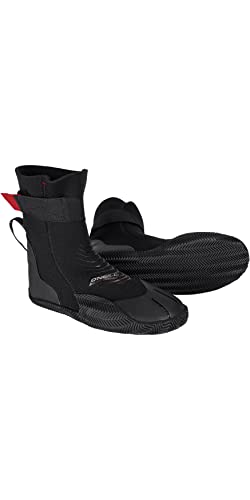
Lightweight Simplicity Pick – O'Neill Youth Heat 3mm Boot
O'NEILL Unisex Child Youth Heat 3mm Rt Booties Wetsuit Accessories, Black, Medium US
Check Price On AmazonThis O’Neill Youth Heat boot is a straightforward option for children’s boating and other water activities. Its 3mm neoprene construction provides a lighter alternative to thicker wetsuit boots for children.
Best For: Youth boating and general water use when a simple pull-on 3mm neoprene boot is preferred.
Pros:
- 3mm neoprene offers a lighter profile than 5mm boots.
- Pull-on closure keeps the design simple to use.
- Made for youth and listed for boating activities.
Cons:
- The notes do not specify a reinforced or puncture-resistant sole.
- The supplied size is medium, so fit should be verified before ordering.
With its uncomplicated pull-on design and moderate 3mm thickness, this boot is suited to families seeking a basic youth water boot without added closure hardware.
Beach Activity Value Pick – Kids Neoprene Diving Boots
These 3mm neoprene wetsuit boots for children are built for varied beach and water activities, including snorkeling, swimming, diving, sailing, and kayaking. A grippy vulcanized rubber sole is intended to improve traction on sand and other surfaces.
Best For: Children and toddlers needing flexible, lightweight boots for beach outings and multiple water sports.
Pros:
- Anti-slip rubber sole is designed for grip and control.
- 3mm neoprene helps retain warmth in cooler water.
- Flexible, lightweight, washable, and slip-resistant design.
- Pull-on construction is simple for beach and water use.
Cons:
- The product notes explicitly state that the boots are not completely waterproof and may let water in.
- They may provide less insulation than thicker 5mm options.
This is a versatile beach-oriented choice with useful traction features. Treat it as a water-resistant neoprene boot rather than a fully sealed waterproof boot.
Secure Fit Pick – O'Neill Youth Heat 3mm Round Toe Boot
O'NEILL Unisex Child Youth Heat 3mm Rt Booties Wetsuit Accessories, Black, X-Large US
Check Price On AmazonThis O’Neill Youth Heat 3mm round-toe boot uses fluid-flex neoprene and construction details aimed at helping the boot stay comfortable during boating and water activities. Its anti-flush shin strap and glued, blind-stitched seams add functional detail beyond a basic pull-on boot.
Best For: Youth boating when flexible neoprene and a shin strap are useful for a more secure fit.
Pros:
- 100% fluid-flex neoprene supports flexibility.
- Anti-flush shin strap is designed to help limit water flushing.
- Glued and blind-stitched seams provide reinforced construction.
- 3mm thickness offers moderate insulation without the bulk of thicker boots.
Cons:
- The listed size is X-Large, so sizing requires careful checking.
- The supplied notes do not specify a puncture-resistant sole.
Compared with a basic 3mm pull-on model, this version stands out for its fluid-flex material, shin strap, and seam construction. It is a sensible option when fit security is a priority.
Warmth & Beach Protection – XUKER Kids 3mm Diving Boots
For children who need wetsuit boots for children for snorkeling, swimming, or beach play, the XUKER 3mm booties focus on warmth, underfoot protection, and traction. Their neoprene-and-nylon construction helps retain heat, while the rubber sole is designed for grip on sandy surfaces.
Best For: Toddlers and children taking part in beach activities, snorkeling, swimming, surfing, kayaking, or similar water sports.
Pros:
- 3mm neoprene helps provide warmth in cooler water.
- Thick neoprene and nylon create a barrier against rocks and other underwater objects.
- Anti-slip rubber sole is suited to sand and beach surfaces.
- Side-zip closure makes the boots practical to put on and remove.
Cons:
- They are not fully waterproof, so water will enter the boots.
- Cushioning is listed as minimal.
The XUKER is a practical choice when warmth and basic beach protection matter more than keeping feet completely dry. Parents should expect some water entry and choose the size carefully for a secure fit.
Lightweight Reef Coverage – O'Neill Youth Reactor 2mm Booties
The O’Neill Reactor 2mm booties are a streamlined option for families shopping for wetsuit boots for children who participate in surfing or diving. They combine Fluid Foam neoprene with a textured rubber sole and flat-stitch construction for a lightweight water-shoe design.
Best For: Baby-girls and youth users who need pull-on booties for surfing, diving, and general water activities.
Pros:
- 2mm Fluid Foam neoprene provides a lighter layer than thicker dive boots.
- Textured rubber sole supports traction.
- Flat-stitch construction is designed for a comfortable, low-profile fit.
- Pull-on design keeps the closure simple.
Cons:
- The 2mm thickness may offer less insulation than 3mm or thicker alternatives.
- There is no adjustable strap listed for customizing the fit.
Choose the O’Neill Reactor when a lightweight, pull-on bootie is the priority. Its 2mm construction suits active water use, while the textured rubber sole adds useful traction for reef and beach environments.
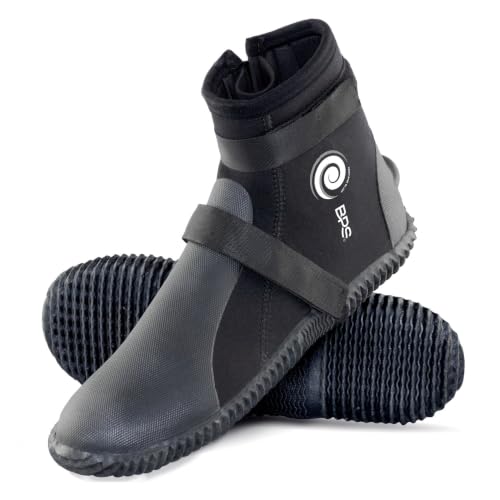
Secure Fin-Friendly Fit – BPS Neoprene Dive Boots
For older children or teens who need wetsuit boots for children with a more secure, adjustable fit, the BPS dive boots offer several practical features. The 3mm version has neoprene construction, a hard rubber sole, two Velcro straps, and a heel ridge intended to help keep fins in place.
Best For: Water-sports users who need firm footing and fin compatibility for snorkeling, diving, surfing, paddleboarding, rafting, or canyoning.
Pros:
- Hard-wearing vulcanized rubber sole is designed for grip on wet or smooth surfaces.
- Two Velcro straps help reduce excess space and limit water entry from the top.
- Heel ridge is designed to help prevent swim fins from slipping off.
- Available in 3mm, 5mm, and 7mm thickness options.
Cons:
- The boots are not fully waterproof; water can still enter.
- The supplied title is primarily sized and marketed for men and women, so parents should check the size chart carefully for a child.
- The hard sole may feel less lightweight than a simple beach bootie.
The BPS boots stand out for adjustability, sole durability, and fin use. They are worth considering for a larger child or teen involved in more demanding water sports, provided the measurements match the wearer.
Best Sand-Ready Pick – XUKER Kids 3mm Neoprene Water Socks
For families comparing wetsuit boots for children, the XUKER Kids Neoprene Water Socks emphasize warmth, traction, and sand resistance. Their 3mm neoprene construction is designed for swimming, beach play, diving, and other outdoor water activities.
Best For: Children ages 3–12 who need flexible water socks for beach trips, swimming lessons, and mixed water-and-land activities.
Pros:
- 3mm neoprene and nylon help provide warmth and flexible all-day comfort.
- Anti-slip dotted soles improve traction on wet surfaces.
- Sand-proof ankle closure helps keep sand, dirt, and water out.
- Glued and blind-stitched seams, plus reinforced heel and toe areas, support durability.
Cons:
- Hand wash only according to the care instructions.
- These are water socks rather than rigid, structured boots.
The XUKER is a practical choice when sand control and flexible comfort matter most. Its size range from XS to XL and multiple color options make it suitable for many toddlers, children, and youths.
Best Fin-Compatible Option – Skyone 3mm Neoprene Dive Boots
Although sized for adults, the Skyone 3mm neoprene dive boots are worth distinguishing in a wetsuit boots for children roundup because their fin-compatible design may suit older youths who fit the stated US 6–11 range. They combine thermal neoprene with rubber soles for diving and other water sports.
Best For: Older children or teens whose feet fit the listed US 6–11 range and who need boots for fins, scuba diving, snorkeling, or board sports.
Pros:
- Stretchy 3mm neoprene provides a snug, comfortable fit and warmth.
- Rear heel design is made to work with open-heel diving fins.
- Non-slip rubber soles help protect against sharp rocks and rough coral.
- Glued and blind-stitched seams support frequent use.
Cons:
- The stated size range is US 6–11 and is intended for men and women, so it may not fit younger children.
- The product is water resistant but not completely waterproof.
- Ankle drawstring adjustment may be more involved than a simple slip-on design.
This is the most specialized option here, particularly for fin use and heavier water-sport activities. Carefully compare measurements before choosing it for a child or teen, since the supplied sizing information targets adult-sized feet.
Best High-Ankle Coverage – Intbost Kids 3mm Neoprene Water Socks
These Intbost 3mm kids water socks offer high-ankle coverage for families shopping for wetsuit boots for children. The design focuses on warmth, foot coverage, traction, and sand control for swimming, beach play, kayaking, paddle boarding, and snorkeling.
Best For: Little kids who need high-top water socks with adjustable closure and coverage for beaches, pools, and outdoor water sports.
Pros:
- 3mm neoprene helps insulate feet in cold pools and open water.
- High-ankle coverage and durable soles help shield feet from rough ground and rocks.
- Updated non-slip sole material is designed to improve traction.
- Adjustable hook-and-loop strap helps block sand and secure the fit.
Cons:
- The slim fit may require careful size selection.
- The lightweight fabric may provide less substantial structure than a traditional dive boot.
- The supplied details list machine washing, but care should still follow the product instructions.
Choose the Intbost when high-ankle coverage and an adjustable sand-blocking strap are priorities. Its flexible construction is suited to active children, though parents should pay close attention to fit before water use.
How We Picked the Best Wetsuit Boots for Children
We focused on features that matter during real water activities: neoprene thickness, sole traction, foot protection, closure design, flexibility, and sizing suitability for children. The selection includes lightweight socks for beaches and pools, as well as more structured boots for snorkeling, scuba diving, surfing, and rocky shorelines.
Because children’s feet vary widely in shape and growth rate, we also considered practical versatility. A boot that is warm and protective but difficult to put on may be frustrating for younger users, while a very flexible water sock may not provide enough protection on rough terrain.
Quick Comparison
| Best for | Look for | Typical design |
|---|---|---|
| Warmth in cooler water | 5mm or thicker neoprene | Insulated boot with secure opening |
| Beach and pool use | Lightweight, flexible construction | 3mm water sock or reef bootie |
| Rocky shorelines | Hard or reinforced anti-slip sole | Structured dive boot |
| Snorkeling and diving | Close fit and durable sole | Neoprene boot with rubber outsole |
Key Buying Factors for Wetsuit Boots for Children
Neoprene Thickness and Warmth
Thicker neoprene generally provides more insulation, but it can feel bulkier and less flexible. A 2mm or 3mm boot is often suitable for mild conditions, splash play, and warm-water activities. For colder water, a 5mm design can offer more warmth, provided the child can move comfortably.
Fit and Sizing
Boots should fit snugly without pinching toes or restricting circulation. Excess space allows water to circulate and can create blisters, while an overly tight fit becomes uncomfortable quickly. Measure the child’s foot and compare it with the manufacturer’s size chart rather than relying solely on age or shoe size.
Sole Protection and Traction
For beaches, reefs, boat decks, and rocky entries, prioritize rubber or reinforced anti-slip soles. Thin water socks are lighter and easier to pack, but they offer less protection from sharp stones and rough surfaces. Check that the tread is substantial enough for the intended terrain.
Entry and Security
Pull-on designs are convenient, especially for younger children. Stretch panels and wide openings make dressing easier, while a close ankle fit helps keep sand and water from entering. Avoid loose boots that can slip off during swimming or boarding.
Who Should Buy Which Wetsuit Boots for Children?
For Toddlers and Casual Beach Days
Choose a lightweight 2mm or 3mm bootie or water sock with a flexible anti-slip sole. These are easier for small children to wear and work well for pools, sandy beaches, and warm-weather play.
For Snorkeling, Diving, and Rocky Beaches
Select a structured neoprene dive boot with a durable rubber sole. Better foot protection and traction are worth the extra weight when children will walk over rocks or use fins.
For Cooler Water
Look for thicker neoprene, such as 5mm, and a snug ankle seal. Prioritize warmth without sacrificing toe room or mobility.
For Frequent Water-Sport Use
Invest in reinforced construction, dependable tread, and materials that can withstand repeated rinsing and drying. Rinse boots with fresh water after each use, remove sand, and dry them fully away from direct heat to extend their life.