The best composting camping toilets make remote travel more comfortable without requiring a permanent bathroom installation. The right model can reduce odors, simplify waste handling, and fit neatly in a van, RV, boat, tent setup, or emergency kit.
This roundup compares ten portable options, including urine-diverting composting toilets and simpler bucket-style camping toilets, so you can choose based on space, capacity, cleanup, and intended use.
Best 10 Composting Camping Toilets Picks for 2026
Best Adjustable Pick

- Lightweight, compact design for mobile use
- Two adjustable seat heights
- Urine-diverting with no power or water required
Best For: Campervans and compact camping spaces
Best Electric Van Toilet
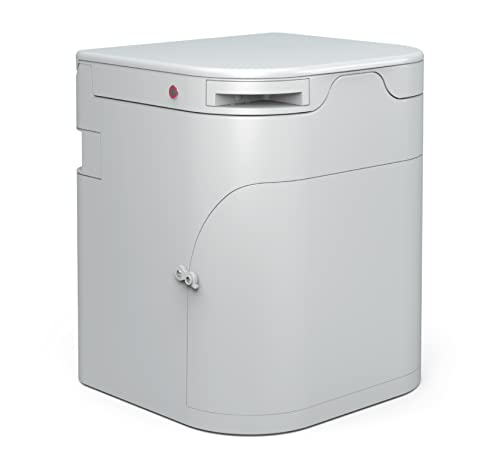
- Compact 15-by-16-inch footprint
- Push-button 12V solids agitator
- Urine diversion with quiet ventilation
Best For: Vans, RVs, boats, and tiny homes with 12V power
Best High-Capacity Option
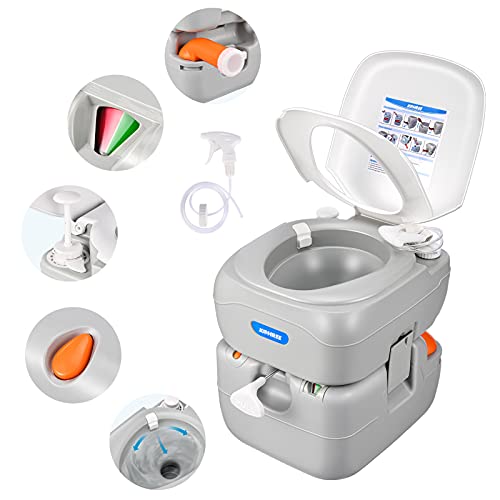
- 5.8-gallon waste capacity
- Fresh-water flush system with level indicator
- 440-pound weight capacity
Best For: RV travel, boats, camping, and emergency use
Best No-Power Portable Toilet

- No electricity or plumbing required
- Compact 12-pound portable design
- Urine-diverting bag-based waste system
Best For: Primitive camping, truck campers, and remote field setups
Best Folding Option

- 450-pound ABS construction
- Folds compactly for transport
- Includes bags, bio gel, and storage bag
Best For: Campers needing a lightweight, bag-based emergency toilet
Best True Composting Design
TRELINO Composting Toilet Evo S

- Separates urine and solid waste
- Waterless and chemical-free operation
- 330-pound recyclable ABS construction
Best For: Van life and camping setups wanting odor-conscious separation
Best Comfort-Focused Folding Toilet

- 15.7-inch ergonomic seat height
- Soft leather-and-board construction
- Folds quickly with handles and storage bag
Best For: Families and travelers prioritizing comfort over composting features
Best Separation Toilet

- Dry-separation design avoids chemical treatments
- Handles about 8–10 uses before disposal
- Compact for vans, boats, and car camping
Best For: Campers wanting a compact, chemical-free separation toilet
Best Folding Toilet
Adjustable Portable Camping Toilet

- Folds nearly flat for easy transport
- Eight height settings suit different users
- Includes bags, gel packs, and carry bag
Best For: Families and travelers prioritizing portability and adjustable height
Best Raised Commode
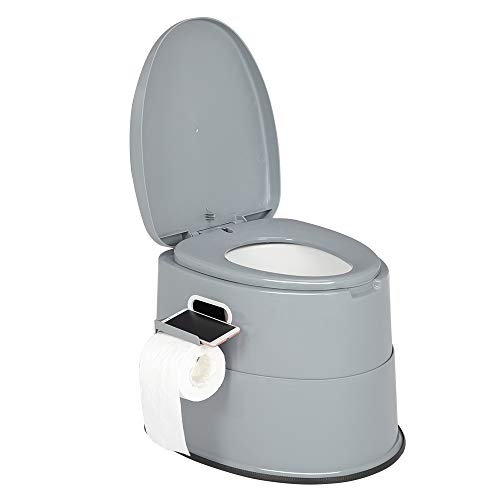
- Raised seat offers familiar adult comfort
- Detachable bucket simplifies emptying
- Nests for easier storage and transport
Best For: Campers wanting a taller, simple bucket-style portable toilet
Best Adjustable Pick – TROBOLO WandaGO
For shoppers comparing composting camping toilets, the TROBOLO WandaGO stands out as a compact, lightweight option with adjustable seat height and separate liquid and solid containers. Its no-electricity design suits mobile camping setups, while the closing lid and travel fastening system add convenience during transport.
Best For: Campervans, compact camping spaces, and users who want adjustable seating in a portable dry toilet.
Pros:
- Compact 10.4-pound design fits many campervan storage compartments.
- Two seat heights—12 or 17.2 inches—support different users.
- Urine-diverting, spill-protected design requires no chemicals, water, or electricity.
- Built-in urine level indicator and firmly closing lid simplify travel and maintenance.
Cons:
- Its 1.2-gallon liquid and 1.7-gallon solids containers require periodic emptying.
- The compact footprint may feel less spacious than a full-size toilet.
The WandaGO is a practical choice when portability and seating flexibility matter most. Its capacity and lightweight construction make it especially appealing for short trips and tightly packed mobile interiors.
Best Electric Van Toilet – OGO Origin
The OGO Origin is a space-conscious choice among composting camping toilets, designed around a 15-by-16-inch footprint for vans, RVs, boats, and tiny homes. Its 12V electric agitator mixes solids with a push button, while urine diversion and quiet ventilation support a more residential-style setup.
Best For: Full-time van lifers, retrofit RV owners, boat cabins, and compact builds with a 12V power source.
Pros:
- Small footprint fits tight layouts and corners.
- Push-button 12V agitator avoids manual cranking.
- Separates liquids into a 2.4-gallon bottle while keeping solids dry.
- Includes quiet fan ventilation, venting hose, power cable, and mounting screws.
Cons:
- Requires 12V power, unlike fully non-electric portable models.
- At 28 pounds, it is less convenient to move frequently.
Choose the OGO Origin if you are building a semi-permanent mobile bathroom and value push-button operation. It offers a polished, compact format, but its electrical requirement and heavier construction make it better suited to installed layouts than quick campsite deployment.
Best High-Capacity Option – Kohree Portable RV Toilet
The Kohree Portable RV Toilet is a flushable cassette-style option for shoppers considering composting camping toilets but wanting separate fresh-water and waste tanks. Its 5.8-gallon sewage capacity, level indicator, leak-resistant valve, and detachable tank make it suitable for camping, RVs, boats, and emergency indoor use.
Best For: Campers and RV users who prioritize high capacity, flushing, and a portable toilet that can serve multiple settings.
Pros:
- Large 5.8-gallon waste tank reduces how often it needs emptying.
- 3.2-gallon fresh-water tank supports approximately 110–120 flushes.
- Level indicator, rotating pour spout, and detachable tank aid servicing.
- Supports up to 440 pounds and includes a cleaning water gun.
Cons:
- It is a flush-based portable toilet rather than a urine-diverting dry composting model.
- Requires water and regular waste-tank cleaning.
- At 16.3 inches wide and 16.3 inches high, it needs more room than compact dry toilets.
The Kohree makes sense when capacity and familiar flushing are more important than waterless operation. It is versatile and sturdy, but buyers specifically seeking chemical-free, urine-diverting composting systems should consider the other models in this roundup.
Best No-Power Portable Toilet – OGO NOMAD
The OGO NOMAD is a straightforward option among composting camping toilets for remote trips where electricity and plumbing are unavailable. Its urine-diverting design, compact 12-pound body, and common 8-gallon bag system make it easy to transport and deploy in truck campers, rooftop tents, boats, or temporary shelters.
Best For: Primitive camping, truck campers, hunters, guides, and weekend adventurers without access to power.
Pros:
- Needs no electricity, plumbing, chemicals, or black tank connection.
- Compact 15.4-by-13-by-12.38-inch format is easy to store and move.
- Urine diversion helps keep solid waste dry and reduce odor.
- Uses widely available 8-gallon bags and includes two bags, coco coir, and a spray bottle.
Cons:
- Bag-based waste handling requires tying off and disposing of bags according to local guidelines.
- It lacks the powered agitation and ventilation features found on some installed models.
The NOMAD is a strong fit for uncomplicated, off-grid use. Its lightweight, no-power design favors portability and quick setup, while the bag system keeps cleanup simple for short trips and temporary camping locations.
Best Folding Option – Sckee Portable Camping Toilet
If you want composting camping toilets convenience without carrying a full-size unit, the Sckee portable toilet is a practical folding choice. Its ABS construction supports up to 450 pounds, while the compact folded profile suits cars, RVs, and other tight storage spaces. Note that it is a bag-based toilet rather than a separating composting model.
Best For: Campers, road trippers, RV owners, and anyone wanting a lightweight emergency toilet with familiar household-style features.
Pros:
- Supports up to 450 pounds and includes a contoured ergonomic seat.
- Folds to approximately 14.1 x 12.6 x 2.7 inches and weighs about 4.5 pounds.
- Includes waste bags, bio gel, a storage bag, phone tray, and toilet paper holder.
- Stain-resistant, odor-proof plastic is designed for easy wiping and cleanup.
Cons:
- Uses 12-gallon waste bags and bio gel rather than a waterless separating system.
- The supplied waste roll includes 12 bags, so additional bags may be needed for extended trips.
The Sckee stands out when portability, weight capacity, and quick setup matter most. It is a sensible backup or short-trip toilet, but shoppers specifically seeking a true separating composting design should consider the Trelino instead.
Best True Composting Design – TRELINO Composting Toilet Evo S
Among these composting camping toilets, the TRELINO Evo S is the dedicated separating model. It separates urine and solid waste, uses drying to help prevent odors, and avoids chemicals and water. Its compact format is suited to vans, tents, cars, and other small spaces.
Best For: Campers and van travelers who want a waterless, chemical-free toilet with separately removable containers.
Pros:
- Urine and solid waste are separated to help control odors.
- Uses no water or chemicals, reducing dependence on dump stations.
- Provides a 1.2-gallon urine container and 1.6-gallon solid waste container.
- Recyclable ABS construction supports up to 330 pounds and is water-resistant.
Cons:
- Its capacity is limited compared with larger fixed RV toilets.
- The unit weighs about 3.9 kilograms, making it heavier than some folding bag toilets.
- It costs more than basic portable toilets because of its separating design and specialized containers.
The Evo S is the strongest match for shoppers specifically seeking composting-style operation. Its separate containers and waterless design make maintenance more manageable, while the compact dimensions work well in mobile living spaces.
Best Comfort-Focused Folding Toilet – Ann Katy Upgrade XL
The Ann Katy Upgrade XL is a comfort-oriented alternative for shoppers comparing composting camping toilets with simpler portable designs. Its 15.7-inch height is intended to provide a more natural seated position, and the leather-and-density-board construction offers a softer feel than a standard plastic potty. It uses trash bags, so it is not a separating composting toilet.
Best For: Families, adults, and road travelers who prioritize seat height, a softer surface, and fast folding setup.
Pros:
- 15.7-inch height is designed for a more comfortable seated posture.
- Leather and density-board construction provides a softer alternative to cold plastic.
- Folds in seconds and includes handles, a storage pocket, and waterproof carrying bag.
- Can also function as a storage box, trash can, stool, or small table.
Cons:
- Relies on disposable trash bags rather than separating or composting waste.
- Only two custom trial-size trash bags are included.
- At about 2.68 kilograms, it is less lightweight than some compact folding models.
The Upgrade XL makes sense when comfort and versatility matter more than composting functionality. Its taller seat and soft covering may be appealing for extended trips, but buyers wanting odor-control separation should choose a dedicated composting model.
Best Separation Toilet – BOXIO Toilet Max+
For campers specifically comparing composting camping toilets, the BOXIO Toilet Max+ uses a dry-separation design instead of chemicals. Its compact form fits vans, boats, car trunks, and other tight camping setups, while the included components support simpler waste handling.
Best For: Car campers, van travelers, boat owners, and campers who want a compact separation toilet with chemical-free disposal.
Pros:
- Handles approximately 8–10 toilet uses before disposal is needed.
- Compact design is suited to vehicles, boats, and small camping spaces.
- Includes a urine canister, lid, plug, bags, clips, and HEMPLITTER components.
- Dry separation and leak-resistant components can help reduce odor.
Cons:
- At 11.4 pounds, it is heavier than some basic portable toilets.
- Its separation system requires managing solid waste bags and a separate urine container.
- The listed dimensions vary by configuration, so check the product size before choosing a storage location.
The BOXIO is a strong option when compact storage, chemical-free use, and separation are more important than the lightest possible weight. It is a more specialized choice than a simple bucket-style camping toilet.
Best Folding Toilet – Adjustable Portable Camping Toilet
Among composting camping toilets and portable alternatives, this folding model stands out for its adjustable height and very small folded profile. It includes waste bags and urine gel packs, making it a practical option for camping, hiking, road trips, and emergency use.
Best For: Families and travelers who need a lightweight toilet with adjustable height for adults, older users, and children.
Pros:
- Supports up to 400 pounds and offers an ergonomic seat with a 12-inch opening.
- Folds to approximately 12.5 × 12.5 × 3.2 inches and weighs about 2.6–2.75 pounds.
- Eight height settings adjust from 3.2 to 12.3 inches.
- Includes a carry bag, 12 waste bags, and 12 urine gel packs.
Cons:
- It uses waste bags and gel packs rather than a dry-separation composting system.
- Its folding design may offer less fixed-seat permanence than a dedicated camping toilet.
- Supplied bags and gel packs are consumable items that will need replenishing.
This is the most portable and height-flexible choice in the group. Choose it when folded storage, low weight, and user comfort matter more than a reusable separation setup.
Best Raised Commode – VINGLI Portable Toilet
The VINGLI Portable Toilet is a straightforward option for shoppers considering composting camping toilets but preferring a detachable bucket system. Its raised seat, nested construction, and removable paper holder make it useful for camping, boating, van travel, and temporary indoor use.
Best For: Campers and households wanting a taller, familiar-feeling portable commode for outdoor trips or emergency backup.
Pros:
- Detaches into two pieces and nests for more convenient transport and storage.
- Raised design measures about 15.7 inches high when assembled.
- Removable inner bucket supports easier emptying and can be used with toilet bags.
- Dual lid seals help reduce odor, while the paper holder also works as a phone seat.
Cons:
- It weighs 5.5 pounds, making it less lightweight than folding models.
- The suggested user limit is under 300 pounds.
- It is a bucket-style portable toilet, not a dedicated dry-separation composting toilet.
The VINGLI makes sense for users who value a higher seat and simple bucket cleanup. It is especially practical as a vehicle, hunting-shed, or home emergency toilet, though it lacks the separation features of the BOXIO.
How We Picked These Composting Camping Toilets
We selected these models to cover the main ways campers handle sanitation away from conventional plumbing. The list includes dedicated urine-diverting composting toilets, compact self-contained units, folding toilets, and portable cassette-style options. We focused on practical criteria: footprint, portability, user comfort, waste separation, capacity, cleaning requirements, odor management, and suitability for vans, RVs, boats, cars, campsites, and emergency use.
Because “composting toilet” is sometimes used broadly in product listings, check the waste system carefully. True urine-diverting models separate liquid and solid waste, while basic portable toilets generally collect waste in a bucket, cassette, or disposable bag and may require different disposal methods.
Quick Comparison
- Best for dedicated off-grid use: OGO Origin, OGO NOMAD, TROBOLO WandaGO, and TRELINO Evo S.
- Best for compact vehicle setups: BOXIO Toilet and the OGO Origin.
- Best for occasional camping or emergencies: Kohree, VINGLI, Sckee, Ann Katy, and the height-adjustable folding toilet.
- Best for easier liquid and solid waste management: Urine-diverting composting models.
- Best for simple, low-cost portability: Folding and bucket-style designs that use liners or removable containers.
Key Buying Factors for Composting Camping Toilets
Size and Available Floor Space
Measure the storage and operating area before buying. A compact footprint matters in a van, boat, tent, or small bathroom, while a larger seat may be more comfortable for adults. Also check the unit’s height, especially if children or users with limited mobility will use it.
Waste Separation and Odor Control
Urine diversion can help keep solid waste drier and reduce odors when the toilet is used and maintained correctly. Look for secure seals, ventilation compatibility, easy-to-remove containers, and clear cleaning instructions. Basic bag-lined toilets are simpler but usually provide less long-term odor control.
Capacity and Emptying Routine
Choose capacity according to the number of users and trip length. Small containers save space but need more frequent emptying. Consider where liquid and solid waste can be disposed of legally and hygienically before relying on any toilet for extended off-grid stays.
Portability, Durability, and Comfort
For frequent relocation, prioritize manageable weight, sturdy latches, carrying handles, and a stable base. A padded or full-size seat can make a major difference on longer trips. Weight limits are especially important when selecting folding models.
Cleaning and Included Accessories
Check whether the toilet includes liners, waste bags, absorbent material, a paper holder, or ventilation components. Removable buckets and smooth interior surfaces generally make cleaning easier. Confirm replacement-bag and separator availability before committing to a proprietary system.
Who Should Buy Which Composting Camping Toilets?
Choose a dedicated composting toilet if you camp frequently, live or travel in a van or RV, or need a more organized long-term waste solution. These models typically cost more but can offer better separation, comfort, and odor management.
Choose a folding or bag-lined toilet if you need an affordable backup, occasional campsite toilet, child-friendly option, or emergency sanitation solution. They are usually easier to store and deploy, though ongoing waste disposal is more hands-on.
Choose a compact model when every inch matters in a car, boat, or small camper. Choose a larger or height-adjustable model when adult comfort, accessibility, or frequent daily use takes priority. Before ordering, verify dimensions, maximum load, container capacities, cleaning requirements, and local disposal rules.