Choosing the right battery can make the difference between a smooth campsite setup and a frustrating power shortage. The best options balance capacity, weight, recharge speed, and long-term reliability.
Below, we focus on the top picks for different camping needs, from lightweight portable power to larger batteries for RVs and off-grid use.
Best 10 Deep Cycle Batteries for Camping Picks for 2026
Budget AGM Pick
Weize 12V 100Ah AGM Deep Cycle Battery

- Sealed AGM, maintenance-free design
- Low 1-3% monthly self-discharge
- 1100A max discharge for short bursts
Best For: Campers wanting a simple AGM battery for RV or off-grid use
Lithium Upgrade
DUMFUME 12V 150Ah LiFePO4 Battery

- 1920Wh capacity with 4,000+ cycles
- Lightweight 41.03 lb design
- 100A BMS with series/parallel expansion
Best For: Campers upgrading to a lighter lithium battery for longer runtimes
Trusted AGM Classic
Renogy 12V 100Ah Deep Cycle AGM Battery

- Sealed AGM with stable chemistry
- Operates from -4 to 140°F
- Supports appliances like fridges and CPAPs
Best For: Campers needing a proven AGM battery for variable temperatures
Dual-Purpose Marine Pick
Interstate 12V 70Ah AGM Group 24 Battery

- Dual-purpose starting and deep-cycle use
- Pure lead AGM built for longer life
- Marine/RV fit with Group 24 size
Best For: Campers who also need a battery for boating or trolling motors
High-Capacity AGM Pack
Renogy 12V 100Ah 2-Pack AGM Batteries

- Two 12V 100Ah batteries
- Sealed AGM, maintenance-friendly design
- 3% self-discharge and cold/heat tolerance
Best For: Campers needing a larger AGM power bank for RVs or off-grid use
Portable AGM Pick

- Lightweight 32 lb sealed AGM battery
- 12V 50Ah for smaller setups
- Trolling motor compatible
Best For: Campers who need a portable battery for boats or lighter power loads
Straightforward 100Ah Option
WEIZE 12V 100Ah Deep Cycle Battery

- 12V 100Ah sealed lead-acid battery
- Maintenance-free and spill-proof
- 3% self-discharge for storage
Best For: Campers needing a simple, general-purpose battery for RV or solar setups
Best with Extra Features
12V 100Ah LiFePO4 for RV, Camping & Solar

- 22.57 lb Group 24 lithium battery
- Built-in smart BMS protection
- 4000+ to 15000 cycle rating
Best For: Campers wanting a lighter lead-acid replacement with long cycle life
Compact AGM Pair
12V 35Ah Deep Cycle AGM Battery Pack of 2
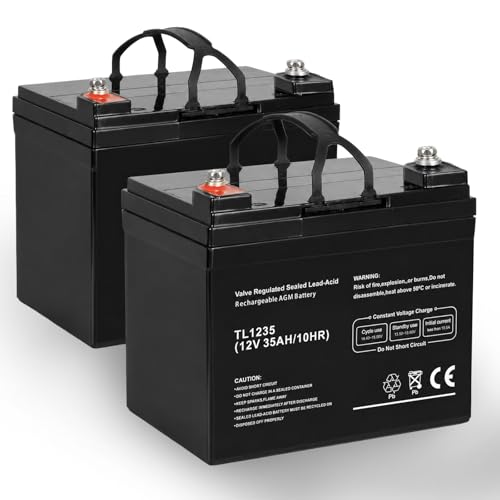
- Maintenance-free sealed AGM design
- Pack of 2 for flexible use
- Leak-proof ABS case with low self-discharge
Best For: Light-duty camping setups needing a sealed two-battery AGM pack
High-Capacity AGM Pick
12V 100Ah Deep Cycle AGM Battery

- 100Ah sealed AGM capacity
- 1150A max discharge current
- 1–3% monthly self-discharge
Best For: Larger camping systems that need a maintenance-free 100Ah battery
Budget AGM Pick – Weize 12V 100Ah AGM Deep Cycle Battery
If you want deep cycle batteries for camping with a familiar AGM design, the Weize 12V 100Ah is a straightforward option. It’s sealed, maintenance-free, and built for steady 12V power in RVs, solar setups, and off-grid gear, with low self-discharge that helps it hold a charge between trips.
Best For: Campers who want a basic, maintenance-free AGM battery for RV or campsite power.
Pros:
- Sealed AGM construction helps prevent acid leakage and reduces upkeep.
- Low 1-3% monthly self-discharge supports storage between camping seasons.
- 1100A max discharge current can handle short bursts of demand.
- Works across RV, solar, trolling motor, marine, and camping uses.
Cons:
- Weighs 57 pounds, so it is not a lightweight carry option.
- Only a 1-year warranty is included.
- Best performance depends on keeping the battery charged and within the recommended temperature range.
Overall, this Weize battery is a practical AGM pick if you want dependable, no-fuss power without moving into lithium pricing.
Lithium Upgrade – DUMFUME 12V 150Ah LiFePO4 Battery
For deep cycle batteries for camping where weight and cycle life matter, this DUMFUME 12V 150Ah LiFePO4 battery stands out. It delivers 1920Wh of energy, comes with a built-in 100A BMS, and is much lighter than comparable lead-acid batteries, making it a strong fit for RV and camper van power systems.
Best For: Campers who want a lightweight lithium battery with long cycle life and expandability.
Pros:
- Over 4,000 cycles to 80% capacity for long service life.
- Weighs only 41.03 lbs, making installation easier than lead-acid options.
- 100A BMS adds protection against overcharge, over-discharge, short circuit, and overheating.
- Supports series and parallel setups up to 4S4P for larger systems.
Cons:
- Not designed for engine starting.
- Requires temperatures of 5°C or higher for battery performance.
- Extended storage calls for a maintenance cycle every 6 months.
This is the strongest pick here if you want a modern camping battery that saves weight and scales well for larger power needs.
Trusted AGM Classic – Renogy 12V 100Ah Deep Cycle AGM Battery
If you prefer proven AGM deep cycle batteries for camping, the Renogy 12V 100Ah model is a dependable middle-ground choice. It is sealed, supports series and parallel connections, and is designed for stable output in RVs, cabins, and solar systems, including colder or hotter conditions.
Best For: Campers who want a widely used AGM battery with strong temperature tolerance.
Pros:
- Sealed AGM design offers higher chemical stability and less troubleshooting.
- Works from -4 to 140°F for better extreme-temperature performance.
- 1100A max discharge can run common camping appliances like a fridge or CPAP.
- Low self-discharge below 3% per month helps with storage.
Cons:
- At 63.9 pounds, it is heavy for a 100Ah battery.
- Warranty is a 2-year prorated material and workmanship policy.
- Still a lead-acid battery, so it is less compact than lithium options.
For campers who want a familiar AGM battery from a well-known brand, this Renogy unit is a solid, easy-to-understand choice.
Dual-Purpose Marine Pick – Interstate 12V 70Ah AGM Group 24 Battery
For campers who also use a boat or trolling motor, this Interstate dual-purpose AGM battery fits the deep cycle batteries for camping category with extra flexibility. It is built as a 2-in-1 cranking and deep-cycle battery, so it can start a motor and keep accessories running during extended use.
Best For: Campers who need one AGM battery for both starting and accessory power.
Pros:
- Dual-purpose design can crank the engine and power accessories.
- Pure lead AGM construction is built for longer life than conventional flooded batteries.
- Designed for extended deep-cycle use with thick plates and repeated recharge capability.
- Group 24 size and marine terminals suit RV and boat applications.
Cons:
- 70Ah capacity is lower than the 100Ah and 150Ah options in this roundup.
- Heavier than it may seem for its size at 44.6 pounds.
- Less ideal if you only want a dedicated house battery, since it is a dual-purpose model.
This is the most flexible pick if your camping setup overlaps with marine use and you want a battery that can do both jobs.
High-Capacity AGM Pack – Renogy 12V 100Ah 2-Pack AGM Batteries
If you’re comparing deep cycle batteries for camping, this Renogy 2-pack is built for bigger power needs in RVs, cabins, and off-grid setups. The sealed AGM design keeps maintenance simple, while the 100Ah capacity per battery and 3% self-discharge rate make it a practical option for storing power between trips.
Best For: Campers who want a higher-capacity AGM battery pair for RV or off-grid power needs.
Pros:
- Two 12V 100Ah batteries provide substantial total capacity for larger camping setups.
- Sealed AGM construction is designed for safety and easier troubleshooting than some other chemistries.
- 3% self-discharge rate helps the batteries hold charge well in storage.
- Rated for strong discharge performance in extreme temperatures from -4 to 140°F.
Cons:
- Two-battery pack may be more than small or minimalist camping rigs need.
- AGM lead-acid batteries are typically heavier than lighter alternatives.
- Requires enough space and setup for a dual-battery system.
This is a solid pick if you need dependable stored power and value a sealed, stable battery design for camping. Its main advantage is capacity, especially when you want to support more demanding RV or cabin loads.
Portable AGM Pick – Newport 12V 50Ah AGM Battery
For campers looking for a compact option among deep cycle batteries for camping, this Newport 12V 50Ah AGM battery offers a lighter, easier-to-move package. It’s sealed, leak-proof, and designed for marine use, which can be useful when you need dependable power for smaller setups or trolling motor compatibility.
Best For: Campers who want a lighter sealed battery for small boats or modest power needs.
Pros:
- Weighs 32 lbs, making it easier to transport and install.
- Sealed AGM lead-acid construction adds durability and leak protection.
- 12V 50Ah capacity suits smaller electrical needs.
- Trolling motor compatible for camping trips that include boating.
Cons:
- 50Ah capacity is lower than larger camping batteries.
- Best fit is more specialized toward marine use than broad campsite power.
- Only a 1-year limited warranty is listed.
This battery makes sense when portability matters more than maximum runtime. It’s a straightforward choice for lighter-duty camping and marine setups where sealed AGM reliability is the main priority.
Straightforward 100Ah Option – WEIZE 12V 100Ah Deep Cycle Battery
Among deep cycle batteries for camping, this WEIZE 12V 100Ah model stands out as a straightforward sealed lead-acid option for RVs, cabins, solar systems, and off-grid use. It includes a 3% self-discharge rate and a maintenance-free, spill-proof design, which makes it practical for buyers who want simple backup power without extra upkeep.
Best For: Campers who want a basic 100Ah sealed battery for RV, solar, or backup use.
Pros:
- 12V 100Ah capacity gives solid runtime for camping and off-grid setups.
- Maintenance-free, spill-proof sealed lead-acid design.
- 3% self-discharge rate helps preserve stored charge.
- Fits a wide range of uses, including RV, solar, marine, and emergency power.
Cons:
- Single-battery setup means less total capacity than a 2-pack option.
- At 60 pounds, it is not especially easy to move.
- Lead-acid construction is generally bulkier than newer battery types.
This is a practical all-around choice if you want one dependable 100Ah battery for camping without overcomplicating the setup. It focuses on utility and compatibility rather than premium features.
Best with Extra Features – 12V 100Ah LiFePO4 for RV, Camping & Solar
If you’re comparing deep cycle batteries for camping and want a lighter, longer-lasting upgrade, this 12V 100Ah LiFePO4 option is built for energy storage in RVs, marine setups, trolling motors, and off-grid use. It’s designed as a drop-in replacement for Group 24 lead-acid batteries, with a compact footprint and much lower weight for easier handling.
Best For: Campers and RV owners who want a lightweight lithium replacement for lead-acid batteries.
Pros:
- 22.57 lb lithium battery is much lighter than typical lead-acid options.
- Built-in smart BMS helps protect against overcharge, over-discharge, over-current, and short-circuit issues.
- Rated for 4000+ cycles at 100% DOD, 6000 at 80% DOD, and up to 15000 at 60% DOD.
- Group 24 size makes it broadly compatible with common battery boxes and vehicle setups.
Cons:
- Not intended for start-up applications.
- Charging guidance is specific, with a recommended 14.6V charging voltage and 20A current.
For camping buyers who value long cycle life and easier portability, this model stands out as a practical lithium upgrade. Its strengths are clear: lighter weight, built-in protection, and a form factor that fits many common installations.
Compact AGM Pair – 12V 35Ah Deep Cycle AGM Battery Pack of 2
For shoppers comparing deep cycle batteries for camping on a smaller budget or with modest power needs, this 2-pack of 12V 35Ah AGM batteries offers a sealed, maintenance-free build. The design is aimed at RV, camping, marine, off-grid, and backup power use, with leak-proof construction and simple wiring via M6 bolts.
Best For: Light-duty camping and backup setups that benefit from a sealed AGM two-battery pack.
Pros:
- Maintenance-free sealed lead-acid design with AGM technology.
- Pack of 2 adds flexibility for paired or distributed setups.
- Heavy-duty ABS casing is built for vibration resistance and leak-proof safety.
- Low self-discharge helps it store more conveniently between uses.
Cons:
- 35Ah capacity is much smaller than larger camping batteries.
- Lead-acid construction is heavier and less advanced than lithium options.
- 1-year warranty is shorter than some premium alternatives.
This pack makes sense if you want a straightforward AGM solution for lighter camping loads. It’s less about maximum runtime and more about getting a sealed, dependable battery pair for basic off-grid use.
High-Capacity AGM Pick – 12V 100Ah Deep Cycle AGM Battery
If your shopping list for deep cycle batteries for camping calls for a larger AGM option, this 12V 100Ah model is built for RVs, solar, marine, and off-grid systems. It emphasizes a rugged, vibration-resistant ABS casing, leak-proof safety, and low monthly self-discharge for storage-friendly use.
Best For: Campers and RV users who want a 100Ah sealed AGM battery for higher-capacity setups.
Pros:
- 100Ah capacity suits larger camping and off-grid power demands.
- 1150A max discharge current supports demanding systems.
- Only 1–3% monthly self-discharge helps maintain charge during storage.
- AGM construction is maintenance-free and built for tough conditions.
Cons:
- Heavier lead-acid design compared with lithium alternatives.
- 1-year warranty is relatively limited.
- Best suited to energy storage rather than lighter, portable use.
This battery is the stronger AGM pick if capacity matters more than weight. It fits camping buyers who want a familiar sealed battery format and enough reserve power for larger systems.
How We Picked the Best Deep Cycle Batteries for Camping
We focused on real-world camping priorities: usable capacity, cycle life, maintenance needs, charging compatibility, portability, and weather resistance. We also considered whether a battery is better suited for occasional weekend trips or frequent off-grid use.
Quick Comparison
If you want the simplest setup, AGM batteries are usually the easiest drop-in choice. If you want lower weight, faster charging, and longer cycle life, LiFePO4 models are often the better long-term value. Smaller Ah ratings work for basic lights and devices, while 100Ah and above are better for fridges, fans, and heavier loads.
Key Buying Factors for Deep Cycle Batteries for Camping
Capacity and Runtime
Match battery size to your power draw. A 35Ah or 50Ah battery may be enough for lights and phone charging, while 100Ah is a more versatile baseline for camping. Larger 150Ah batteries are best when you need longer runtime or plan to run more appliances.
Battery Chemistry
AGM batteries are sealed, familiar, and usually less expensive upfront. LiFePO4 batteries cost more at purchase, but they tend to be lighter, charge faster, and last far longer through repeated cycles.
Weight and Portability
If you move your battery often or have limited trailer payload, weight matters. Lithium batteries are much easier to carry than equivalent AGM units, which can be a major advantage for portable camping setups.
Charging and Compatibility
Make sure your charger, converter, or solar controller supports the battery type you choose. Some batteries are more forgiving than others, but correct charging is essential for performance and lifespan.
Durability and Environment
For camping, look for sealed construction, vibration resistance, and water or dust protection when possible. Marine-rated and IP65-style designs can be a smart choice for rugged use.
Who Should Buy Which Deep Cycle Batteries for Camping?
Choose AGM if you want a straightforward, budget-friendly battery for weekend camping, RV backups, or simple 12V systems.
Choose LiFePO4 if you camp often, need lighter weight, or want the best long-term cycle life and charging efficiency.
Choose smaller batteries if you only need power for lights, small electronics, or a compact portable setup.
Choose larger 100Ah to 150Ah batteries if you run a fridge, inverter, fan, or other higher-demand gear and want fewer recharge stops.
For most buyers, the best Deep Cycle Batteries for Camping are the ones that match your actual electrical load, travel style, and charging setup—not just the biggest capacity on the shelf.