Choosing a large capacity deer feeder can save time, reduce refill trips, and help you keep a more consistent feeding schedule through the season.
Below, we focus on practical differences that matter most: storage size, feed delivery style, durability, and control options for different hunting setups.
Best 10 Large Capacity Deer Feeder Picks for 2026
High-Capacity Gravity Pick

- 348 lb hopper capacity
- UV-protected HDPE build
- Three-tube gravity feed head
Best For: hunters wanting a durable, maintenance-free gravity feeder
Single-Post Stable Setup
Banks Outdoors Feedbank 300 lb. Capacity Deer and Wildlife Feeder

- 300 lb capacity
- Adjustable feed ports
- Watertight cover and single-post mount
Best For: hunters wanting a compact pole-mounted feeder
Timed Patterning Choice
Wildgame Innovations Quick-Set 270 lb Game Feeder

- 270 lb capacity for corn or pellets
- Digital timer with up to four daily feed times
- Tripod design with 30-foot radius
Best For: hunters wanting timed, portable feeding control
Blended-In Portable Option
Banks Outdoors Feedbank Timber 250 lb. Capacity Deer and Wildlife Feeder
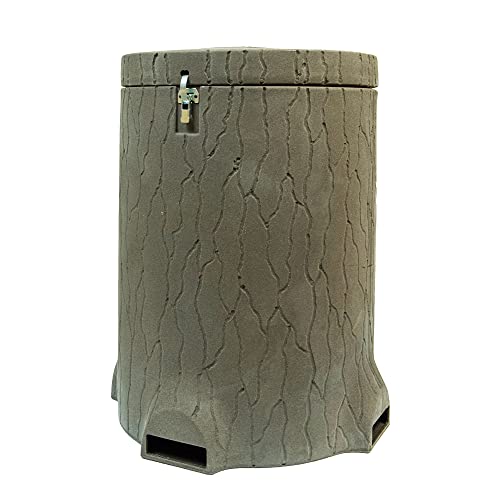
- 250+ lb capacity
- UV-stabilized polyethylene construction
- Realistic bark pattern and watertight cover
Best For: hunters wanting a portable feeder that blends into the woods
Quick-Set Pro
Durable, Varmint-Proof Feeding

- 270 lb hopper with 50-foot feed radius
- Up to 6 programmable feed times daily
- Rigid varmint guard and durable tripod build
Best For: portable, varmint-resistant deer feeding setups
Big Capacity Steel

- 450 lb feed capacity for fewer refills
- Zinc-plated steel with rust and water resistance
- Stable 78-inch tripod with gravity cone design
Best For: high-volume hunting setups that need fewer refills
Pro Hunter III

- 250 lb hopper with 6-foot fill height
- Bluetooth app control from up to 300 feet
- Solar-ready with up to 10 feed events daily
Best For: hunters who want remote scheduling and easy programming
Heavy-Duty Gravity Pickup
KUAFU 450 LB Galvanized Steel Feeder

- 450 lb max load for fewer refills
- Cone design feeds four ports evenly
- Galvanized steel helps resist rust
Best For: Hunters and land managers needing a rugged, no-power feeder
Smart Remote Monitor
Moultrie Connected 250 Lb Tripod Feeder

- 4G LTE app control from anywhere
- Feed level detector helps avoid wasted trips
- Includes 6V solar panel for charging
Best For: Buyers who want remote control and feed monitoring
Low-Maintenance Gravity Build
Moultrie 250 Lb Gravity Tripod Feeder

- Battery-free gravity feed design
- 250 lb hopper for less frequent refills
- Triple funnels handle corn and pellets
Best For: Hunters and managers wanting a simple, no-power feeder
High-Capacity Gravity Pick – BOSS BUCK 350 LB Deer Feeder
If you want a large capacity deer feeder with a straightforward gravity design, the BOSS BUCK 350 LB model is built for long stretches between refills. Its 348 lb hopper, UV-protected HDPE body, and included protein gravity head make it a practical choice for hunters who want durable feed storage and even dispensing.
Best For: Hunters who want a maintenance-free, gravity-fed feeder with a 350 lb-class capacity and multiple feed ports.
Pros:
- 348 lb hopper capacity handles extended feeding intervals
- UV-protected HDPE plastic is designed not to rot, rust, or leak
- Three feeding tubes and internal cone help spread feed evenly
- Double-walled lid is oversized to help reduce condensation
Cons:
- Gravity-fed design does not include a timer or programmable feed schedule
- 34 x 32 x 35 footprint may still require planning for transport and placement
For buyers comparing a large capacity deer feeder in a simple, durable package, this model stands out for its weather-resistant build and feed-dispersion setup. It is a strong fit if you value low-maintenance storage over electronic controls.
Single-Post Stable Setup – Banks Outdoors Feedbank 300 lb. Capacity Deer and Wildlife Feeder
The Banks Outdoors Feedbank is a large capacity deer feeder built around a single-post mounting style that keeps the setup compact and stable. With a 300 lb capacity, watertight cover, and adjustable feed ports, it is aimed at hunters who want controlled feed flow and a design that won’t interfere with antler growth.
Best For: Hunters who want a 300 lb feeder that mounts on a single 4×4 post and keeps feed dry.
Pros:
- 300 lb capacity supports longer feeding intervals
- Single-post mount is designed not to interfere with antler growth
- Adjustable feeding ports let you control feed flow
- Large watertight cover helps keep feed fresh
Cons:
- 8-foot 4×4 post is not included
- Pole-mount design requires installation into the ground
This feeder makes sense if you want a practical large capacity deer feeder with a clean footprint and adjustable feeding. It favors simple, weather-conscious storage over added electronics or complex hardware.
Timed Patterning Choice – Wildgame Innovations Quick-Set 270 lb Game Feeder
If you need a large capacity deer feeder with a timer, the Wildgame Innovations Quick-Set gives you a 270 lb hopper plus programmable feed times. Its built-in funnel, durable tripod setup, and 30-foot radius make it useful for patterning deer and other game on a schedule.
Best For: Hunters who want timed feeding control and easy setup in a portable tripod feeder.
Pros:
- 270 lb capacity holds plenty of corn or pellets
- Digital timer allows up to four daily feed times
- 30-foot feed radius helps cover a wider area
- Quick assembly takes about 15-20 minutes
Cons:
- Smaller capacity than 300 lb and 350 lb options in this roundup
- Battery-powered design means you will need to maintain power
This is a solid pick if you want scheduling control instead of a gravity-only setup. It combines portability with automatic feeding, which can be helpful when you are testing locations or trying to pattern game activity.
Blended-In Portable Option – Banks Outdoors Feedbank Timber 250 lb. Capacity Deer and Wildlife Feeder
The Banks Outdoors Feedbank Timber is a large capacity deer feeder for hunters who want a portable setup that blends into natural surroundings. Its 250+ lb capacity, large watertight cover, and UV-stabilized polyethylene construction make it a simple feeding station for corn and pellets.
Best For: Hunters who want a portable feeder with a natural bark look and weather-resistant construction.
Pros:
- 250+ lb capacity works with corn and pellets
- Large watertight cover helps protect feed
- UV-stabilized polyethylene build is made for outdoor use
- Realistic bark pattern helps it blend in
Cons:
- Lower capacity than the 300 lb and 350 lb models here
- Freestanding design may not be as fixed as a pole-mounted option
For a buyer who wants a large capacity deer feeder with a quieter visual profile, this model is appealing. It focuses on portability and weather resistance rather than electronic controls or maximum storage.
Quick-Set Pro – Durable, Varmint-Proof Feeding
If you want a large capacity deer feeder that is still easy to move and set up, the Wildgame Innovations Quick-Set Pro is built around a 270 lb hopper, a 50-foot feed radius, and a simple tripod design. It’s aimed at hunters who want dependable feed coverage, programmable feeding windows, and extra protection against varmints without adding a complicated setup.
Best For: Hunters who want a portable, varmint-resistant feeder with programmable daily feed times.
Pros:
- 270 lb capacity reduces refill frequency for longer deployment.
- Up to 6 feed times per day, with 1- to 30-second run durations.
- Includes a rigid varmint guard to help protect feed and the power control unit.
- Powder-coated legs and galvanized spinner plate are designed for outdoor durability.
Cons:
- Uses a battery-powered system rather than solar power.
- Smaller than the largest-capacity feeders in this roundup.
This is a practical choice if you want a feeder that balances capacity, durability, and portability. The Quick-Set Pro keeps the focus on straightforward operation and solid feed control for deer hunting setups.
Big Capacity Steel – High-Volume Gravity Design
For buyers focused on a large capacity deer feeder, this HECASA gravity model stands out with a 450 lb feed hold and a tall tripod base for stability. The internal cone design is meant to keep feed moving smoothly, while the zinc-plated steel construction is built for rust and water resistance in outdoor conditions.
Best For: Hunters who need maximum feed capacity and a gravity-style feeder for less frequent refills.
Pros:
- 450 lb capacity is the largest in this group.
- Gravity feed design uses an internal cone for consistent distribution.
- Zinc-plated steel helps resist rust and water exposure.
- 78-inch tripod structure is designed for stable placement.
Cons:
- Heavier at 73 pounds, so it is less convenient to move.
- Sold without the foot kit, which may matter for some setups.
If your priority is minimizing refill trips, this feeder is the strongest fit here. It leans more toward rugged, high-volume field use than convenience extras, which is exactly what many large-capacity setups need.
Pro Hunter III – Remote-Control Tripod Setup
The Moultrie Pro Hunter III is a strong pick if you want a large capacity deer feeder with modern control features. Its 250 lb hopper, Bluetooth app control, and solar-ready design make it a practical option for hunters who want to adjust feeding schedules without walking into the area and disturbing deer.
Best For: Hunters who want remote scheduling, a solid capacity hopper, and easy programming.
Pros:
- 250 lb capacity with a 6-foot fill height for easier loading.
- Bluetooth app control lets you adjust settings from up to 300 feet away.
- Up to 10 programmable feed events per day, with durations up to 60 seconds.
- Solar panel port and rechargeable 6V power support longer deployment.
Cons:
- Battery is sold separately.
- Capacity is lower than 270 lb and 450 lb options in this list.
This feeder is best if control and convenience matter as much as capacity. It combines useful remote management features with a sturdy hopper setup, making it well suited to hunters who want to fine-tune feeding patterns from a distance.
Heavy-Duty Gravity Pickup – KUAFU 450 LB Galvanized Steel Feeder
KUAFU Gravity Deer Feeder Hunting Game 450 LB Large Capacity w/o Foot Kit | Galvanized Steel
Check Price On AmazonIf you want a large capacity deer feeder that prioritizes sheer storage and simple gravity-fed operation, this KUAFU model is built for exactly that. Its 450 lb hopper, cone-shaped interior, and four-way feed station are designed to spread feed to multiple deer at once, while the galvanized steel build adds outdoor durability.
Best For: Hunters and land managers who want a high-capacity, no-power feeder for protein pellets or feed.
Pros:
- 450 lb maximum load for fewer refill trips
- Cone interior helps distribute feed to all four ports
- Galvanized steel construction is made to resist rust
- Works for protein feeding and feed station use
Cons:
- Solar panel is not included
- Instructions are included, but setup may benefit from professional help
- Sealing tape may be needed for a better seal
This is a strong pick if capacity matters more than electronics. It offers a rugged, low-maintenance feeding solution, but buyers should be comfortable with a more hands-on setup.
Smart Remote Monitor – Moultrie Connected 250 Lb Tripod Feeder
This large capacity deer feeder leans hard into convenience, giving you cellular control from anywhere through the Moultrie app. The 250 lb hopper, feed level detector, and included solar panel make it a practical choice if you want to manage feeding schedules without repeated site visits.
Best For: Users who want remote feeder control, refill alerts, and app-based monitoring.
Pros:
- Built-in 4G LTE lets you manage schedules from the app
- Feed level detector helps confirm when refills are needed
- Alerts for clogs, jams, and low battery can save a trip
- Includes a 6V solar panel and supports up to 10 feed events per day
Cons:
- Subscription is required for cellular features
- 250 lb capacity is smaller than some large-capacity competitors
- Depends on battery-powered operation rather than gravity feed
For buyers who value monitoring and control over maximum hopper size, this feeder offers a very modern setup. It is especially appealing when you want to know the feeder is working without driving out to check.
Low-Maintenance Gravity Build – Moultrie 250 Lb Gravity Tripod Feeder
If you prefer a large capacity deer feeder without batteries or electronics, this Moultrie gravity model keeps things straightforward. The 250 lb hopper, triple funnel feed system, and protein pellet-ready design make it a flexible option for corn, pellets, or mixed grains.
Best For: Land managers and hunters who want a simple, battery-free feeder for different feed types.
Pros:
- 250 lb hopper reduces how often you need to refill
- Battery-free gravity design avoids electronic maintenance
- Triple funnel system supports corn, pellets, and mixed grains
- UV-resistant, weather-resistant construction is built for outdoor use
Cons:
- No powered timer or remote control features
- 250 lb capacity is solid, but not as large as some gravity competitors
- Manual setup and refilling are still required
This feeder is a good fit if you want reliability and flexibility without worrying about batteries. It focuses on simple operation and broad feed compatibility rather than smart features.
How We Picked These Large Capacity Deer Feeders
We prioritized hopper capacity, weather resistance, build quality, and how well each feeder handles regular use in real field conditions. We also looked at setup simplicity, feed compatibility, and whether the design fits protein, corn, or mixed feed plans.
Quick Comparison: What Matters Most
Capacity is only part of the story. A 250- to 350-pound feeder may be ideal for many hunters who want a balance of size and portability, while 450-pound gravity models are better for remote sites where refill access is limited. Timer-based tripods offer more control, while gravity feeders can be simpler and more dependable when power is a concern.
Key Buying Factors for a Large Capacity Deer Feeder
Capacity and Refill Frequency
Pick the largest hopper you can realistically transport, mount, and refill. Bigger does not always mean better if you need to move the unit often or place it on uneven ground.
Feed Type and Delivery Style
Check whether the feeder is designed for corn, pellets, protein feed, or gravity dispensing. If you want a Large Capacity Deer Feeder for mixed nutrition or protein programs, verify chute size and flow consistency before buying.
Durability and Weather Protection
Look for UV-protected plastic, galvanized steel, wind resistance, and water management features. In wet or windy areas, materials and lid design can matter as much as total capacity.
Control and Power Options
Timers, Bluetooth, and cellular monitoring offer more control over feeding schedules and remote management. If your property is far from service or power, a gravity-style feeder can be the more reliable choice.
Who Should Buy Which Large Capacity Deer Feeder?
If you want maximum simplicity and low maintenance, choose a gravity feeder with a large hopper. If you prefer precise feeding windows and better management, a timer-equipped tripod feeder is usually the smarter pick. Hunters managing multiple properties may benefit most from connected models with app-based control, while those focused on rugged, remote use may prefer steel construction and no-power designs.
In short, the best option depends on how often you can visit the site, what feed you use, and how much control you want over each feeding cycle.