Long runs demand more than a convenient place to carry water. The right hydration belt should keep fluids, fuel, and essentials secure without bouncing, chafing, or disrupting your stride.
We compared 10 popular running hydration belts and waist packs across capacity, storage, adjustability, bottle access, and comfort to help you find a dependable match for your training and racing needs.
Best 10 Running Hydration Belts for Long Runs Picks for 2026
Best No-Bounce Bottle Belt
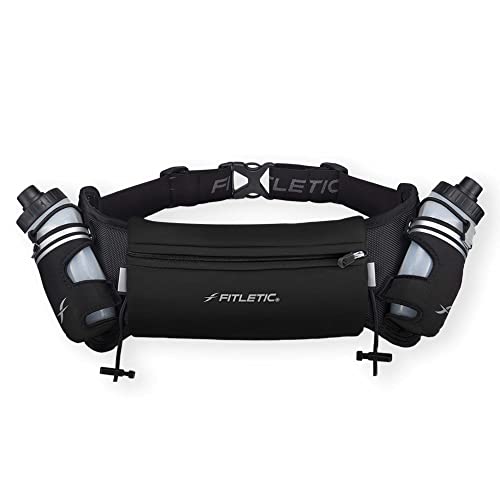
- 16 ounces via two 8-ounce bottles
- Water-resistant large phone pouch
- Gel holders and race bib toggles
Best For: Runners wanting two quick-access bottles and race-day storage
Best High-Capacity Carrying Option
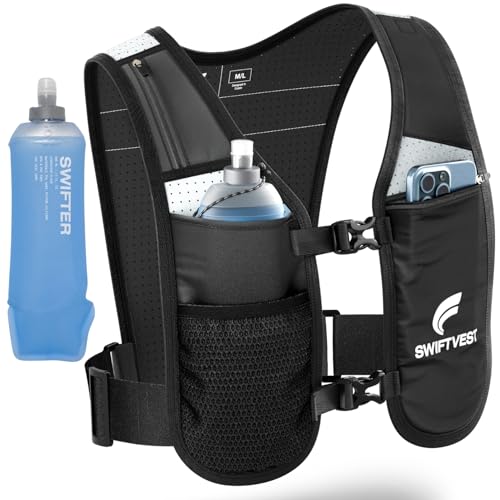
- Six pockets for running essentials
- Includes a 500 ml soft flask
- Adjustable and reflective vest design
Best For: Runners needing organized storage and an adjustable fit
Best Touchscreen Phone Belt

- 20 ounces from two BPA-free bottles
- Tilt-up touchscreen-ready phone pocket
- Race bib toggles and reflective strips
Best For: Runners prioritizing phone access and dual-bottle hydration
Balanced Trail Hydration

- Includes flask with secure one-handed holster
- Expandable phone pocket and mesh storage
- Lightweight 0.5-liter running waist pack
Best For: Compact hydration and essentials on training or trail runs
Race-Ready Fit
Fitletic Fully Loaded Hydration Belt

- 12-ounce quick-flow bottle with leak-resistant cap
- Phone pocket, gel holders, and bib toggles
- Water-resistant adjustable hip-hugging fit
Best For: Race training and runners carrying gels and essentials
High-Capacity Value
Number-one Two-Bottle Running Belt

- Two included 6.5-ounce BPA-free bottles
- Large zippered phone and essentials compartment
- Adjustable 27–59-inch water-resistant waistband
Best For: Short to medium runs needing two bottles and storage
Best Minimalist Pick
Nathan Peak Hydration Waist Pack
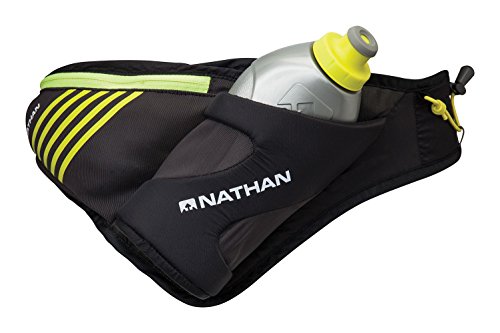
- 18-ounce flask with push/pull cap
- Angled holder for one-handed access
- Expandable pocket and reflective trim
Best For: Compact, single-bottle hydration on runs, walks, and hikes
Best Phone-Carrying Option
AiRunTech Hydration Running Belt

- Two 10-ounce push-pull bottles
- 6.5-inch phone pocket
- Race bib toggles and reflective tab
Best For: Training and races requiring dual bottles and phone storage
Best Simple Pick
PYFK Double-Bottle Running Belt

- Two 10-ounce BPA-free bottles
- 7-inch main pocket for essentials
- 25- to 60-inch waist fit with bib clips
Best For: Longer runs needing dual bottles, storage, and broad adjustability
Best No-Bounce Bottle Belt – Fitletic Hydra 16
For runners comparing running hydration belts for long runs, the Fitletic Hydra 16 combines 16 ounces of quick-access hydration with a water-resistant phone pouch. Its hip-hugging design, bottle holsters, gel holders, and race bib toggles make it suited to organized training and race days.
Best For: Runners who want two easily accessed bottles and dedicated phone and race-day storage.
Pros:
- Includes two 8-ounce BPA-free bottles with quick-flow caps.
- Water-resistant 8 x 4-inch pouch fits large smartphones, including iPhone Pro Max and Samsung Galaxy Ultra models.
- Two gel holders, race bib toggles, and reflective accents add practical run-day utility.
- Neoprene, contoured waist design is intended to reduce bounce.
Cons:
- The listed S/M size fits 24–34-inch waists, so sizing may not suit everyone.
- Hand-wash-only care is required.
Choose this belt if you prefer two separate bottles and a structured waist pack rather than a soft-flask system. Its 16-ounce capacity is useful for shorter long runs or routes with refill options.
Best High-Capacity Carrying Option – SWIFTVEST Hydration Vest
This running vest is a practical alternative to traditional running hydration belts for long runs, offering a 500 ml soft flask and six pockets. Adjustable straps, a waterproof phone compartment, breathable materials, and reflective details support longer outings in changing conditions.
Best For: Runners who need more organized storage and a secure, adjustable vest-style fit.
Pros:
- Six pockets provide space for a phone, keys, gels, and other running accessories.
- Includes a compressible 500 ml/17-ounce soft flask.
- Adjustable chest and side straps help customize the fit.
- Reflective detailing and quick-dry, breathable materials suit low-light and warm-weather runs.
Cons:
- A vest may feel less minimal than a waist belt.
- Only one 500 ml flask is included.
The SWIFTVEST makes sense when storage and fit adjustment matter more than the smallest possible profile. Its three listed size ranges also provide more sizing flexibility than a one-size belt.
Best Minimalist Flask Belt – CamelBak Ultra Running Belt
For runners seeking running hydration belts for long runs without a bulky setup, the CamelBak Ultra Running Belt pairs a 17-ounce collapsible flask with a lightweight waist design. Its zippered phone pocket, five-pocket layout, reflective details, and trekking-pole carry add useful support for longer efforts.
Best For: Minimalist runners who want a collapsible flask, phone storage, and room for fuel or small gear.
Pros:
- Includes a 17-ounce Quick Stow collapsible flask.
- Five pockets and up to 2.5 liters of cargo capacity provide space for fuel and gear.
- 3D Micro Mesh is designed for airflow and cushioning.
- Reflective details and integrated trekking-pole carry add outdoor-oriented features.
Cons:
- Only one flask is included.
- Its trekking-pole feature may be unnecessary for road runners.
This is a strong fit for runners who favor a soft-flask system and additional cargo capacity over dual-bottle access. The collapsible flask can also reduce bulk as it empties.
Best Touchscreen Phone Belt – Runtasty No.1 Hydration Belt
The Runtasty No.1 is a useful choice among running hydration belts for long runs when phone access is a priority. It includes two 10-ounce BPA-free bottles, a tilt-up touchscreen-ready pocket, separate storage, race bib toggles, and reflective strips.
Best For: Runners who want dual-bottle hydration with convenient touchscreen access to a phone.
Pros:
- Provides 20 ounces of hydration through two BPA-free 10-ounce bottles.
- Touchscreen-compatible tilt-up pocket allows access without removing the phone.
- Stay-dry neoprene and a separate waterproof pocket help protect valuables.
- Fits 27–37-inch waists and includes race bib toggles and reflective strips.
Cons:
- Listed storage is limited to two pockets.
- The one-size range may not fit waists outside 27–37 inches.
Consider this belt if changing music, checking messages, or taking calls during a run matters to you. Its 20-ounce total capacity is higher than the Fitletic option, while the touchscreen cover adds convenience for phone-dependent training.
Balanced Trail Hydration – Nathan Trail Mix Plus 3.0
For runners comparing running hydration belts for long runs, the Nathan Trail Mix Plus 3.0 offers a lightweight setup with an included flask, a secure holster, and practical storage. Its 0.5-liter capacity is suited to carrying essentials without the bulk of a larger running pack.
Best For: Runners who want a compact hydration belt with a phone pocket and one-handed flask access.
Pros:
- Includes a flask and weighs about 10 ounces with the flask.
- Updated holster and no-bounce design help keep the belt in place.
- Expandable front zippered pocket fits most phones, with an additional exterior mesh pocket.
- Side tension locks and elastic strap keepers help manage excess straps.
Cons:
- Its 0.5-liter storage capacity may be limited for longer outings requiring more supplies.
- It is not listed as water resistant.
- Spot-clean or hand-wash care may require extra attention.
The Trail Mix Plus 3.0 is a sensible middle ground for runners who value stable carrying and quick hydration access. The included flask and expandable phone pocket make it especially practical for organized training runs and lighter trail outings.
Race-Ready Fit – Fitletic Fully Loaded Hydration Belt
Among running hydration belts for long runs, the Fitletic Fully Loaded stands out for combining 12-ounce hydration with race-focused features. Its adjustable hip-hugging belt, phone-friendly pocket, gel holders, bib toggles, and reflective accents make it designed for organized training and race-day use.
Best For: Runners who need quick hydration plus space for a phone, energy gels, identification, and race bibs.
Pros:
- Includes a 12-ounce BPA-free bottle with a quick-flow, leak-resistant cap.
- Large 8-by-4-inch pocket includes an organizer for essentials and fits similarly sized smartphones.
- Four energy gel holders and race bib toggles support race-day organization.
- Water-resistant, sweat-wicking construction with reflective accents.
Cons:
- The listed S/M size fits 24 to 34-inch waists, so other runners may need a different size.
- It has one main pocket, which may offer less compartmentalization than multi-pocket designs.
- Hand-wash-only care may be less convenient.
This is the most race-oriented option of the three, with dedicated gel and bib features alongside quick-access hydration. Check the size range carefully, but the bounce-free design and organized pocket layout make it a strong choice for structured long-run preparation.
High-Capacity Value – Number-one Two-Bottle Running Belt
For shoppers seeking running hydration belts for long runs on a budget, this Number-one waist pack provides two removable 6.5-ounce bottles and a large zippered storage area. Its broad adjustable waistband and anti-slip bottle-pocket design are intended to reduce movement while carrying everyday running essentials.
Best For: Runners who prefer two small bottles and generous phone-and-essentials storage for short to medium runs.
Pros:
- Includes two BPA-free 6.5-ounce bottles for 13 ounces of total listed bottle capacity.
- Large zippered compartment with layered pockets separates a phone, keys, cards, money, and small items.
- Adjustable elastic waistband fits listed waists from 27 to 59 inches.
- Water-resistant neoprene construction is washable and designed with an anti-slip waistband.
Cons:
- The two small bottles may be less convenient than a single larger flask for longer runs.
- The product is described as suitable for short to medium distance runs, so capacity may not meet every long-run need.
- Its listed weight is about 0.26 kg, heavier than some minimalist belts.
This belt prioritizes storage and flexible fit over an ultralight profile. The dual-bottle layout can be useful when you want balanced access to hydration, while the roomy compartment helps accommodate a larger phone and several small essentials.
Best Minimalist Pick – Nathan Peak Hydration Waist Pack
For runners who want straightforward hydration without a bulky pack, the Nathan Peak is a streamlined choice among running hydration belts for long runs. It combines an 18-ounce flask with an expandable pocket and an angled holder designed for one-handed access.
Best For: Runners who prefer a compact, single-bottle belt for runs, walks, and hikes.
Pros:
- Includes an 18-ounce Speed Draw Flask with a push/pull race cap.
- Angled bottle holder supports convenient one-handed access and helps keep the bottle in place.
- Expandable zippered stretch pocket stores essentials, while reflective trim improves visibility in dim light.
- Extended side panels are designed to hug the body for a comfortable fit.
Cons:
- Its single 18-ounce bottle offers less water capacity than belts with two bottles.
- The product is not water resistant, according to the supplied details.
- Hand-wash care may require extra maintenance.
The Nathan Peak is a practical option when low-profile storage and easy bottle access matter more than maximum capacity. It suits shorter or moderately long outings and runners who want to carry only the essentials.
Best Phone-Carrying Option – AiRunTech Hydration Running Belt
The AiRunTech belt is a versatile choice among running hydration belts for long runs, pairing two 10-ounce bottles with a large phone pocket. Its adjustable hook-and-loop design, reflective tab, and race bib toggles make it suited to training and organized events.
Best For: Runners who want dual-bottle hydration, phone storage, and race-day features in one belt.
Pros:
- Includes two 10-ounce BPA-free bottles with leakproof push-pull nozzles.
- Large 6.5-inch pocket fits many smartphones along with small essentials.
- Adjustable fit accommodates hips from 18 to 51.2 inches, with contoured grips intended to reduce bounce and chafing.
- Reflective tab, headphone hole, and removable race bib toggles add useful training and event features.
Cons:
- The two bottles provide 20 ounces total, but each bottle is smaller than the Nathan Peak’s 18-ounce flask.
- Bottle nozzle colors are selected randomly.
- The bottles may need to be washed several times before first use to reduce residual taste.
With dual bottles and a dedicated phone compartment, the AiRunTech emphasizes versatility rather than minimalist weight. It is a strong fit for runners who carry a smartphone, nutrition, and race accessories while keeping hydration within reach.
Best Simple Pick – PYFK Double-Bottle Running Belt
The PYFK running belt adds two 10-ounce bottles, a large phone pocket, and an adjustable waist range, making it a practical value-oriented option among running hydration belts for long runs. Its neoprene bottle pockets and interior silica gel grip are designed to help limit movement and rubbing.
Best For: Runners seeking two-bottle hydration with broad waist adjustability and race-number attachments.
Pros:
- Includes two BPA-free 10-ounce pull-top bottles for 20 ounces of total capacity.
- 7-inch main pocket holds phones, keys, money, cards, and other essentials.
- Fits waists from 25 to 60 inches and includes reflective straps plus two bib clips.
- Silica gel grip and soft Lycra material are intended to reduce bounce and chafing.
Cons:
- Phones with bulkier cases may need the case removed to fit in the pocket.
- Pull-top bottles require access to the bottle tops rather than a push-pull nozzle system.
- Its two-bottle layout may feel less minimal than a single-flask belt.
The PYFK is built around practical capacity and adjustability, with helpful race-day details at a value-focused design point. Consider it when you want two bottles and ample storage, especially for longer outings where a single flask may not be enough.
How We Picked the Best Running Hydration Belts for Long Runs
We focused on the features that matter most after the first few miles: usable fluid capacity, stable fit, easy bottle access, storage layout, adjustability, and overall versatility. The selection includes compact belts with one flask, two-bottle fuel belts, and larger waist packs for runners who carry a phone, gels, keys, or extra layers.
Product descriptions were also compared for bounce-control features, reflective details, touchscreen-compatible pockets, insulated storage, and bottle-cap designs. Since comfort depends heavily on body shape and running style, the guide emphasizes how each configuration may suit different users rather than naming one universal winner.
Quick Comparison
| Type | Best For | Typical Capacity | Look For |
|---|---|---|---|
| Single-flask belt | Shorter long runs and minimalists | About 12–18 oz | Stable flask holder and phone storage |
| Two-bottle fuel belt | Longer runs and frequent drinking | About 16–20 oz total | Balanced bottle placement and gel storage |
| Hydration waist pack | Trail runs and extended outings | About 18 oz or more | Expandable storage and secure closures |
| Hydration vest | Maximum carry and reduced waist pressure | Typically 17 oz or more | Adjustable chest fit and pocket access |
Key Buying Factors for Running Hydration Belts for Long Runs
Capacity and Refill Strategy
Choose capacity based on distance, weather, access to refill points, and your personal drinking rate. A single 12- to 18-ounce bottle may work for supported routes, while two bottles are more practical when you want water plus an electrolyte drink or fewer stops.
Fit and Bounce Control
A belt should sit securely around the narrowest comfortable part of your waist without restricting breathing. Adjustable straps, wide elastic sections, grippy materials, and angled bottle placement can reduce movement. Load the belt before testing it, because a full bottle and phone reveal fit problems quickly.
Storage and Access
Check whether the main pocket fits your phone with its case and whether zippers or stretch openings can be operated while moving. Dedicated spaces for gels, keys, cards, and earbuds help prevent the belt from becoming overstuffed.
Visibility and Weather Protection
Reflective accents are useful for dawn, dusk, and road running. Water-resistant fabric can protect essentials from light moisture, but it should not automatically be treated as fully waterproof unless the manufacturer clearly states that rating.
Who Should Buy Which Running Hydration Belts for Long Runs?
Minimalist road runners: Choose a lightweight single-flask belt when you want basic hydration and phone storage with minimal bulk.
Distance runners and racers: A two-bottle belt is the better fit if you need more fluid, balanced weight, and room for gels or race essentials.
Trail runners: Look for a waist pack with expandable storage, a secure zipper, and a push-pull or quick-access flask. Extra room is valuable for keys, nutrition, and changing conditions.
Runners carrying more gear: A hydration vest may be more comfortable than loading a waist belt heavily, especially when you need clothing, larger phones, or multiple nutrition items.
Before race day, test the belt on several progressively longer runs. Adjust its position, experiment with bottle placement, and confirm that you can reach hydration and fuel without breaking rhythm.