The best running waist packs for marathons keep essentials secure without distracting bounce, chafing, or unnecessary bulk. The right choice depends on what you carry, how much hydration you need, and how well the pack stays put over many miles.
We compared lightweight phone belts, reflective waist packs, and hydration-focused designs to help you find a comfortable option for training and race day.
Best 10 Running Waist Packs for Marathons Picks for 2026
Best Overall Compact Pick

- Adjustable elastic fit with reflective strips
- Separate storage for phone, keys, and cards
- Sweat- and splash-resistant, not fully waterproof
Best For: Low-profile runs carrying only essential items
Best Hydration Vest
SWIFTVEST Running Phone Holder Vest
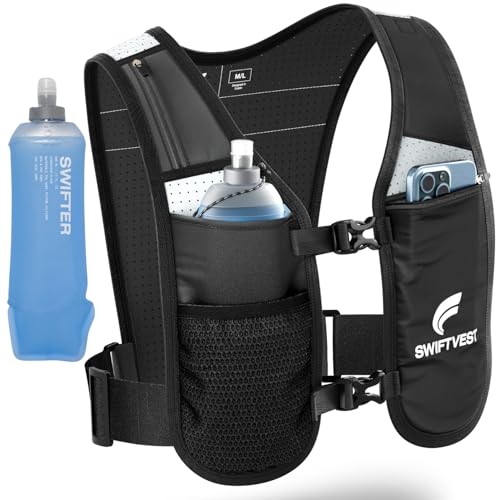
- Includes a 500 ml soft flask
- Six pockets organize phone, gels, keys, and hydration
- Reflective, breathable, adjustable, and chafe-conscious design
Best For: Longer runs needing hydration and organized storage
Best Slim No-Bounce Design
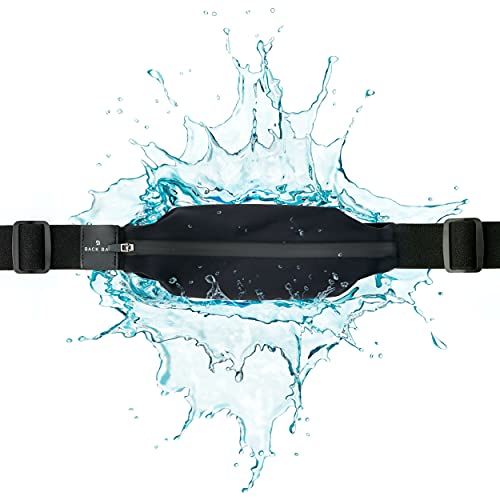
- Low-profile expandable pocket fits any phone
- Anti-slip material helps prevent bounce
- Adjustable for 27- to 49-inch waists
Best For: Minimalist runners carrying a phone and small essentials
Best Bottle Belt for Race Accessories

- Two 175 ml bottles with push-pull nozzles
- Fits phones up to 6.5 inches and includes race-bib toggles
- Adjustable hip fit with anti-slip comfort features
Best For: Races and training runs needing compact, hands-free hydration
Best Lightweight Pick
USHAKE Bounce-Free Running Belt
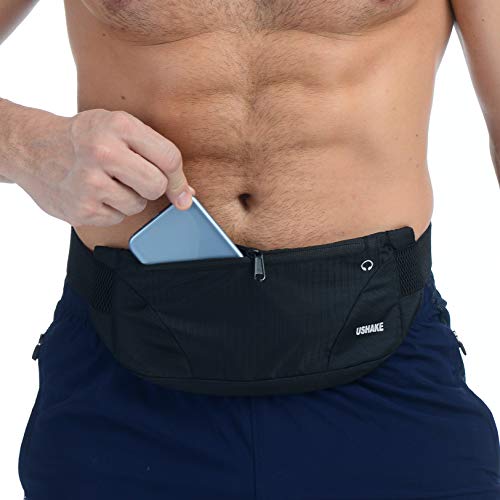
- Lightweight 3.52-ounce design
- Fits 25.9- to 42-inch waists
- Stores phone and small essentials
Best For: Marathoners wanting compact, lightweight storage
Best Hydration Option
AONIJIE 250ml Hydration Running Belt

- Includes a 250ml soft flask
- Four pockets for organized storage
- Fits phones up to 6.9 inches
Best For: Runners needing light hydration and storage
Best Classic Design
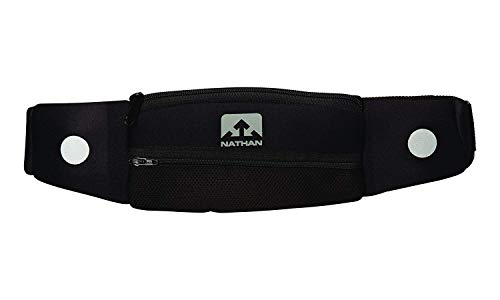
- Fits 26- to 44-inch waists
- Two zippered storage pockets
- Includes reflective 3M belt detailing
Best For: Runners carrying a phone and small essentials
Best All-Around Capacity

- Three-pocket layout
- Fits phones and race essentials
- Reflective, water-resistant design
Best For: Runners who need versatile storage for longer runs
Best Expandable Pocket

- Expandable low-profile pocket
- Fits phones and small essentials
- 25- to 47-inch adjustable fit
Best For: Runners who prefer compact, flexible storage
Best Minimalist Fit
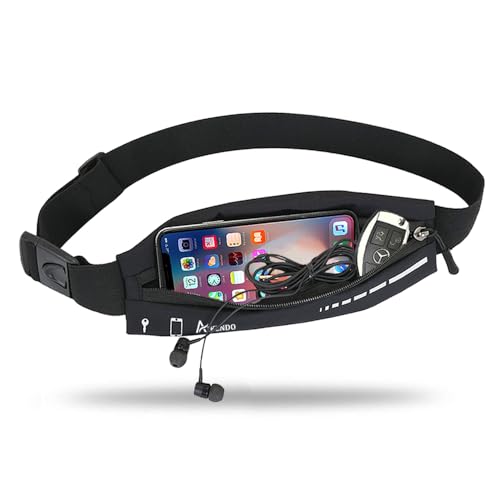
- Lightweight 2-ounce design
- Slim expandable phone pocket
- Water-resistant and reflective
Best For: Runners carrying only core essentials
Best Overall Compact Pick – Fitgriff Running Belt
The Fitgriff running belt is a streamlined option for runners who want a small, adjustable pouch for a phone, keys, cards, and other essentials. Its sweat- and splash-resistant construction, reflective strips, and separated compartments make it a practical choice among running waist packs for marathons, although it is not fully waterproof.
Best For: Runners seeking a lightweight, low-profile belt for essentials and visibility during training or race-day runs.
Pros:
- Adjustable, elastic strap is designed to stay securely in place.
- Main compartment fits almost all smartphones, with a separate small compartment for keys and cards.
- Reflective strips improve visibility in low-light conditions.
- Provides protection from sweat and light rain.
Cons:
- Not 100% waterproof in heavy rain or prolonged exposure.
- Only one main pocket is listed, so capacity is limited.
- Requires checking the size chart before ordering.
This is a sensible everyday running belt when minimal bulk matters more than hydration or high storage capacity. It is best suited to shorter outings or marathon runners who plan to use aid stations for fluids.
Best Hydration Vest – SWIFTVEST Running Phone Holder Vest
The SWIFTVEST combines six pockets with a 500 ml soft flask, giving runners more storage and on-the-go hydration than a basic waist pouch. Adjustable straps, breathable materials, reflective detailing, and a water-resistant phone pocket make it a strong alternative to running waist packs for marathons when you need room for gels and other accessories.
Best For: Runners who want a lightweight hydration system with organized storage for phones, keys, gels, and other race essentials.
Pros:
- Includes a compressible 500 ml/17 oz soft flask.
- Six pockets provide organized access to running accessories.
- Adjustable chest and side straps support a secure, chafe-reducing fit.
- Reflective details and breathable, quick-dry zones support longer runs.
Cons:
- More substantial than a simple waist pack, at 230 g before additional contents.
- The included 500 ml capacity may be limited for some marathon training sessions.
- Fit depends on selecting the appropriate size among three options.
For runners who need water and more than a phone pocket, this vest offers the most comprehensive carrying setup in the group. Its compact hydration capacity is especially useful for training runs and races with frequent refill opportunities.
Best Slim No-Bounce Design – Bay Belt Slim Running Belt
The Bay Belt Slim Running Belt focuses on a close-fitting, low-profile design for runners who dislike bouncing or bulk. Its expandable pocket accommodates any-sized phone, while the RunGrip anti-slip material and adjustable waistband make it a compelling choice among running waist packs for marathons when you need secure storage without carrying water.
Best For: Runners who prioritize a slim profile, broad waist adjustability, and secure phone storage.
Pros:
- Expandable pocket is designed to fit any phone size.
- RunGrip anti-slip material helps reduce bouncing and slipping.
- Adjustable fit accommodates waists from 27 to 49 inches.
- Waterproof pocket helps protect a phone during demanding runs.
Cons:
- One pocket limits organization for multiple small items.
- Does not include water storage.
- The product notes describe a waterproof pocket, but overall carrying capacity remains minimal.
This belt is a strong choice for carrying a phone, keys, cards, and gels with minimal visual and physical bulk. Marathon runners should pair it with a separate hydration plan because the belt is designed for essentials rather than fluids.
Best Bottle Belt for Race Accessories – AiRunTech Hydration Belt
The AiRunTech Hydration Belt is built for runners who want fluids, phone storage, and race-day features in one waist-worn design. It includes two 175 ml BPA-free bottles, a phone pocket, reflective detailing, and removable race-bib toggles, making it particularly useful among running waist packs for marathons and triathlons.
Best For: Endurance runners who want lightweight hydration, race-bib attachment points, and storage for a phone and small accessories.
Pros:
- Includes two 175 ml bottles with leakproof push-pull nozzles.
- Large pocket fits phones up to 6.5 inches and small race essentials.
- Hook-and-loop adjustment fits hips from 18 to 51.2 inches.
- Reflective tab, headphone hole, and removable race-bib toggles add race-day practicality.
Cons:
- Total bottle capacity is 350 ml, less than the included flask in the vest option.
- Only two pockets are listed, limiting organization.
- Bottles should be washed several times before first use according to the product notes.
This belt suits runners who prefer distributed bottle storage at the hips and need convenient race features. Its lower fluid capacity makes it most appropriate for courses with aid stations or shorter training sessions.
Best Lightweight Pick – USHAKE Bounce-Free Running Belt
For runners comparing running waist packs for marathons, the USHAKE belt focuses on low weight, phone storage, and an adjustable fit. Its nylon/polyester fabric is moisture-wicking, quick-drying, and water resistant for sweat and light rain.
Best For: Marathoners and everyday runners who want a lightweight phone-and-essentials belt with a broad 25.9- to 42-inch fit range.
Pros:
- Lightweight 3.52-ounce construction with soft, stretchable fabric.
- Adjustable elastic strap is designed to reduce bouncing.
- Holds phones, keys, cards, cash, passports, and energy gels.
- Includes an earbud opening and reflective stripe.
Cons:
- Water resistant rather than fully waterproof.
- Two-pocket layout may offer less organization than larger hydration belts.
Choose this model when keeping your marathon load compact matters most. It offers practical storage and broad phone compatibility without adding much bulk, but it is not intended for prolonged heavy rain or large hydration supplies.
Best Hydration Option – AONIJIE 250ml Hydration Running Belt
Among running waist packs for marathons, the AONIJIE stands out by pairing storage with a supplied 250ml soft water bottle. It also provides multiple pockets, a lightweight build, and an adjustable elastic waistband for running and other outdoor activities.
Best For: Runners who want a small hydration reserve alongside phone, key, card, and energy storage.
Pros:
- Includes a 250ml leak-proof soft water bottle.
- Four-pocket configuration offers flexible organization.
- Lightweight belt weighs 60g before adding the bottle.
- Fits phones up to 6.9 inches and includes reflective branding.
Cons:
- Listed as not water resistant.
- Waist sizing varies by size selection, so careful measurement is important.
- Its 250ml bottle may be limited for longer races or runners needing more hydration.
This is a useful choice when carrying some water is more important than having the slimmest possible belt. The supplied flask and multiple pockets add versatility, while the relatively small capacity keeps it better suited to shorter routes or races with frequent aid stations.
Best Classic Design – Nathan 5K Runner's Waist Pack
The Nathan 5K is a straightforward option for shoppers evaluating running waist packs for marathons. Its adjustable 26- to 44-inch strap, two zippered pockets, reflective belt, and lightweight neoprene construction are designed to keep everyday race essentials close without excessive bulk.
Best For: Runners who prefer a familiar two-pocket layout for a phone, keys, bills, and other small essentials.
Pros:
- Adjustable one-size design fits 26- to 44-inch waists.
- Two external zippered pockets separate phone and smaller items.
- Lightweight 3.6-ounce neoprene construction.
- 3M reflective belt supports visibility in low-light conditions.
Cons:
- Two pockets provide less capacity than multi-pocket hydration belts.
- Hand-wash-only care is less convenient than machine-washable alternatives.
- It does not include a water bottle.
The Nathan is a sensible minimalist pick for runners carrying only core essentials. Its broad waist adjustment and dedicated zippered pockets make it easy to use, while the lack of included hydration favors races with dependable aid stations.
Best All-Around Capacity – WATERFLY Running Belt
For runners comparing running waist packs for marathons, the WATERFLY Running Belt stands out when you need room for more than just a phone. Its three-pocket layout, stretch fit, and reflective details make it a practical choice for carrying race-day essentials.
Best For: Marathon runners who want multiple pockets for a phone, keys, cards, cash, and other small essentials.
Pros:
- Three pockets, including a spacious main pocket designed to fit any size phone.
- Stretch waistband and slip-proof buckle are designed to reduce bounce during runs.
- Reflective logo, water-resistant material, and a dedicated headphone port add useful running features.
Cons:
- Hand wash only.
- Its larger-capacity design may be more storage than runners who prefer an ultra-minimal belt need.
With a 27- to 48-inch waist range and a 36-inch strap, this belt offers flexible sizing and useful storage. It is a strong pick for longer runs where carrying several small items matters.
Best Expandable Pocket – SPIbelt Original Running Belt
The SPIbelt Original is a low-profile option for runners choosing running waist packs for marathons and everyday training. Its expandable pocket accommodates a phone, energy gels, keys, and other small items while the elastic waistband is designed for a bounce-free fit.
Best For: Runners who want a simple, expandable pocket with a broad 25- to 47-inch waist range.
Pros:
- Expandable pocket reaches 9″ x 4″ x 2″ for phones, gels, keys, cards, and similar essentials.
- Soft 1-inch elastic belt is designed to resist chafing and shifting.
- Fits popular iPhone, Samsung Galaxy, Google Pixel, and other Android phones.
Cons:
- Listed as not water resistant.
- Its two-pocket configuration offers less compartmentalization than some multi-pocket belts.
The SPIbelt keeps the design focused on compact storage and an adjustable fit. Because it is not water resistant, it is better suited to dry conditions or runners who can protect their belongings separately.
Best Minimalist Fit – AIKENDO Slim Running Belt
The AIKENDO Slim Running Belt is a lightweight choice for shoppers comparing running waist packs for marathons. Its slim profile, soft material, and expandable pocket provide room for a phone and small essentials without adding much bulk around the waist.
Best For: Runners seeking a lightweight, low-profile belt for a phone, key, and other small items.
Pros:
- Weighs 2 ounces and uses soft material intended to minimize bouncing and chafing.
- Expandable pocket fits smartphones with cases along with keys and money.
- Water-resistant material and reflective design support outdoor and low-light use.
Cons:
- Only one pocket is listed, limiting organization.
- The 27- to 45-inch waist range is narrower than some competing options.
At 10.24 inches long and only 0.39 inches wide, this belt emphasizes a slim feel over maximum capacity. It makes sense for runners who want to carry the basics while keeping their gear close and unobtrusive.
How We Picked the Best Running Waist Packs for Marathons
We focused on the features that matter most during long-distance running: stability, storage, comfort, adjustability, visibility, and hydration. The selection includes slim belts for runners carrying only a phone and keys, as well as larger designs with bottles, soft flasks, or multiple pockets. We also considered whether each pack is suitable for different phone sizes and whether its construction is practical for repeated training use.
Because fit varies by body shape and running style, no single waist pack is ideal for every marathoner. A secure belt that works well for short runs may not offer enough capacity for a long training session, while a hydration pack can feel excessive for a supported race course.
Quick Comparison
- Best for minimal carry: Slim belts from SPIbelt, AIKENDO, USHAKE, and other compact designs.
- Best for phone-and-essentials storage: Fitgriff, Nathan, and WATERFLY options.
- Best for built-in hydration: AiRunTech and AONIJIE waist packs.
- Best for larger carrying capacity: The reflective hydration vest with a 500 ml bottle.
- Best for race visibility: Models with reflective detailing, especially for early-morning or evening runs.
Key Buying Factors for Running Waist Packs for Marathons
Fit and Bounce Control
A marathon belt should sit securely around your waist without cutting in or sliding down. Look for an adjustable strap, a close-fitting profile, and enough structure to prevent a phone from swinging. Test the pack with the items you expect to carry, since an overloaded pocket can create movement even when the belt fits well.
Storage and Phone Compatibility
Check the main pocket dimensions against your phone, including its case. Separate compartments are useful for keys, cards, gels, and identification because they reduce shifting and make items easier to reach. If you carry only a phone and a key, a slim design is usually more comfortable than a multi-pocket pack.
Hydration Capacity
Choose a bottle or soft-flask waist pack when you need water between aid stations or are training without reliable refill points. A 250 ml bottle is compact, while a 500 ml option provides more reserve but may add weight and bulk. Make sure the bottle remains stable when full.
Comfort, Weather Protection, and Visibility
Breathable fabric, smooth seams, and a non-irritating strap matter over several hours. Water-resistant material can help protect electronics from light rain or sweat, although it is not necessarily waterproof. Reflective accents are valuable for visibility but should supplement, not replace, appropriate lighting and reflective clothing.
Who Should Buy Which Running Waist Packs for Marathons?
Choose a slim phone belt if you carry a phone, key, card, and perhaps a gel. These are generally the least noticeable option for organized races with frequent aid stations.
Choose a hydration waist pack if you need personal water during long training runs or races with widely spaced aid stations. Prioritize bottle stability and easy access over maximum pocket count.
Choose a larger hydration vest if you carry more fuel, a phone, multiple gels, and extra accessories. It can distribute weight better than a crowded waist pack, though it may feel warmer.
For most runners, the best purchase is the smallest pack that securely holds everything needed for the route. Load it before race day and test it on several long runs to identify bounce, rubbing, or access issues early.