When backpacking takes you beyond cellular coverage, a satellite communicator can provide a vital link for messaging, location sharing, weather updates, and emergency assistance.
We compared 10 leading devices across network coverage, messaging features, tracking, navigation, durability, subscription flexibility, and overall packability to help you choose the right connection for remote trips.
Best 10 Satellite Communicators for Backpacking Picks for 2026
Best Overall

- Two-way messaging and interactive SOS
- TracBack routing and digital compass
- Up to 14 days of battery life
Best For: Backpackers seeking compact communication with built-in navigation
Best for Smartphone Messaging
- Satellite, cellular, and Wi-Fi messaging
- Dedicated SMS number and email
- Over 200 hours of battery life
Best For: App-based communication and flexible network use
Best Battery Life

- Up to 28 days of battery life
- Group and two-way messaging
- Safety charging for a depleted phone
Best For: Extended trips requiring maximum battery endurance
Best for Group Tracking

- GroupTrack for up to 12 people
- Offline maps and GPS tracking
- Global Iridium messaging and SOS
Best For: Groups and families sharing locations off grid
Best for Easy Setup

- Two-way messaging and interactive SOS globally
- Up to 14 days of battery life in tracking mode
- TracBack, compass, and Garmin Explore integration
Best For: Lightweight, all-around backpacking communication and navigation
Best for Everyday Use
ACR Bivy Stick Satellite Communicator

- Global Iridium messaging and SOS support
- GroupTrack supports up to 12 people
- Unlimited check-ins and live breadcrumb tracking
Best For: Groups, guides, and families sharing off-grid locations
Best Renewed Value

- Two-way messaging and interactive SOS via Iridium
- Works with Earthmate maps and weather services
- Compact renewed unit weighing 3.52 ounces
Best For: Budget-minded backpackers seeking core Garmin safety features
Best Value for Simple Check-Ins

- Two-way satellite communication with SOS
- Unlimited check-ins and GPS sharing
- Includes protective pouch and carabiner
Best For: Backpackers wanting simple satellite check-ins and location sharing
Best for Built-In Navigation
- Global Iridium two-way messaging
- Preloaded topo maps and GPS routing
- 30-hour battery and IPX7 water resistance
Best For: Backpackers wanting dedicated maps and GPS navigation
Best Rugged Smartphone Companion

- Lightweight 2.5-ounce design
- IP68 dustproof and waterproof construction
- Two-way messaging and SOS via smartphone
Best For: Backpackers seeking a durable, lightweight phone companion
Best Overall – Garmin inReach Mini 2
For backpackers who want navigation as well as dependable off-grid communication, the Garmin inReach Mini 2 is a well-rounded choice among satellite communicators for backpacking. It supports two-way messaging, interactive SOS, location sharing, a digital compass, and TracBack routing, though an active satellite subscription is required.
Best For: Backpackers who want a compact communicator with built-in navigation features and long battery life.
Pros:
- Compact 99-gram design with two-way messaging and interactive SOS
- TracBack routing, digital compass, and GPS-based location sharing
- Up to 14 days of battery life in 10-minute tracking mode
- Bluetooth pairing with the Garmin Explore app and compatible Garmin devices
Cons:
- Requires an active satellite subscription for messaging, location sharing, and SOS
- Small 1.27-inch monochrome display is better suited to basic navigation than detailed mapping
The Mini 2 is a strong all-purpose pick for hikers who want a lightweight device that can handle communication, emergency support, and basic route tools without relying entirely on a phone.
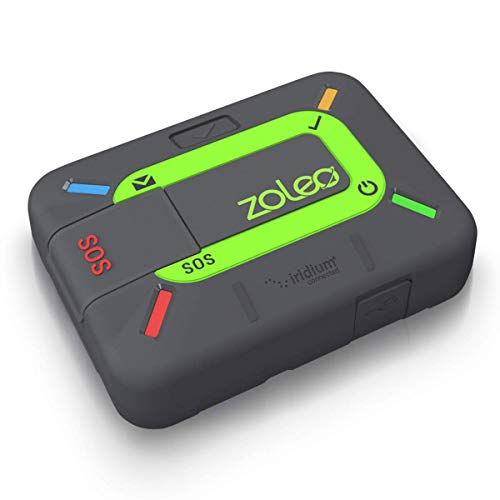
Best for Smartphone Messaging – ZOLEO Satellite Communicator
The ZOLEO Satellite Communicator is designed for backpackers who prefer handling messages through a smartphone app. It can use satellite, cellular, or Wi-Fi connectivity, while providing two-way messaging, SOS monitoring, check-ins, and location sharing when a service plan is active.
Best For: Smartphone-focused hikers who want flexible messaging and an assigned SMS number for off-grid contacts.
Pros:
- Uses the lowest-cost available connection among Iridium satellite, cellular, and Wi-Fi
- Includes two-way messaging, dedicated SMS and email contact options, and unlimited check-ins within the plan
- IP68-rated design with over 200 hours of stated battery life
- Supports long messages of up to 900 characters and weather forecasts
Cons:
- Requires a smartphone and an active service plan for core communication features
- Location sharing at regular intervals is listed as an optional add-on
ZOLEO makes sense for backpackers who want a familiar app-based experience and frequent contact with people at home. Its hybrid connectivity can also help avoid using satellite service when cellular or Wi-Fi is available.
Best Battery Life – Garmin inReach Messenger
The Garmin inReach Messenger is a practical option for backpackers prioritizing extended battery life and straightforward two-way communication. It supports global messaging, group chats through the Garmin Messenger app, location sharing, check-ins, and interactive SOS, with an active satellite subscription required for satellite features.
Best For: Multi-day or extended trips where long battery life and phone-charging support are especially useful.
Pros:
- Up to 28 days of battery life in 10-minute tracking mode
- Supports two-way and group messaging through the Garmin Messenger app
- Interactive SOS connects with a 24/7-staffed Garmin response center
- Can provide safety charging to help recover a depleted phone
Cons:
- Relies heavily on a compatible smartphone app for messaging features
- Its small monochrome display and button controls are focused on basic communication rather than detailed navigation
Choose the inReach Messenger when keeping a phone usable over a long backpacking trip matters more than having advanced on-device mapping. It is particularly appealing for groups that want shared conversations and extended tracking endurance.
Best for Group Tracking – ACR Bivy Stick
The ACR Bivy Stick combines satellite communication, GPS tracking, offline maps, weather updates, and SOS support through its Bivy app. For backpackers traveling with friends or family, its GroupTrack feature can share messages and locations with up to 12 people, while global Iridium coverage supports communication beyond cellular service.
Best For: Groups, guides, and families who want shared tracking alongside messaging and emergency features.
Pros:
- Global Iridium coverage for two-way SMS, email, GPS tracking, and SOS
- GroupTrack supports messaging and location sharing with up to 12 people
- Includes offline maps, GPS navigation data, weather updates, and live tracking
- 24/7 SOS monitoring through Global Rescue and a dedicated phone number and email
Cons:
- Requires a Bivy service plan, with a one-time three-month commitment per device
- Battery life is listed at 120 hours, shorter than some competing options in this group
- Most features are accessed through the iOS or Android Bivy app
The Bivy Stick stands out when a trip involves multiple people who need to see one another’s progress. Its combination of group tracking, offline navigation, and emergency support makes it a versatile tool for organized or family backpacking trips.
Best for Easy Setup – Garmin inReach Mini 2
For backpackers who want a compact, capable option among satellite communicators for backpacking, the Garmin inReach Mini 2 combines two-way messaging, interactive SOS, location sharing, and navigation tools. It requires an active satellite subscription, but its small 99-gram design and long rated battery life make it practical for extended trips.
Best For: Backpackers who want lightweight global messaging, SOS access, and basic navigation in one device.
Pros:
- Supports two-way messaging and interactive SOS globally through an active subscription.
- Up to 14 days of battery life in 10-minute tracking mode.
- Includes TracBack routing, a digital compass, and location sharing through MapShare.
- Pairs with the Garmin Explore app and compatible Garmin devices.
Cons:
- An active satellite subscription is required for messaging, SOS, and some location-sharing features.
- The 1.27-inch monochrome display and button controls are functional but compact.
The Mini 2 is a well-rounded choice when pack weight, battery endurance, and reliable off-grid communication matter more than a large standalone map screen.
Best for Everyday Use – ACR Bivy Stick Satellite Communicator
The ACR Bivy Stick is a flexible pick among satellite communicators for backpacking, using the Bivy app on iOS or Android for two-way SMS, offline maps, tracking, weather updates, and location sharing. Its Iridium coverage and group features are especially useful when several people need to follow the same trip.
Best For: Backpackers, guides, and groups who want live tracking, group messaging, and app-based navigation.
Pros:
- Uses global Iridium coverage for messaging, GPS tracking, SOS, and location sharing.
- GroupTrack supports messaging and location sharing with up to 12 people.
- Offers unlimited GPS check-ins and live tracking with a shareable breadcrumb map.
- Includes offline maps, weather updates, and a dedicated phone number and email after activation.
Cons:
- Requires a Bivy service plan, with a one-time three-month commitment per device.
- Rated battery life is 120 hours, shorter than the Garmin inReach Mini 2’s stated tracking-mode rating.
- Core features are accessed through the Bivy app on a compatible smartphone.
The Bivy Stick stands out for coordinated trips and family visibility, though its subscription structure and smartphone dependence should be considered before heading out.
Best Renewed Value – Garmin inReach Mini
Garmin inReach Mini, Lightweight and Compact Handheld Satellite Communicator, Black (Renewed)
Check Price On AmazonThe renewed Garmin inReach Mini offers a compact way to add two-way text messaging and SOS capability to a backpacking setup. It uses the global Iridium network and pairs with compatible devices through Bluetooth, while the Garmin Earthmate app adds downloadable maps, NOAA charts, and aerial imagery.
Best For: Budget-conscious backpackers who want a small renewed communicator with messaging, SOS, and app-based mapping.
Pros:
- Provides two-way text messaging and interactive SOS through the global Iridium network.
- Works with the Garmin Earthmate app for downloadable maps, NOAA charts, and aerial imagery.
- Supports optional weather forecasts and messaging through compatible Garmin devices.
- Compact design weighs 3.52 ounces.
Cons:
- A satellite subscription is required for messaging and SOS.
- As a renewed product, it includes a 90-day limited warranty.
- The device is an older inReach Mini model and relies on compatible devices for expanded mapping features.
This renewed model can be a practical entry point for backpackers who want Garmin’s core satellite messaging and SOS functions, provided they are comfortable with the shorter warranty and older hardware.
Best Value for Simple Check-Ins – ACR Bivy Stick
NEW ACR Bivy Stick 2-Way Satellite Communicator with Carrying Case and Carabiner Bundle
Check Price On AmazonThe ACR Bivy Stick is a practical pick among satellite communicators for backpacking when you want two-way communication, SOS access, location sharing, and offline navigation without relying on cell coverage. It pairs with a smartphone and includes a protective pouch with belt attachment and carabiner.
Best For: Backpackers who prioritize check-in messaging, GPS location sharing, and a compact carry setup.
Pros:
- Supports two-way satellite communication and SOS emergency rescue.
- Offers unlimited check-in messages and GPS location sharing.
- Includes offline maps and navigation for areas without cell service.
- Comes with a protective pouch, belt attachment, and carabiner.
Cons:
- Requires a compatible smartphone for operation.
- Subscription or service-plan details are not provided in the supplied information.
The Bivy Stick keeps the feature set focused on essential backcountry communication and navigation. Its included carrying accessories also make it convenient to attach to a pack or belt.
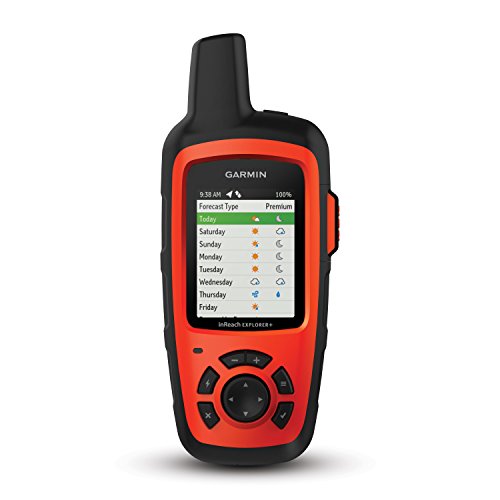
Best for Built-In Navigation – Garmin inReach Explorer+
The Garmin inReach Explorer+ is a navigation-focused option among satellite communicators for backpacking. It provides two-way messaging through global Iridium coverage, interactive SOS monitoring, location sharing, and a built-in display with preloaded topo maps and GPS routing.
Best For: Backpackers who want a handheld communicator with on-device maps, GPS routing, and navigation sensors.
Pros:
- Provides two-way text messaging through global Iridium satellite coverage.
- Supports interactive SOS with a 24/7 search-and-rescue monitoring center.
- Includes preloaded DeLorme topo maps, GPS routing, and a digital compass.
- Offers up to 30 hours of average battery life and IPX7 water resistance.
Cons:
- A satellite subscription is required for messaging and related services.
- The listed model is from 2017.
- Its 8-ounce weight is higher than the Motorola option in this roundup.
For hikers who prefer a dedicated screen and onboard navigation tools, the Explorer+ is the most map-oriented choice here. Bluetooth pairing also adds access to downloadable maps and additional imagery through the Earthmate app.
Best Rugged Smartphone Companion – Motorola Defy Satellite Link
The Motorola Defy Satellite Link is a lightweight choice among satellite communicators for backpacking, using Bluetooth to connect with compatible iOS 14 or Android 10-and-later smartphones. It supports two-way satellite messaging, check-ins, GPS coordinates, and SOS alerting in a rugged, pocket-friendly design.
Best For: Backpackers who want a small, durable satellite messenger that works with an existing smartphone.
Pros:
- Supports two-way satellite-enabled messaging and emergency SOS alerting.
- Works with compatible iOS and Android smartphones.
- IP68-rated design is dustproof and waterproof to nearly 5 feet for 30 minutes.
- Provides up to four days of standby battery power and includes unlimited SOS with every service plan.
Cons:
- A service plan is required, with plans listed as starting at $4.99 per month for SOS satellite assist.
- Messaging and SOS features depend on smartphone compatibility and the companion app.
- Coverage is specified for areas shown on the provider’s coverage map, including use up to 75 miles offshore.
At 2.5 ounces, the Defy Satellite Link is the lightest listed device and emphasizes durability and smartphone integration. It is a strong fit when pack weight matters and you already carry a compatible phone.
How We Picked the Best Satellite Communicators for Backpacking
We focused on the features that matter most away from reliable cell service: two-way satellite messaging, SOS functionality, GPS tracking, location sharing, battery performance, network reach, ease of use, and device size. We also considered whether each communicator works independently or pairs with a smartphone, since that affects convenience, battery demands, and emergency readiness.
The selection includes established Garmin inReach models, ACR Bivy Stick devices, ZOLEO, and Motorola’s satellite messaging option. Some are designed for frequent backcountry use, while others are better suited to occasional trips or users who want a lower-cost way to add emergency connectivity.
Quick Comparison
| What to Compare | Best Fit |
|---|---|
| Full-featured backcountry communication | Garmin inReach Mini 2 or inReach Messenger |
| Phone-based messaging | ZOLEO or ACR Bivy Stick |
| Navigation and mapping | Garmin inReach Explorer+ |
| Occasional emergency connectivity | Motorola Defy Satellite Link |
| Lower purchase cost | Renewed Garmin inReach Mini |
Key Buying Factors for Satellite Communicators for Backpacking
Satellite Network and Coverage
Check the provider’s coverage for the countries and routes you use. Global coverage is useful for international travel, but terrain, dense forest, canyon walls, and heavy weather can still delay communication. Devices using Iridium’s network are commonly chosen for broad worldwide reach.
Messaging and SOS Features
Two-way messaging lets you receive a reply rather than simply send an alert. Look for preset messages, custom text, delivery confirmations, contact management, and 24/7 emergency response. Confirm that SOS activation and cancellation procedures are easy to understand before heading out.
Phone Dependence and Usability
Many compact communicators use a companion app for typing, maps, weather, and contact management. This is convenient, but it requires a charged, compatible phone. A device with a screen and physical controls can be preferable when gloves, rain, or a dead phone make app use impractical.
Battery, Tracking, and Navigation
Compare claimed battery life in tracking and messaging modes rather than standby time alone. Frequent tracking intervals use more power. Built-in navigation, topo maps, waypoints, and breadcrumb trails can be valuable for route awareness, while simpler models may be lighter and easier to manage.
Subscription Costs and Durability
Include activation, monthly plans, message charges, tracking fees, and seasonal suspension policies in your budget. Also check water resistance, impact protection, charging connectors, carabiner attachment points, and operating temperature for your intended trips.
Who Should Buy Which Satellite Communicators for Backpacking?
Choose a Garmin inReach Mini 2 if you want a compact, proven communicator with strong tracking and emergency features. The inReach Messenger is a sensible choice for users prioritizing battery endurance and dependable messaging. Pick the Explorer+ if maps and handheld navigation matter as much as communication.
ZOLEO and ACR Bivy Stick models suit backpackers who prefer composing messages and managing contacts from a phone. Consider the Motorola Defy Satellite Link for occasional off-grid use with a compatible Android or iPhone. A renewed Garmin inReach Mini can make sense when purchase price matters, provided its condition, battery health, warranty, and subscription compatibility are verified.