Cell service can disappear quickly on remote trails, campsites, and backcountry roads. The best satellite communicators for camping provide a dependable way to send messages, share your location, and request emergency help when a phone cannot connect.
This roundup compares compact options from Garmin, ZOLEO, ACR Bivy Stick, and Motorola, including devices designed for two-way messaging, GPS tracking, check-ins, and SOS communication. The right choice depends on your coverage needs, messaging habits, phone compatibility, and subscription budget.
Best 10 Satellite Communicators for Camping Picks for 2026
Best Value for Flexible Messaging
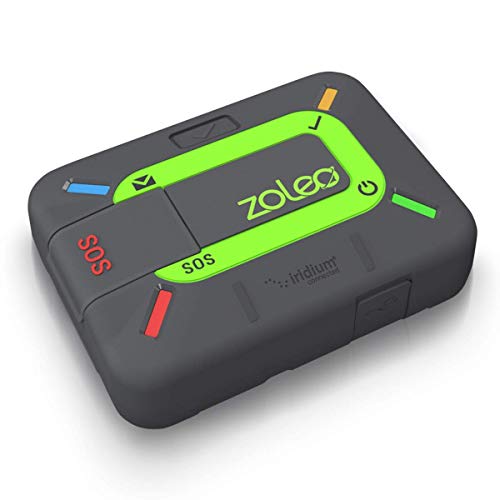
- Iridium, cellular, and Wi-Fi messaging
- SOS monitoring and unlimited check-ins
- Over 200 hours of battery life
Best For: Campers wanting flexible connectivity and long runtime
Best for Extended Trips

- Up to 28 days in tracking mode
- Read and confirm messages on-device
- Cellular-to-Iridium network switching
Best For: Long camping trips requiring visible message status
Best for Group Tracking

- Global Iridium messaging and SOS
- GroupTrack for up to 12 people
- Offline maps and live breadcrumb tracking
Best For: Groups sharing locations during remote camping trips
Best Compact Garmin Option

- Global messaging and interactive SOS
- Up to 14 days of battery life
- TracBack, weather, and digital compass
Best For: Campers wanting compact Garmin navigation and safety tools
Best Budget-Friendly Pick

- Two-way satellite messaging through iOS and Android phones
- IP68-rated, lightweight design with up to four days of standby
- Unlimited SOS included with every service plan
Best For: Affordable satellite check-ins and emergency messaging
Best Feature-Rich Choice

- Global Iridium messaging and interactive SOS coordination
- Up to 350 hours of battery life with tracking
- Color touchscreen, navigation, weather, and LiveTrack tools
Best For: Extended camping trips and advanced backcountry communication
Best Messaging Flexibility

- Uses satellite, cellular, or Wi-Fi for flexible messaging
- Supports SMS, email, SOS, GPS check-ins, and location sharing
- Includes cradle, belt clip, strap connector, and tripod mount
Best For: Campers who want seamless messaging and versatile mounting
Best Global Coverage Pick

- Global Iridium coverage with two-way messaging
- Interactive SOS and TracBack routing
- Up to 14 days of battery life; accessories included
Best For: Campers seeking compact, long-lasting emergency communication
Best App-Based Group Pick
ACR Bivy Stick Satellite Communicator

- Global two-way messaging and GPS tracking
- GroupTrack supports up to 12 people
- 24/7 Global Rescue SOS monitoring
Best For: Groups and families wanting app-based location sharing
Best Accessory Bundle
Garmin inReach Mini 2 with Power Bank
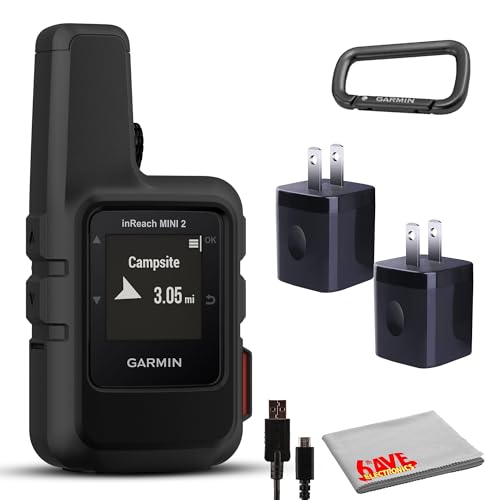
- Two-way messaging and interactive SOS worldwide
- Up to 30 days with extended tracking intervals
- Includes 10,000 mAh power bank and charging accessories
Best For: Longer trips needing extra portable charging capacity
Best Value for Flexible Messaging – ZOLEO Satellite Communicator
For campers who want dependable satellite communicators for camping without giving up cellular or Wi-Fi flexibility, the ZOLEO Satellite Communicator is a practical option. It pairs with an Android or iOS smartphone and selects the available cellular, Wi-Fi, or Iridium satellite connection, while a service plan supports messaging and emergency features.
Best For: Campers and hikers who want long battery life, a dedicated SMS number, and flexible two-way messaging through a phone app.
Pros:
- Uses cellular, Wi-Fi, or Iridium satellite networks for two-way messages.
- Offers SOS alerting with 24/7 monitoring and non-emergency Medical Assist.
- Provides unlimited check-ins and more than 200 hours of battery life.
- IP68-rated construction supports rugged outdoor use.
Cons:
- Requires a paid service plan.
- Messaging and control depend on a compatible smartphone and app.
- Optional location-sharing features may require an add-on.
ZOLEO stands out for campers who prioritize extended battery life and versatile message delivery. Its dedicated contact number and included check-ins make routine communication especially convenient, while the smartphone-dependent design may be less appealing if you want a fully standalone communicator.
Best for Extended Trips – Garmin inReach Messenger GPS
The Garmin inReach Messenger is a strong choice for satellite communicators for camping when long battery life and message confirmation matter. Its screen lets you verify sent messages and read replies, while the Garmin Messenger app can use cellular service when available before switching to the global Iridium network.
Best For: Campers on extended trips who want on-device message visibility and up to 28 days of battery life in 10-minute tracking mode.
Pros:
- Displays sent-message confirmations and incoming responses on the device.
- Provides up to 28 days of battery life in 10-minute tracking mode.
- Seamlessly combines smartphone cellular connectivity with Iridium satellite messaging.
- Bundle includes a charging cable, battery charger, and two USB wall adapters.
Cons:
- Requires a smartphone app for the simplest messaging experience.
- The supplied specifications list a relatively heavy 1.1-pound item weight.
- Satellite service costs are separate from the hardware.
With its readable MIP screen and unusually long stated battery life, this inReach Messenger is well suited to multi-day camping trips away from outlets. It is most compelling for users who want to check messages directly on the communicator rather than relying entirely on a phone.
Best for Group Tracking – ACR Bivy Stick
The ACR Bivy Stick is a versatile pick among satellite communicators for camping, combining two-way messaging, GPS tracking, offline maps, weather updates, and SOS access through its iOS and Android app. Its GroupTrack feature also lets up to 12 people exchange messages and follow locations.
Best For: Groups, families, guides, and campers who want shared location tracking and app-based navigation alongside satellite messaging.
Pros:
- Uses global Iridium coverage for messaging, tracking, weather, and SOS functions.
- GroupTrack supports messaging and location sharing with up to 12 people.
- Includes offline maps, GPS data, and live breadcrumb tracking through the Bivy app.
- Compact 3.35-ounce design has IPX7 and MIL-STD-810 compliance.
Cons:
- Requires a service plan with a one-time three-month commitment per device.
- Core features are primarily accessed through a smartphone app.
- Stated battery life is up to 120 hours.
The Bivy Stick is particularly useful when several people need to stay aware of one another’s whereabouts. Its combination of group tracking and offline navigation gives it broader trip-planning utility than a basic messaging device, though the subscription commitment and phone reliance should be considered.
Best Compact Garmin Option – Garmin inReach Mini 2 Bundle
The Garmin inReach Mini 2 is a compact, rugged choice for satellite communicators for camping. It supports global two-way messaging and interactive SOS through the Iridium network, while TracBack routing, weather updates, a digital compass, and location sharing add useful navigation and trip-safety functions.
Best For: Campers who want a small Garmin communicator with global messaging, navigation tools, and flexible monthly or annual airtime plans.
Pros:
- Supports global two-way messaging and interactive SOS with 24/7 response coordination.
- Compact, 3.5-ounce design is MIL-STD-810 built and IPX7 water-resistant.
- Offers up to 14 days of battery life in 10-minute tracking mode or 30 days at 30-minute intervals.
- Includes TracBack routing, weather information, digital compass, and MapShare location sharing.
Cons:
- Requires a Garmin satellite airtime plan.
- The small 0.9-inch screen may be less convenient for detailed viewing.
- Many messaging functions are easiest to control through a paired device or app.
The inReach Mini 2 balances a small, rugged form with a useful collection of safety and navigation tools. It is a strong fit for campers already comfortable with Garmin’s ecosystem, especially those who value TracBack and flexible subscription choices.
Best Budget-Friendly Pick – Motorola Defy Satellite Link
The Motorola Defy Satellite Link is a compact option for campers who want two-way satellite messaging without carrying a full-featured standalone communicator. It pairs with iOS 14 and Android 10 or later phones and supports check-ins, GPS coordinates, and emergency SOS messaging when cellular service is unavailable.
Best For: Campers who want an affordable, phone-connected satellite communicator for basic messaging and emergency check-ins.
Pros:
- Two-way satellite messaging works with compatible iOS and Android smartphones
- IP68-rated design is dustproof and waterproof to nearly 5 feet for up to 30 minutes
- Up to four days of standby battery life and a lightweight 2.5-ounce build
- Unlimited SOS is included with every service plan
Cons:
- A service plan is required for satellite features
- Messaging and controls depend on a compatible smartphone
- Coverage is limited to areas shown on the service coverage map
For campers who mainly need dependable check-ins and SOS support, the Defy Satellite Link keeps the hardware simple and portable. Its phone dependence makes it less self-contained than dedicated communicators, but the rugged design and low starting plan cost can make it a practical entry point.
Best Feature-Rich Choice – Garmin inReach Mini 3
The Garmin inReach Mini 3 is a feature-rich choice for campers seeking satellite communication, navigation, and tracking in one rugged device. It uses the global Iridium network for messaging and SOS, while its color touchscreen, mapping tools, weather reports, and long battery life add useful capability for extended trips.
Best For: Serious campers and hikers who want global messaging, navigation, tracking, and emergency coordination in a dedicated communicator.
Pros:
- Global Iridium coverage supports two-way messaging and interactive SOS
- Garmin Response provides a 24/7-staffed international emergency coordination center
- Up to 350 hours of battery life with 10-minute inReach tracking
- Color touchscreen, weather reports, LiveTrack, and app-connected navigation tools
Cons:
- An active satellite subscription is required
- Some jurisdictions regulate or prohibit satellite communication devices
- At 4.31 ounces, it is heavier than the Motorola Defy Satellite Link
The Mini 3 is the most capable option here for campers who need more than basic messaging. Its dedicated screen and extensive navigation features add versatility, though the active subscription requirement and higher feature set may be unnecessary for occasional users.
Best Messaging Flexibility – ZOLEO Satellite Communicator
The ZOLEO Satellite Communicator is designed for campers who want a familiar texting experience across satellite, cellular, and Wi-Fi networks. It links to a smartphone or tablet through the ZOLEO app, supports SMS and email, and includes a cradle accessory kit for belt, strap, or tripod mounting.
Best For: Campers who prioritize flexible two-way messaging, dedicated SMS and email contact options, and convenient mounting.
Pros:
- Switches between satellite, cellular, and Wi-Fi connectivity when available
- Supports messaging with SMS numbers, email addresses, and ZOLEO app users
- IP68-rated, MIL-STD 810G shock-resistant design with over 200 hours of battery life
- Included cradle kit adds belt clip, strap, and camera tripod mounting options
Cons:
- A monthly subscription and initial three-month commitment are required
- Plans are currently available in the USA, Canada, and Australia
- Messaging and app features require a compatible smartphone or tablet
ZOLEO stands out among satellite communicators for camping when message continuity matters: it can use Wi-Fi or cellular service before switching to Iridium satellite coverage. The accessory kit is useful for keeping the device accessible, but the subscription structure and phone reliance should be considered before buying.
Best Global Coverage Pick – Garmin inReach Mini 2 Bundle
For campers who need reliable off-grid contact, the Garmin inReach Mini 2 is a compact option among satellite communicators for camping. It supports two-way messaging, interactive SOS alerts, weather updates, location sharing, and GPS-based TracBack routing through the Iridium satellite network.
Best For: Campers who prioritize global coverage, long battery life, and a compact rugged communicator.
Pros:
- Two-way messaging and interactive SOS support with 24/7 Garmin Response coordination.
- Iridium-based global satellite coverage, location sharing, weather updates, and TracBack routing.
- Compact 3.5-ounce design with IPX7 water resistance and up to 14 days of battery life in default tracking mode.
- Bundle includes charging accessories, a portable battery charger, and a USB-C cable.
Cons:
- Requires a separate satellite airtime plan.
- Small monochrome display and button-based controls may be less convenient than using a paired phone.
The Mini 2 is a strong fit for extended camping trips where dependable messaging and emergency communication matter more than a large screen. Its bundled charging accessories also make it practical for vehicle-supported or multi-day outings.
Best App-Based Group Pick – ACR Bivy Stick Satellite Communicator
The ACR Bivy Stick combines satellite messaging with an iOS and Android app, making it a flexible choice among satellite communicators for camping. It provides two-way SMS and email, GPS tracking, offline maps, weather updates, SOS monitoring, and location sharing over the Iridium network.
Best For: Campers, families, and outdoor groups who want app-based tracking and shared communication.
Pros:
- Global Iridium coverage supports messaging, tracking, offline maps, weather, and SOS features.
- 24/7 SOS monitoring through Global Rescue, with location sharing during an emergency.
- GroupTrack supports messaging and location sharing with up to 12 people.
- Includes a dedicated SMS phone number and email address after activation.
Cons:
- Requires a Bivy service plan, with a one-time three-month commitment per device.
- Battery life is listed at approximately 120 hours, shorter than the Garmin alternatives in this roundup.
- Many navigation and communication functions depend on the companion mobile app.
Choose the Bivy Stick when group visibility and smartphone integration are central to your camping plans. Its live tracking and GroupTrack features are particularly useful for families, guides, and parties traveling separately.
Best Accessory Bundle – Garmin inReach Mini 2 with Power Bank
This Garmin inReach Mini 2 bundle offers the core features expected from satellite communicators for camping, including two-way messaging, interactive SOS, GPS tracking, weather updates, and global Iridium coverage. Its added power bank and charging accessories are useful when a trip extends beyond standard battery capacity.
Best For: Campers who want Garmin’s compact communicator with extra charging gear for longer or vehicle-based trips.
Pros:
- Global two-way messaging and interactive SOS support through the Iridium network.
- Up to 14 days of battery life in 10-minute tracking mode, or up to 30 days at 30-minute intervals.
- Includes TracBack routing, weather information, digital compass functionality, and location sharing.
- Bundle includes a 10,000 mAh power bank, carabiner, USB cable, and two USB charging adapters.
Cons:
- Satellite communication requires an airtime plan.
- Its compact 0.9-inch display is better suited to essential information than detailed map viewing.
The included 10,000 mAh power bank distinguishes this package from a basic device-only purchase. It is a practical choice for campers who already like the inReach Mini 2 feature set and want additional charging flexibility.
How We Picked the Best Satellite Communicators for Camping
We focused on the features that matter most away from reliable cellular coverage: two-way satellite messaging, emergency SOS access, location sharing, GPS performance, network coverage, battery life, durability, and ease of use. We also considered whether each communicator works independently or relies on a paired smartphone, since that affects convenience and failure points in the field.
Because satellite devices require an active service plan for most messaging and tracking functions, overall ownership cost matters as much as the hardware price. Bundle contents, charging accessories, companion apps, and available plan options were also considered.
Quick Comparison
| Feature | What to Look For |
|---|---|
| Messaging | Two-way text, email, app messaging, and preset check-ins |
| Emergency support | Dedicated SOS access with two-way response capability |
| Navigation | GPS location sharing, tracking, waypoints, or route support |
| Phone dependence | Bluetooth app integration versus standalone operation |
| Power | Battery runtime, USB charging, and field recharge options |
| Coverage | Satellite network availability in your intended regions |
Key Buying Factors for Satellite Communicators for Camping
Coverage and Messaging Plans
Check the satellite network and service availability before buying. A device that works well in your home region may not offer identical coverage internationally. Compare monthly and annual plans, message limits, tracking fees, weather features, and activation or suspension rules.
Emergency SOS and Location Sharing
An SOS button should be easy to find while wearing gloves or dealing with poor visibility. Look for two-way communication with a response center rather than a one-way alert only. Location sharing and customizable check-ins are especially useful when family or a group leader needs reassurance without a full conversation.
Standalone Use Versus Smartphone Pairing
Phone-connected communicators generally make composing longer messages easier and may add mapping or contact features. Standalone devices can be more dependable when your phone battery is low, but their screens and keyboards are usually limited. Consider whether you are comfortable carrying and maintaining both devices.
Battery, Durability, and Portability
Choose a device with enough battery for your longest trip, including tracking and frequent messaging. Rugged construction, water resistance, glove-friendly controls, and a compact shape matter on hikes and multi-day camps. A charging cable or power bank can extend runtime, but it also adds weight and another item to manage.
Who Should Buy Which Satellite Communicators for Camping?
For Frequent Backcountry Travelers
Choose a Garmin inReach model if you want established two-way messaging, tracking, navigation support, and broad outdoor-oriented features. Compare the Mini models and newer designs based on display, controls, battery needs, and your preferred plan.
For Simple Phone-Based Messaging
ZOLEO, ACR Bivy Stick, and Motorola Defy options can suit campers who prefer composing messages on a smartphone. Confirm compatible operating systems, app requirements, and regional service coverage before purchase.
For Occasional Campers
Prioritize flexible subscription options, straightforward SOS activation, preset check-ins, and low carrying weight. An inexpensive device is not necessarily the best value if its service plan is difficult to pause or its battery cannot cover your trips.
For Groups and Family Coordination
Look for reliable location sharing, contact management, and two-way replies. These features make it easier to coordinate campsites, communicate delays, and reassure people at home without relying on cellular service.
Before heading out, activate the plan, update firmware and apps, test messaging outdoors, charge every device, and tell a trusted person how to interpret your check-ins and tracking links.