Cell service can disappear quickly on remote trails, making a satellite communicator an important backup for hikers who travel beyond reliable coverage. The best models combine two-way messaging, location sharing, navigation, and emergency SOS features in a compact device.
We selected 10 satellite communicators from Garmin, ZOLEO, ACR, SPOT, and Motorola to suit different hiking styles, budgets, and communication needs. Compare the options below, then use the buying guide to choose the right level of connectivity for your next trip.
Best 10 Satellite Communicators for Hiking Picks for 2026
Connected Trail Safety

- Satellite, cellular, and Wi-Fi messaging
- Immediate SOS with 24/7 monitoring
- Up to 200 hours in tracking mode
Best For: Flexible remote messaging and extended tracking
Navigation-Ready Messaging

- Two-way messaging and interactive SOS
- TracBack routing and digital compass
- Up to 14 days of battery life
Best For: Lightweight hiking communication with navigation tools
Standalone SOS Messaging
SPOT X Bluetooth Satellite Messenger

- Two-way Globalstar satellite messaging
- Standalone use with dedicated U.S. number
- Up to 240 hours of battery life
Best For: Standalone outdoor messaging and SOS communication
Compact Route Tracking

- Two-way messaging and interactive SOS
- TracBack and Garmin Explore support
- Up to 14 days in tracking mode
Best For: Compact route tracking and emergency communication
Best Value
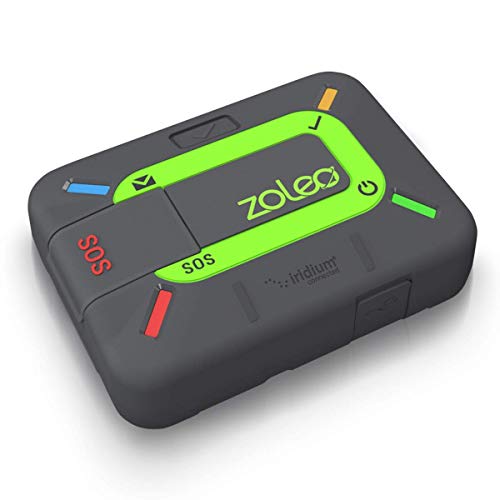
- Two-way Iridium, cellular, and Wi-Fi messaging
- SOS monitoring, Medical Assist, and check-ins
- IP68 design with over 200-hour battery life
Best For: Affordable, app-based communication for hikers
Best Advanced Option

- Global text, voice, group, and photo messaging
- Interactive SOS with 24/7 Garmin Response support
- Up to 350 hours of battery life in tracking mode
Best For: Feature-focused hikers on multi-day trips
Best for Group Tracking
ACR Bivy Stick Satellite Communicator

- Global Iridium messaging, SOS, and GPS tracking
- GroupTrack supports up to 12 people
- Offline maps and 120-hour battery life
Best For: Group hikes and lightweight off-grid navigation
Best Global Coverage Pick

- Two-way messaging and interactive SOS
- Up to 14 days of battery life
- Rugged, compact design with TracBack
Best For: Hikers needing global coverage and extended battery life
Best Lightweight Smartphone Companion

- Pairs with iOS and Android phones
- Two-way messaging and SOS assistance
- 2.5-ounce IP68-rated design
Best For: Phone-carrying hikers wanting a compact satellite link
Best Simple Pick

- GroupTrack supports up to 12 people
- Unlimited GPS check-ins and live tracking
- Offline maps and global Iridium coverage
Best For: Groups, guides, and families sharing locations off-grid
Connected Trail Safety – ZOLEO Satellite Communicator
For hikers comparing satellite communicators for hiking, the ZOLEO Satellite Communicator is a practical choice when you want two-way messaging through satellite, cellular, or Wi-Fi networks. It pairs with an Android or iOS phone and includes SOS monitoring, check-ins, location sharing, and an assigned SMS number.
Best For: Hikers who want flexible messaging, dependable tracking, and extended battery life in remote areas.
Pros:
- Supports two-way messaging over Iridium satellite, cellular, or Wi-Fi.
- Offers immediate SOS activation with 24/7 emergency monitoring and medical assistance.
- Provides up to 200 hours of battery life in tracking mode and IP68-rated durability.
- Includes GPS location sharing, check-ins, weather forecasts, and a dedicated SMS number.
Cons:
- A service plan is required for messaging and satellite features.
- Messaging and app controls depend on pairing with a compatible smartphone.
With USB-C charging, secure Bluetooth pairing, and no annual contract requirement, ZOLEO is a well-rounded option for hikers who prioritize communication flexibility and long tracking endurance.
Navigation-Ready Messaging – Garmin inReach Mini 2 Orange
The orange Garmin inReach Mini 2 combines two-way messaging, interactive SOS, and navigation in a compact device. Among satellite communicators for hiking, it stands out for hikers who want TracBack routing, a digital compass, and Garmin Explore trip-planning support alongside off-grid communication.
Best For: Hikers who want a lightweight communicator with navigation tools and Garmin ecosystem integration.
Pros:
- Enables two-way messaging and interactive SOS globally with an active subscription.
- Uses TracBack routing to help navigate back to the starting point.
- Includes a digital compass that provides heading information while stationary.
- Offers up to 14 days of battery life in 10-minute tracking mode.
Cons:
- An active satellite subscription is required for messaging and SOS functions.
- The small 1.27-inch monochrome display is designed for basic device operation rather than detailed mapping.
At 99 grams, the inReach Mini 2 is easy to carry and adds useful navigation features without replacing a dedicated mapping device or smartphone.
Standalone SOS Messaging – SPOT X Bluetooth Satellite Messenger
The SPOT X with Bluetooth is a two-way satellite messenger for hikers who want to contact phone numbers or email addresses beyond cellular coverage. It can pair with a smartphone or work as a standalone device using its dedicated U.S. mobile number, while providing SOS communication with a 24/7 search-and-rescue service.
Best For: Outdoor users who value standalone messaging, dedicated contact details, and SOS communication.
Pros:
- Sends two-way messages to cell numbers and email addresses through the Globalstar satellite network.
- Provides SOS messaging with two-way communication about the emergency.
- Can operate with Bluetooth and a phone or independently with its dedicated U.S. mobile number.
- Offers GPS location transmission and up to 240 hours of battery life.
Cons:
- A service plan and activation are required.
- Uses a micro USB power/data cable rather than USB-C.
- Its 7.04-ounce weight is higher than some compact satellite communicators.
The SPOT X is a useful pick for hikers who want a more self-contained messaging device and the ability to continue an SOS conversation with responders.
Compact Route Tracking – Garmin inReach Mini 2 Black
The black Garmin inReach Mini 2 offers the same compact communication and navigation platform as the orange version, making it a strong option for satellite communicators for hiking. It supports two-way messaging, interactive SOS, location sharing, TracBack routing, and synchronization with Garmin Explore.
Best For: Hikers seeking a compact, understated communicator with route-back navigation and Garmin app support.
Pros:
- Supports two-way messaging and interactive SOS globally with an active subscription.
- TracBack routing helps guide you back to where you started.
- Garmin Explore supports trip planning, topographical mapping, waypoints, and courses.
- Provides up to 14 days of battery life in 10-minute tracking mode.
Cons:
- An active satellite subscription is required for messaging, location sharing, and SOS.
- The monochrome 1.27-inch display is compact and not intended for full detailed map viewing.
Weighing 99 grams and offering Bluetooth smartphone integration, this version is well suited to hikers who want route tracking and emergency communication in a small handheld device.
Best Value – ZOLEO Satellite Communicator
For hikers who want straightforward two-way communication beyond cell coverage, the ZOLEO Satellite Communicator uses the Iridium network, cellular service, or Wi-Fi through its smartphone app. It combines messaging, SOS support, check-ins, and location sharing in a compact, rugged package.
Best For: Hikers seeking affordable off-grid messaging with a long-lasting battery and simple app-based operation.
Pros:
- Supports two-way messages and emails over satellite, cellular, or Wi-Fi.
- Offers SOS alerting with 24/7 monitoring and non-emergency Medical Assist.
- IP68-rated design and battery life of over 200 hours.
- Includes unlimited check-ins and an assigned SMS number and email address with service.
Cons:
- Requires a paid service plan.
- Needs a compatible smartphone for app-based messaging and control.
- Some location-sharing features are optional add-ons.
The ZOLEO is a practical choice for hikers who prioritize dependable messaging, emergency support, and extended battery life without needing a built-in screen.
Best Advanced Option – Garmin inReach Mini 3 Plus
The Garmin inReach Mini 3 Plus is a feature-rich option among satellite communicators for hiking. It supports global messaging through the Iridium network, including texts, voice messages, group messages, and photo sharing when paired with a compatible smartphone.
Best For: Multi-day hikers who want a touchscreen communicator with interactive SOS, LiveTrack, weather tools, and extended battery performance.
Pros:
- Enables global messaging and interactive SOS coordination through Garmin Response.
- Scratch-resistant color touchscreen with IP67-rated durability.
- Battery life reaches up to 350 hours with 10-minute tracking.
- Works with Garmin Messenger and Garmin Explore for planning, weather, and LiveTrack.
Cons:
- Photo sharing requires pairing with a compatible smartphone.
- Communication and satellite features depend on service availability and a compatible plan.
- The supplied bundle includes third-party charging accessories.
With its touchscreen interface, voice commands, messaging flexibility, and long battery life, the inReach Mini 3 Plus is well suited to hikers who want more capability than basic text check-ins.
Best for Group Tracking – ACR Bivy Stick Satellite Communicator
The ACR Bivy Stick combines global Iridium messaging with GPS tracking, offline maps, weather updates, and location sharing through its iOS or Android app. For hiking groups, its GroupTrack feature can share messages and locations with up to 12 people.
Best For: Solo or group hikers who want lightweight satellite communication with offline navigation and live tracking.
Pros:
- Provides global two-way SMS, email, SOS, weather, and location sharing.
- Supports unlimited GPS check-ins and live breadcrumb tracking.
- GroupTrack supports messaging and location sharing with up to 12 people.
- Includes offline maps and GPS data for pace, mileage, and altitude.
Cons:
- Requires a Bivy service plan with a three-month initial commitment.
- Battery life is rated at up to 120 hours, shorter than some competing options.
- Most functions rely on the Bivy app and a compatible smartphone.
The Bivy Stick stands out for hikers who value group coordination and navigation features alongside emergency communication, while its compact 3.35-ounce design keeps pack weight low.
Best Global Coverage Pick – Garmin inReach Mini 2
For hikers who need dependable satellite communicators for hiking, the Garmin inReach Mini 2 combines two-way messaging, interactive SOS, GPS, and Iridium global coverage in a compact, rugged device. Its long battery life and flexible service-plan options make it suitable for extended trips beyond cell coverage.
Best For: Hikers prioritizing global coverage, extended battery life, and a dedicated SOS service.
Pros:
- Two-way messaging and interactive SOS through the 24/7 Garmin Response coordination center.
- Up to 14 days of battery life in the default tracking mode, or up to 30 days with 30-minute tracking.
- Compact, MIL-STD-810-rated, IPX7 water-resistant design with TracBack routing and weather updates.
- Can be controlled through compatible smartphones, tablets, Garmin wearables, or handhelds.
Cons:
- Requires a satellite airtime plan for messaging and SOS features.
- The listed bundle includes several accessories, but adds more bulk than the communicator alone.
The inReach Mini 2 is a strong all-around choice when worldwide reach, emergency coordination, and long runtime matter more than having a large screen.
Best Lightweight Smartphone Companion – Motorola Defy Satellite Link
The Motorola Defy Satellite Link is a lightweight option for hikers who want satellite communicators for hiking that pair with an existing iOS or Android phone. It supports two-way satellite messaging, location check-ins, and SOS assistance while remaining small enough to carry with minimal fuss.
Best For: Smartphone users who want a compact satellite messenger for check-ins and emergency communication.
Pros:
- Works with iOS 14 and Android 10 or later smartphones through Bluetooth.
- Supports two-way satellite messaging, coordinate sharing, and SOS assistance without a cellular connection.
- IP68-rated construction is dustproof and waterproof to nearly 5 feet for up to 30 minutes.
- Weighs 2.5 ounces and includes a webbing strap with D-ring attachment.
Cons:
- Requires a service plan, including for satellite SOS and messaging features.
- Battery standby life is listed at up to four days, shorter than some competing options.
- Most messaging and navigation functions depend on the paired smartphone and app.
This is a practical pick for day hikers and weekend adventurers who already carry a compatible phone and mainly need off-grid messaging and SOS access.
Best Simple Pick – ACR Bivy Stick
The ACR Bivy Stick stands out among satellite communicators for hiking with unlimited GPS check-ins, live tracking, group messaging, offline maps, and global Iridium coverage. It connects to an iOS or Android app, making it especially useful for hiking groups, guides, and families sharing an itinerary.
Best For: Groups that want live location sharing, offline navigation, and frequent GPS check-ins.
Pros:
- Global Iridium coverage supports two-way SMS, email, GPS tracking, SOS, weather, and location sharing.
- GroupTrack supports messaging and location sharing with up to 12 people.
- Offers unlimited GPS check-ins, live breadcrumb tracking, and offline maps through the Bivy app.
- 24/7 SOS monitoring is provided through Global Rescue.
Cons:
- Requires a service plan, with listed monthly and annual pricing tiers.
- Core controls and navigation features rely on the Bivy app and a compatible smartphone.
- Its listed 120-hour battery life is shorter than the extended runtimes of some dedicated communicators.
The Bivy Stick is a compelling choice for organized group outings or solo hikers whose contacts need to follow a live route rather than receive occasional check-ins.
How We Picked the Best Satellite Communicators for Hiking
We focused on the features that matter most beyond cellular coverage: satellite-network reach, two-way messaging, SOS functionality, GPS tracking, phone integration, battery practicality, device size, and ease of use. We also considered whether each communicator works as a standalone device or depends heavily on a paired smartphone.
The list includes compact messengers for day hikes, rugged trackers for longer expeditions, and newer devices with expanded messaging or touchscreen features. Because subscription plans can affect total ownership cost, compare activation fees, message limits, tracking intervals, and seasonal options before buying.
Quick Comparison
| Best For | Look For |
|---|---|
| Simple emergency backup | Dedicated SOS, clear status indicators, and dependable battery life |
| Frequent two-way messaging | Reliable app connectivity, comfortable texting, and flexible plans |
| Navigation and tracking | GPS tools, breadcrumb tracking, location sharing, and waypoint support |
| Long or remote trips | Iridium or similarly broad satellite coverage, rugged construction, and extended battery performance |
| Phone-free operation | On-device controls, display visibility, and standalone messaging capability |
Key Buying Factors for Satellite Communicators for Hiking
Satellite Coverage and Message Delivery
Check the coverage map for the regions where you hike. Dense forest, steep canyon walls, and poor sky visibility can delay transmission on any network, so a clear view of the sky remains important. Two-way confirmation is preferable to one-way tracking because you can verify that messages and SOS updates were received.
Messaging, Tracking, and SOS Features
Decide whether you need occasional check-ins or regular conversations. Some devices are designed around a smartphone app, while others provide more direct control. For route tracking, review interval settings and battery impact. SOS service should connect to a staffed emergency response center, provide location data, and support two-way communication when possible.
Battery, Durability, and Usability
Choose a battery rating that exceeds your planned trip length, especially in cold weather or when tracking continuously. Water resistance, impact protection, glove-friendly controls, and visible indicators are valuable on demanding trails. A lightweight device is easier to carry, but a slightly larger model may offer better controls and battery capacity.
Subscription and Phone Compatibility
Review the required service plan before purchasing. Check supported iOS and Android versions, Bluetooth reliability, contact management, mapping tools, and whether messages can be sent without the phone. Also confirm what happens when a plan is paused, canceled, or changed between hiking seasons.
Who Should Buy Which Satellite Communicators for Hiking?
Choose a compact Garmin or ZOLEO model if you want a proven everyday communicator with location sharing and two-way messaging. Garmin options are especially appealing to hikers who already use Garmin navigation products, while ZOLEO is well suited to users who prefer messaging through a phone app.
Consider ACR Bivy Stick or SPOT X if broad off-grid communication and tracking are central to your trips. Motorola Defy Satellite Link can make sense for Android or iOS users who want to add satellite messaging to a compatible smartphone without carrying a full-featured handheld communicator. For demanding routes, prioritize the device with the best combination of coverage, battery life, ruggedness, and SOS support rather than choosing solely by size or price.