When you leave cellular coverage, a satellite communicator can provide a crucial link to help, family, and trip partners. The best models combine dependable SOS service with two-way messaging, location tracking, and practical battery life.
Our 2026 roundup compares 10 satellite communicators and satellite phones for hiking, overlanding, boating, hunting, and remote work. Use the guide below to narrow your choice by coverage, messaging features, phone integration, durability, and subscription needs.
Best 10 Satellite Communicators with Sos Picks for 2026
Best for Rich Off-Grid Messaging

- Two-way text, photo, and voice messaging
- Interactive SOS with Garmin Response
- Up to 25 days in 10-minute tracking mode
Best For: Adventurers who want multimedia messaging and Garmin integration
Best for Satellite Voice Calls

- Satellite voice calls, SMS, and GPS tracking
- One-touch assistance button
- Up to 8 hours talk time and 160 hours standby
Best For: Remote users who prioritize voice communication
Best for Long-Tracking Adventures

- Up to 350 hours of 10-minute tracking
- Interactive SOS through Garmin Response
- IP67 touchscreen design with navigation tools
Best For: Backpackers needing extended battery life and navigation
Best for Simple Two-Way SOS Messaging

- Two-way messages to phones and email
- Back-and-forth SOS communication
- Up to 240 hours of battery life
Best For: Outdoor users seeking basic messaging and SOS protection
Best Touchscreen Pick

- Text, voice, and photo messaging
- Up to 350 hours of battery life
- Garmin watch and handheld integration
Best For: Extended trips and Garmin ecosystem users
Best App-Based Value
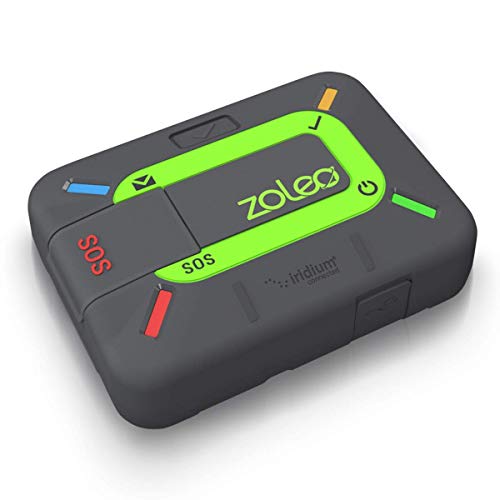
- Satellite, cellular, and Wi-Fi messaging
- 24/7 SOS monitoring with GPS location
- More than 200 hours of battery life
Best For: Smartphone-based remote travel communication
Best Voice-Capable Option

- Voice calls, SMS, GPS, and SOS
- Global Iridium network coverage
- Rugged IP65 satellite phone bundle
Best For: Global voice communication and demanding field use
Best Compact Navigator

- Two-way messaging and interactive SOS
- 99-gram design with GPS navigation
- Up to 14 days of battery life
Best For: Hikers and campers prioritizing portability
Best Group Tracking Option
ACR Bivy Stick Satellite Communicator

- Global Iridium coverage and SOS monitoring
- GroupTrack for up to 12 people
- IPX7 waterproof and app-connected
Best For: Groups and guides needing live location sharing
Best Button-Controlled Garmin

- Global two-way messaging and SOS
- Physical push-button operation
- Up to 14 days in tracking mode
Best For: Hikers wanting simple, compact controls
Best for Rich Off-Grid Messaging – Garmin inReach Messenger Plus
For travelers who want more than basic emergency messaging, the Garmin inReach Messenger Plus is one of the most versatile satellite communicators with SOS. With an active subscription and a compatible smartphone, it supports two-way text, photo, and voice messaging when cellular service is unavailable.
Best For: Adventurers who want multimedia messaging, location sharing, and Garmin ecosystem integration.
Pros:
- Supports texts up to 1,600 characters, photos, and 30-second voice messages.
- Interactive SOS connects with Garmin Response, a 24/7-staffed coordination center.
- Battery supports up to 25 days in 10-minute tracking mode and can safety-charge a depleted phone.
- Can switch between Wi-Fi, smartphone cellular service, and satellite connectivity.
Cons:
- Requires an active subscription for satellite messaging and SOS.
- Multimedia features require a compatible smartphone and Garmin Messenger app.
- Some jurisdictions regulate or prohibit satellite communication devices.
Its standout advantage is communication flexibility: you can send richer updates than with a basic text messenger while retaining tracking, TracBack navigation, and SOS functions. It is a strong choice for users already invested in Garmin devices.
Best for Satellite Voice Calls – OSAT Inmarsat IsatPhone 2
The OSAT Inmarsat IsatPhone 2 is a traditional satellite phone for users who prioritize voice communication and emergency readiness. It supports calls, SMS, GPS tracking, and an assistance button across most regions outside the polar areas, with an airtime plan required before use.
Best For: Remote workers, emergency-preparedness users, and travelers who need satellite voice calls.
Pros:
- Provides satellite voice calls, SMS, and GPS tracking across near-global coverage.
- One-touch assistance button can send GPS location data to emergency contacts.
- Offers up to 8 hours of talk time and 160 hours of standby.
- Shock-, dust-, and splash-resistant design is suited to demanding conditions.
Cons:
- Requires purchasing and activating an airtime plan for the included SIM card.
- Coverage excludes polar regions.
- Larger and less messaging-focused than compact satellite messengers.
Choose the IsatPhone 2 when a real voice conversation is more useful than app-based text messaging. Its long standby time and dedicated assistance button also make it practical for backup communications and emergency kits.
Best for Long-Tracking Adventures – Garmin inReach Mini 3
The Garmin inReach Mini 3 combines SOS capability, two-way messaging, navigation, and an unusually long stated battery life in a compact handheld design. It uses the Iridium network beyond cell coverage and requires an active satellite subscription.
Best For: Backpackers and expedition users who need extended tracking, weather information, and rugged navigation features.
Pros:
- Supports interactive SOS messaging with location coordinates through Garmin Response.
- Battery supports up to 350 hours with 10-minute inReach tracking.
- Rugged IP67 design includes a scratch-resistant color touchscreen and glove-friendly physical buttons.
- Provides weather reports, location sharing, and navigation when paired with Garmin apps.
Cons:
- Requires an active satellite subscription.
- Some navigation and LiveTrack functions require a compatible smartphone and Garmin apps.
- Some jurisdictions regulate or prohibit satellite communication devices.
The Mini 3 is particularly compelling for trips where recharging is difficult. Its long tracking runtime, weather tools, touchscreen, and navigation features make it more capable than a basic SOS-only device.
Best for Simple Two-Way SOS Messaging – SPOT X Satellite Messenger
The SPOT X is a straightforward two-way satellite messenger for outdoor users who want to exchange messages and send an SOS without relying on cellular coverage. It can work independently with its own dedicated U.S. mobile number or pair with a phone over Bluetooth, and a service plan is required.
Best For: Hikers, campers, and vehicle travelers seeking basic two-way messaging and SOS protection.
Pros:
- Supports two-way messages to cell numbers and email addresses virtually anywhere.
- SOS messaging enables back-and-forth communication with 24/7 search-and-rescue service.
- Can operate as a standalone device or connect to Android and iPhone devices through Bluetooth.
- Battery is rated for up to 240 hours.
Cons:
- Requires activation and a subscription service plan.
- Uses a Globalstar satellite network, so coverage and performance depend on that network.
- Its feature set is more focused on messaging and SOS than advanced navigation.
SPOT X makes sense for users who want a dedicated communicator with a built-in contact number and clear emergency messaging workflow. It is less feature-rich than Garmin’s newer models but offers a practical approach to basic off-grid contact.
Best Touchscreen Pick – Garmin inReach Mini 3 Plus
For shoppers comparing satellite communicators with sos, the Garmin inReach Mini 3 Plus stands out as a compact, feature-rich option for two-way messaging and emergency communication. It supports text, voice, and photo messaging, touchscreen control, paired-device access, and up to 350 hours of battery life, though an applicable subscription is required for satellite features.
Best For: Hikers, travelers, and Garmin users who want a lightweight communicator with touchscreen controls, rich messaging, and extended battery life.
Pros:
- Supports text, voice, and photo messaging through the device and Garmin Messenger app.
- Offers global SOS satellite communication, LiveTrack location sharing, and seamless switching to satellite service outside cellular coverage.
- Up to 350 hours of battery life, plus the included 5,000 mAh power bank, car charger, and wall adapter.
- Pairs with compatible Garmin watches and handhelds for remote controls and SOS activation.
Cons:
- Satellite messaging and SOS features require a subscription.
- Some messaging functions depend on a compatible smartphone, Garmin device, or available Wi-Fi/cellular connection.
The Mini 3 Plus is a strong choice when messaging versatility, Garmin ecosystem integration, and long battery endurance matter more than a basic SOS-only design. The Wearable4U bundle also adds useful charging accessories for extended trips.
Best App-Based Value – ZOLEO Satellite Communicator
The ZOLEO is a practical choice for shoppers seeking satellite communicators with sos that work alongside a smartphone. It uses the lowest-cost available network among Iridium satellite, cellular, and Wi-Fi connections, while providing two-way messaging, location sharing, check-ins, and 24/7 emergency monitoring with a service plan.
Best For: Campers, hikers, and remote travelers who prefer smartphone-based messaging with a dedicated SMS number and straightforward check-in features.
Pros:
- Supports two-way messaging over Iridium satellite, cellular, or Wi-Fi through the ZOLEO app.
- Includes SOS alerts with GPS location sent to a 24/7 emergency monitoring center.
- Offers unlimited check-ins within the plan, an assigned SMS number, and email access for incoming contacts.
- IP68-rated construction and more than 200 hours of stated battery life.
Cons:
- A smartphone and service plan are required for the main messaging experience.
- Regular location sharing is listed as an optional add-on.
- At 12 ounces, it is heavier than some compact satellite communicators.
ZOLEO makes sense for users who want their existing phone to handle longer messages and email while the communicator supplies satellite connectivity and emergency support. Its check-in allowance and dedicated number can also simplify routine contact off the grid.
Best Voice-Capable Option – BlueCosmo Iridium Extreme
For buyers who need more than messaging, the BlueCosmo Iridium Extreme combines satellite phone calls, SMS, GPS tracking, and an emergency SOS button. Its Iridium network is described as covering the globe, including oceans and polar regions, while the included prepaid SIM and charging accessories provide a ready-to-activate communications package.
Best For: Professionals, crews, and travelers who need voice calling and global satellite coverage in addition to SOS and text capabilities.
Pros:
- Supports voice calls, SMS, GPS tracking, and emergency SOS through the Iridium network.
- Designed for global use, including oceans, airways, and polar regions, with no roaming charges stated.
- Military-standard durability claims, IP65 ingress protection, and a rugged tapered grip.
- Bundle includes a prepaid SIM, international wall charger, vehicle charger, holster, hands-free earpiece, and external antenna accessories.
Cons:
- Battery life is listed at approximately 30 hours, substantially less than dedicated messaging devices.
- Prepaid airtime or an applicable service option is needed for continued calling and messaging.
- Its phone-oriented design is heavier and less compact than small satellite messengers.
The Iridium Extreme is the most suitable pick here for voice-first communication and demanding global deployments. It costs more in size and battery endurance than a simple messenger, but the phone functionality, rugged construction, and extensive bundle add practical value where calls are essential.
Best Compact Navigator – Garmin inReach Mini 2 Orange
If you want satellite communicators with sos capability in a compact package, the Garmin inReach Mini 2 offers two-way messaging and interactive SOS globally with an active satellite subscription. Its lightweight design, navigation tools, and Bluetooth app support make it practical for hiking and camping beyond cell service.
Best For: Hikers and campers who want a small, lightweight communicator with navigation and long battery life.
Pros:
- Two-way messaging and interactive SOS through the global inReach network with an active subscription
- Compact 99-gram design with a sunlight-readable monochrome display
- TracBack routing, digital compass, GPS, and Garmin Explore app compatibility
- Battery life of up to 14 days in 10-minute tracking mode
Cons:
- Requires an active satellite subscription for messaging, location sharing, and SOS
- Small 1.27-inch display is better suited to basic device controls than detailed map viewing
- Satellite communication devices may be regulated or prohibited in some jurisdictions
The Mini 2 is a strong choice when portability matters most. It combines essential emergency communication with useful route-back and location-sharing features, while the orange finish can be easy to spot in outdoor gear.
Best Group Tracking Option – ACR Bivy Stick Satellite Communicator
The ACR Bivy Stick is one of the more feature-rich satellite communicators with sos support for users who rely heavily on a phone app. It uses global Iridium coverage for two-way messages, location sharing, tracking, weather updates, and SOS monitoring through iOS or Android.
Best For: Groups, guides, and adventurers who want live tracking, group messaging, and app-based off-grid communication.
Pros:
- Global Iridium satellite coverage for messaging, GPS tracking, offline maps, weather, and SOS
- 24/7 SOS monitoring with Global Rescue and location sharing
- GroupTrack supports messaging and tracking with up to 12 people
- IPX7 waterproof enclosure with a 120-hour stated battery average
Cons:
- Requires a subscription plan, with pricing varying by monthly or annual option
- Many features depend on the Bivy app and a compatible iOS or Android smartphone
- Battery average is shorter than the Garmin Mini 2’s stated 14-day tracking figure
The Bivy Stick stands out for collaborative trips. Its dedicated phone number and email, live map sharing, and GroupTrack tools are particularly useful when several people need to stay connected beyond cellular coverage.
Best Button-Controlled Garmin – Garmin inReach Mini 2 Black
The black Garmin inReach Mini 2 is a dependable pick among satellite communicators with sos functionality, offering two-way messaging and interactive SOS globally when paired with an active subscription. Its button controls, GPS features, and Garmin Explore compatibility suit users who prefer straightforward operation in the outdoors.
Best For: Outdoor users who want a compact, button-operated satellite communicator with navigation and location sharing.
Pros:
- Two-way messaging and interactive SOS beyond cell service with an active subscription
- Lightweight 99-gram handheld design with a sunlight-readable display
- TracBack routing, digital compass, GPS, and Garmin Explore synchronization
- Battery life of up to 14 days in 10-minute tracking mode
Cons:
- Subscription required for satellite messaging, location sharing, and SOS
- Small 1.27-inch screen limits on-device viewing space
- Satellite devices may be restricted in some jurisdictions
This version delivers the same core Mini 2 feature set in a black finish, with physical push-button control instead of touchscreen operation. It is a sensible fit for hikers and campers who value simple, glove-friendly handling.
How We Picked These Satellite Communicators with Sos
We focused on devices that support emergency SOS communication through a satellite network, then compared the features that matter most away from cellular service. The selection includes compact messengers, app-connected units, rugged standalone devices, and full satellite phones.
Our criteria included network reach, two-way messaging, SOS handling, location sharing, GPS performance, battery expectations, weather resistance, ease of use, and the cost and flexibility of required service plans. Because coverage and plan terms can change, confirm current details for your destination before buying.
Quick Comparison
| Device type | Best for | Primary strength | Potential trade-off |
|---|---|---|---|
| Compact satellite messenger | Hikers and travelers | Small size and SOS access | Limited on-device typing |
| Phone-connected messenger | Frequent messaging | Uses a smartphone interface | Depends on phone battery and Bluetooth |
| Rugged messenger | Remote expeditions | Durability and standalone controls | Higher price or subscription cost |
| Satellite phone | Voice communication | Direct calls in remote areas | Bulkier hardware and airtime costs |
Key Buying Factors for Satellite Communicators with Sos
Satellite Network and Destination Coverage
Check the network footprint for your actual routes, including polar, ocean, canyon, and forested areas. “Global” coverage does not guarantee an uninterrupted connection everywhere; the device still needs a reasonably clear view of the sky.
SOS and Two-Way Communication
Look for a monitored SOS workflow that allows responders to communicate with you, not merely a one-way distress signal. Two-way text messaging can help clarify your location, injuries, supplies, and evacuation needs.
Messaging, Tracking, and Navigation
Consider whether you need simple check-ins or regular location sharing, route tracking, weather forecasts, waypoint navigation, photo delivery, or voice messages. App-based products are often easier for longer messages, while standalone models can be more dependable when your phone is unavailable.
Battery, Durability, and Subscriptions
Compare claimed battery life in the tracking mode you expect to use, rather than relying only on standby figures. Also check water resistance, impact protection, charging options, activation fees, message limits, suspension rules, and overage charges.
Who Should Buy Which Satellite Communicators with Sos?
Choose a compact Garmin, ZOLEO, SPOT, or ACR messenger if you mainly need emergency contact, check-ins, and location sharing during hiking or travel. A model with a smartphone app is preferable for frequent or detailed messaging.
Choose a newer feature-rich messenger if you want richer communication such as photos, voice messages, touchscreen controls, or more capable tracking. These features can improve convenience, but they may require a larger budget and more data-intensive plan.
Choose an Iridium or Inmarsat satellite phone if voice calls are essential for work, maritime use, remote operations, or coordinating groups. Satellite phones are generally less compact and can cost more to operate, but they remain the clearest choice when text-only communication is insufficient.