Loose sand can make ordinary tent pegs unreliable, especially when wind puts constant tension on guy lines, canopies, and shelters. The right anchor needs to spread its holding power through soft ground instead of pulling straight out.
This roundup compares 10 tent stakes for sandy soil, covering screw-in anchors, spiral plastic designs, aluminum stakes, and heavy-duty options for beach camping and windy conditions.
Best 10 Tent Stakes for Sandy Soil Picks for 2026
Best for Firm Sand and Versatile Campsite Anchoring
Orange Screw Ultimate Ground Anchors

- 9.5-inch screw-in recycled polycarbonate anchors
- Includes T-grip tool for installation
- Works for tents, tarps, and garden tasks
Best For: Campers needing versatile anchors for firm sand and light-duty uses
Drill-In Versatility
Heavy Duty Screw-In Tent Stakes

- Threaded anchors grip sand and varied soil types
- Galvanized carbon steel resists moisture
- 12-piece set includes socket and storage case
Best For: Large shelters and multi-purpose outdoor anchoring
Lightweight Beach Anchoring
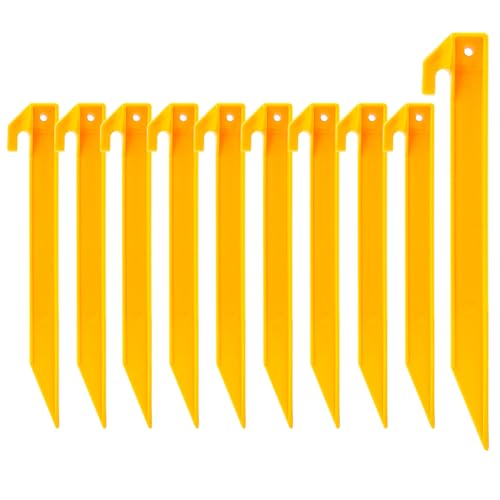
- 9-inch T-beam design for holding power
- Lightweight, weather-resistant ABS construction
- Bright orange color is easy to spot
Best For: Beach tents and lightweight outdoor setups
Best Overall Screw-In Anchor
GroundGrabba Lite Orange Stakes

- Hand-screw design needs no power tool
- 15.75-inch reinforced nylon anchors
- Six-pack for tents and varied tie-downs
Best For: Sandy campsites and versatile outdoor anchoring
Best Lightweight U-Shaped Option
TRIWONDER Aluminum Sand Stakes

- 12.2-inch U-shaped aluminum profile
- Six holes for adjustable rigging
- Lightweight option for sand and snow
Best For: Beach camping, backpacking, and soft terrain
Best Multi-Pack Value

- Spiral design screws into sand and soil
- Nylon-fiberglass build resists rust
- Listed as a 10-piece pack
Best For: Large beach setups and general outdoor tie-downs
Best for Firm Sand and Versatile Campsite Anchoring – Orange Screw Ultimate Ground Anchors
For tent stakes for sandy soil that can also handle broader campsite tasks, these Orange Screw anchors offer a lightweight screw-in design and a included T-grip tool. Their 9.5-inch length suits tents, tarps, and other light-duty anchoring jobs, though the manufacturer specifically positions the small version for firm soils.
Best For: Campers who want reusable screw-in anchors for firm sand, tents, tarps, small dogs, and home or garden projects.
Pros:
- Screw-in design with included T-grip tool for added leverage.
- Lightweight 9.5-inch recycled polycarbonate construction.
- Useful for tents, tarps, cold frames, landscaping, and other tasks.
- Bright orange color and compact four-pack format.
Cons:
- Designed for firm soils, so it may be less suitable for very loose, dry beach sand.
- Four anchors provide fewer pieces than the larger sets in this roundup.
- The small model is intended for lighter-duty applications.
This is a versatile option when you need a compact anchor that works beyond camping. For especially loose sand or large canopies, a wider sand stake may provide a more specialized fit.
Best Wide-Profile Sand Stake – 12.6-Inch Aluminum Sand Stakes
These wide aluminum stakes are purpose-built for tent stakes for sandy soil, with a 1.38-inch profile designed to grip loose beach sand. Their extended length and rope holes also make them useful for canopies, sun shades, tarps, and selected snow-staking setups.
Best For: Beach campers securing tents, canopies, sun shades, or tarps in deep, loose sand.
Pros:
- Long 12.6-inch design helps reach deeper into loose sand.
- Wide U-channel profile is designed to improve grip in sand and packed snow.
- Lightweight aluminum construction is rust-resistant and easy to spot.
- Six-piece set includes rope holes for flexible guyline attachment.
Cons:
- Wide profile may not fit small tent stake loops.
- Not intended for ice or rocky soil.
- Hammering into hard ground can bend the stakes.
Among these options, this set is the most specialized for loose beach sand. Plan to tie guylines through the provided rope holes rather than expecting a narrow stake loop to fit over the body.
Best Lightweight Beach Screw Stake – 10-Inch ABS Canopy Anchors
For shoppers comparing tent stakes for sandy soil, these orange ABS anchors use a long, sharp head and spiral shape to screw into sand and dry dirt. The eight-piece set gives you enough stakes for a tent plus spares, while the lightweight plastic construction keeps carrying weight down.
Best For: Beach tents, canopies, gazebos, tarps, groundsheets, and other lightweight outdoor setups.
Pros:
- Spiral shape is designed for easy insertion into sand and dry dirt.
- 10-inch length provides substantial penetration for common setups.
- Eight-pack offers backup stakes for a tent or canopy.
- Lightweight, bright orange ABS construction is easy to carry and spot.
Cons:
- ABS plastic may be less suitable for very heavy-duty anchoring than metal.
- The wide head and spiral shape may not suit every small tent loop.
- Product notes focus on beach and general ground use rather than hard or rocky soil.
This is a practical middle ground for casual beach use: easier to carry than many metal anchors and more sand-oriented than ordinary narrow pegs. Use it for lightweight-to-moderate setups rather than demanding heavy-wind applications.
Best Large Pack for Loose Soil – 15-Pack Plastic Spiral Tent Stakes
These 10-inch spiral anchors are a useful choice when you need many tent stakes for sandy soil or loose ground. The corkscrew-style coils are designed to resist pulling out, and the bright orange T-shaped heads make hand installation and retrieval straightforward.
Best For: Campers, backpackers, and outdoor users who need a lightweight 15-pack for beach tents, tarps, canopies, inflatables, or garden structures.
Pros:
- Spiral design is intended to grip loose soil and resist pullout.
- 15-piece set supplies ample stakes and replacements.
- 10-inch length balances deeper placement with low weight.
- Oversized T-shaped heads support hand installation, while orange color improves visibility.
Cons:
- Plastic construction may not be ideal for very high-load anchoring.
- Twist-in stakes are not described as suitable for rocky or hard ground.
- The large head may be incompatible with some small stake loops.
If quantity matters, this set stands out with 15 stakes and a design aimed at loose soil. It is especially convenient for group camping or setups where spare anchors are valuable.
Sand-Specific Stability – Ogrmar Aluminum Sand Stakes
For campers comparing tent stakes for sandy soil, the Ogrmar stakes use a wide, 12-inch U-style aluminum design made specifically for sand and snow. Their broad profile is intended to improve stability in soft ground while providing multiple rigging options.
Best For: Beach camping, snow camping, and securing tents or shelters in soft ground.
Pros:
- Wide, longer U-style shape is designed for sand and snow.
- 12-inch length and 1.38-inch width provide a substantial anchoring profile.
- Six holes offer multiple rigging options.
- Lightweight aluminum construction; the six-stake set weighs 1.76 ounces according to the supplied details.
Cons:
- The package includes only six stakes.
- Designed for soft ground, so it may be less suitable for hard or rocky soil.
The Ogrmar is the most purpose-built option here for loose sand or snow. Its wide profile prioritizes holding power in soft conditions, while the aluminum construction keeps the set easy to carry.
Drill-In Versatility – Heavy Duty Screw-In Tent Stakes
These screw-in anchors are a practical alternative for shoppers seeking tent stakes for sandy soil and other ground conditions. The threaded carbon-steel design can be installed with a drill or impact driver and is intended to secure shelters, canopies, tarps, and other outdoor items.
Best For: Campers anchoring larger shelters or gear in sand, dirt, grass, gravel, hard soil, or snow.
Pros:
- Threaded design is intended to provide a stronger grip in varied ground conditions.
- Galvanized carbon steel is described as rust-resistant and durable in moisture.
- Includes 12 stakes, a hexagonal head socket, and a storage case.
- Suitable for tents, canopies, awnings, tarps, trampolines, and decorations.
Cons:
- Installation requires a drill or impact driver.
- At 8 inches long, these stakes are shorter than the 12-inch Ogrmar stakes.
- The metal construction may be less convenient for ultralight packing.
The screw-in format gives this set broader ground-condition versatility than a conventional peg. It is particularly compelling when secure anchoring matters more than the simplest, lightest setup.
Lightweight Beach Anchoring – ABS Plastic Sand Stakes
For lightweight campers looking at tent stakes for sandy soil, these 9-inch ABS plastic stakes combine a T-beam profile with low weight. Their bright orange color makes them easier to spot in sand, grass, or forest floors, and the set is designed for tents, tarps, canopies, and outdoor decorations.
Best For: Beach tents, lightweight backpacking setups, tarps, canopies, and visible outdoor anchoring.
Pros:
- Durable ABS plastic is described as weather-resistant and impact-resistant.
- T-beam design is intended to improve holding power across several soil types.
- At 9 inches long and 0.99 ounce each, they balance reach with low weight.
- Bright orange color improves visibility and retrieval.
Cons:
- Plastic construction may not be the preferred choice for extremely demanding anchoring.
- The 10-pack is shorter than the 12-inch Ogrmar option.
This set is a sensible choice when portability and visibility are priorities. The T-beam shape is tailored toward holding power, while the ABS construction keeps the stakes lighter than comparable metal alternatives.
Best Overall Screw-In Anchor – GroundGrabba Lite Orange Stakes
For campers who want strong tent stakes for sandy soil without carrying a drill, the GroundGrabba Lite uses a screw-in design that digs into soft ground by hand. Its 15.75-inch length and reinforced nylon construction make it a versatile choice for tents, canopies, tarps, and other light anchoring tasks.
Best For: Campers seeking reusable screw-in anchors for sandy or loose ground, plus users who want one stake for camping and general outdoor tie-downs.
Pros:
- Installs without power tools in soft, loose, or sandy surfaces.
- Long 15.75-inch design and screw-in flights provide substantial grip.
- Glass-reinforced nylon resists rust and supports varied anchoring uses.
- Six-pack includes built-in hooks and works with a 3/4-inch hex clip-in socket.
Cons:
- Screw-in stakes are intended for soft surfaces and may not suit hard, rocky soil.
- The 15.75-inch length may take more pack space than compact pegs.
The GroundGrabba Lite is a strong all-around pick when easy hand installation and versatility matter. Its longer profile is especially appealing for sandy campsites and larger items such as canopies or tarps.
Best Lightweight U-Shaped Option – TRIWONDER Aluminum Sand Stakes
These TRIWONDER tent stakes for sandy soil use a long, U-shaped aluminum profile to spread stress across soft terrain. Six adjustable holes give you multiple rope-placement options, while the 45-degree insertion recommendation helps improve stability in sand and snow.
Best For: Beach campers, backpackers, and hikers who want lightweight aluminum stakes for tents, tarps, or canopies on sand or snow.
Pros:
- Lengthened 12.2-inch U-shaped design is made for soft ground.
- High-strength aluminum offers a lightweight, durable construction.
- Six holes allow adjustable rigging and rope placement.
- Designed for beach camping, hiking, backpacking, and snow use.
Cons:
- U-shaped stakes may be less convenient to install than screw-in anchors.
- The product listing has inconsistent unit-count details, so verify the package contents before buying.
Choose the TRIWONDER set when pack weight and soft-ground holding power are priorities. Its long aluminum body and adjustable holes make it particularly suited to beach or snow setups where conventional short pegs can struggle.
Best Multi-Pack Value – Spiral Nylon Beach Anchors
For buyers who need several tent stakes for sandy soil, these orange spiral anchors provide a 10-piece pack and a hand-screw installation method. The 9.4-inch nylon-and-fiberglass stakes are designed for tents, tarps, canopies, decorations, and other lightweight outdoor tie-downs.
Best For: Families, party setups, and campers who want multiple reusable spiral anchors for beach trips and general outdoor projects.
Pros:
- Ten-piece pack supplies plenty of anchors for larger setups.
- Thickened spiral shape is designed to hold in sand and soil.
- Nylon-fiber construction will not rust or deteriorate like metal.
- Lightweight 9.4-inch design is easy to carry and store.
Cons:
- Shorter than the 15.75-inch GroundGrabba stakes in this roundup.
- Plastic construction may be less suitable for demanding anchoring than heavier-duty options.
- Package information is inconsistent: the title says 10 pieces, while the supplied details list six.
This set stands out for quantity and versatility, especially when you need anchors for several tents, decorations, or tarps. Confirm the actual package count before ordering, and reserve it for the soft-ground applications described by the manufacturer.
How We Picked the Best Tent Stakes for Sandy Soil
We focused on the features that matter most in loose, shifting ground: anchor shape, length, material, installation method, pack size, and intended use. Screw-in and spiral stakes generally provide more resistance than short straight pegs because they engage more sand. Longer stakes can also improve holding power, although they may be harder to install in compacted or mixed terrain.
We also considered practical differences between aluminum, plastic, and heavier-duty anchor designs. Aluminum stakes are light and corrosion-resistant, while plastic options can be affordable and easy to replace. Screw-in anchors are often the better choice for high-wind setups, but they require more installation effort and storage space.
Quick Comparison
| Stake type | Best for | Main advantage | Potential limitation |
|---|---|---|---|
| Screw-in metal anchor | Windy campsites and canopies | Strong grip and reusable construction | Heavier and slower to install |
| Aluminum sand stake | Beach and backpacking trips | Lightweight and rust-resistant | Can bend under excessive force |
| Plastic spiral stake | Casual camping and shade shelters | Affordable and easy to handle | May be less durable in hard ground |
| U-shaped aluminum stake | Soft sand and snow | Broad surface area with low weight | Requires suitable guy-line placement |
Key Buying Factors for Tent Stakes for Sandy Soil
Shape and Holding Area
Choose spiral, screw-in, or broad-profile stakes that resist being pulled through loose sand. Narrow straight pegs are best reserved for firm soil or backup use.
Length and Construction
Longer stakes usually reach deeper, more stable sand. Aluminum keeps weight down, while reinforced plastic and heavy-duty metal are better suited to repeated use or strong winds.
Installation and Removal
Screw-in designs offer excellent engagement but take more time to place. Look for a head or loop that accepts a cord, carabiner, or tool without damaging the stake. Remove anchors by reversing the screw rather than pulling aggressively.
Pack Size and Portability
Count how many tie-down points your shelter uses before buying. Larger packs are useful for tents, tarps, and canopies, while compact aluminum sets are easier to carry on foot.
Who Should Buy Which Tent Stakes for Sandy Soil?
Choose heavy-duty screw-in anchors for large canopies, windy beaches, and shelters where failure could damage equipment. Choose aluminum sand stakes when low weight and corrosion resistance matter for camping, hiking, or travel. Choose plastic spiral stakes for occasional beach trips, lightweight shade structures, or budget-friendly replacements. Choose U-shaped aluminum stakes when you want a broad, lightweight profile that works across soft sand and snow.
Whichever style you choose, set each stake at the recommended angle, bury or screw it as deeply as practical, and keep guy lines evenly tensioned. For severe weather, use extra anchors and avoid relying on a single stake at high-load points.