Choosing the right ultralight sleeping bag can make a big difference on the trail. The best options save pack space and ounces without leaving you cold at night.
Below, we focus on practical picks for backpackers, hikers, and minimalist campers who want dependable warmth, efficient compression, and real-world comfort.
Best 10 Ultralight Sleeping Bags Picks for 2026
Editor’s Pick
Naturehike 650FP Ultralight Down Bag

- 1.3 lb CW295 weight
- 650FP duck down fill
- YKK zipper and compact pack size
Best For: Backpackers wanting a light 3-season down bag
Premium Performance
Therm-a-Rest Parsec 32 Ultralight

- 800-fill hydrophobic down
- Recycled ripstop shell
- SynergyLink pad connectors
Best For: Technical backpackers and alpine travelers
Budget-Friendly Pick
Naturehike Compact Envelope Bag

- 1.68 lb lightweight build
- Roomy envelope shape
- Compression sack included
Best For: Travelers and campers who want a roomy light bag
Cold-Weather Value

- 680FP duck down insulation
- Detachable 80g pillow included
- Compact pack size with YKK zipper
Best For: Campers who want comfort features in a packable bag
Ultralight Quilt Pick
850 Down Ultralight Backpacking Camping Blanket

- 1.9 lb top quilt for easy packing
- 850-fill down for strong warmth-to-weight
- Foot box and pad straps improve comfort
Best For: Backpackers who want a light, versatile quilt for cool-weather trips
Balanced Three-Season Pick
Naturehike Ultralight Down Sleeping Bag

- 2 lb packed weight for easy carrying
- 650FP RDS down with 40.4°F comfort rating
- Hybrid shape offers warmth up top and leg room নিচe
Best For: Three-season hikers and travelers who want a lightweight, roomier down bag
Best with Extra Features
Sierra Designs Cloud 20 Degree DriDown Sleeping Bag

- 800 fill power DriDown insulation
- Zipperless comforter-style design
- Rear pad sleeve and draft control features
Best For: Backpackers who want a roomier ultralight bag with dependable warmth
Cold-Weather Pick
0 Degree Down Mummy Sleeping Bag
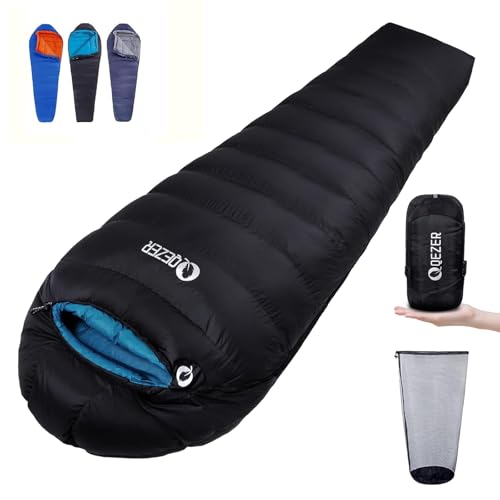
- 600 fill power duck down insulation
- 0°F to 18°F comfort range
- Wider foot box with connectable zippers
Best For: Winter campers who need warmth first and packability second
Lightest Pick
Night Cat 600 FP Duck Down Sleeping Bag

- 2.3 lb weight with compact packed size
- 600 fill power duck down
- Dual zippers with snag-reducing inner barrier
Best For: Hikers and backpackers looking for a lighter down bag for milder weather
Editor’s Pick – Naturehike 650FP Ultralight Down Bag
If you want ultralight sleeping bags that still feel warm and well-finished, this Naturehike model is a strong backpacking pick. It keeps weight low at 1.3 lb for the CW295 version, uses 650 fill power duck down, and packs down small enough for easy carrying on hiking trips.
Best For: Backpackers who want a light, compact down bag for 3-season trips and cooler evenings.
Pros:
- Very light at 1.3 lb / 565 g for the CW295 size
- 650FP duck down with individual down channels for more even warmth
- 20D400T nylon shell and lining with water-repellent treatment
- YKK two-way zipper and compact stowed size for easier packing
Cons:
- Temperature range is geared more toward mild to moderate conditions
- Size choice matters, since the CW295 and CWM400 options differ
This is a practical entry-level down bag for hikers who want a genuine lightweight setup without moving into extreme cold territory. The materials and construction look thoughtfully chosen for backpacking convenience.
Premium Performance – Therm-a-Rest Parsec 32 Ultralight
For ultralight sleeping bags aimed at serious mountain travel, the Therm-a-Rest Parsec 32 focuses on warmth control, low weight, and premium materials. Its 800-fill hydrophobic down, zoned insulation, and lightweight recycled shell make it a refined choice for summer alpine missions and fast-moving trips.
Best For: Mountaineers and backpackers who want a premium, lightweight mummy bag with technical features.
Pros:
- 800-fill Nikwax Hydrophobic Down with PFC-free, RDS-certified fill
- GRS-certified recycled nylon ripstop fabric keeps the bag light and durable
- SynergyLink Connectors help secure the bag to a sleeping pad
- Zoned insulation and Toe-asis foot warmer target warmth where it matters
Cons:
- Mummy shape is less roomy than rectangular designs
- Best suited to milder to moderate conditions rather than deep cold
This is the most technical option in the group and a good fit if your priority is efficiency rather than extra space. The feature set supports comfort and thermal performance without adding unnecessary bulk.
Budget-Friendly Pick – Naturehike Compact Envelope Bag
If you need ultralight sleeping bags that are easy to carry and simple to use, this Naturehike envelope-style model is a very practical option. It weighs 1.68 lb, compresses into a compact package, and offers a roomy shape that feels less restrictive than many mummy bags.
Best For: Campers, hikers, and travelers who want a lightweight, roomy sleeping bag for general use.
Pros:
- Lightweight at 0.76 kg / 1.68 lb with a small packed size
- Roomy 80.7″ x 33.5″ envelope shape for easier movement
- Double-reinforced seams and tested zippers for everyday durability
- Includes a compression sack for simpler transport
Cons:
- Uses imitation silk cotton rather than down fill
- Warmth expectations can vary, especially in colder conditions
This is a solid pick if you value comfort and portability more than high-end insulation. It works well as an affordable, packable bag for travel and casual outdoor use.
Cold-Weather Value – Down Sleeping Bag with Pillow
This down sleeping bag with pillow is aimed at buyers who want a feature-rich, packable option in the ultralight sleeping bags category. It uses 680FP duck down, packs into a compact size, and adds extras like a detachable pillow and internal pocket for longer outdoor trips.
Best For: Campers and backpackers who want added comfort features in a compact down bag.
Pros:
- 680FP duck down and baffle box construction help retain warmth evenly
- Compact packed size makes it easier to carry on trips
- Detachable 80 g pillow adds convenience for overnight use
- YKK zipper, internal security pocket, and reflective drawcords add practicality
Cons:
- Heavier than the lightest backpacking-focused models at 2.38 to 2.99 lb
- Best warmth claims depend on the chosen fill-weight version
This is a good choice if you want a more complete sleep setup instead of the absolute lightest bag possible. The comfort and accessory features make it appealing for multi-season camping and travel.
Ultralight Quilt Pick – 850 Down Ultralight Backpacking Camping Blanket
If you want ultralight sleeping bags that trim bulk without giving up warmth, this top quilt is built for backpackers who prefer a simpler sleep system. At 1.9 lbs with 850-fill down, it’s aimed at hikers who value strong warmth-to-weight performance, easy packing, and more freedom of movement than a traditional bag.
Best For: Backpackers and hikers who want a lightweight, low-bulk quilt for cool nights and flexible temperature control.
Pros:
- Weighs only 1.9 lbs, making it easy to carry on long hikes.
- 850-fill down provides a strong warmth-to-weight ratio.
- Top-quilt design allows more ventilation and freedom of movement.
- Foot box and included straps add comfort and pad attachment options.
Cons:
- Quilt style is less enclosed than a full sleeping bag.
- Comfort rating of 30°F is better suited to moderate cold than deep winter.
This is a practical pick if you want a compact, versatile sleep option that feels less restrictive than a mummy bag. The tradeoff is coverage, but for backpackers who already know they like quilts, it delivers the lightweight convenience you’re looking for.
Compact Pillow Bag – Down Sleeping Bag with Pillow
Among ultralight sleeping bags, this option stands out for travelers who want a compact setup that includes a pillow. It weighs 2.16 lbs including the pillow and packs down small with a compression sack, while the 680FP duck down and weather-resistant nylon shell make it a sensible choice for three-season use.
Best For: Campers, backpackers, and travelers who want a lightweight sleeping bag with an integrated pillow and compact storage.
Pros:
- Includes a removable pillow and compression sack for simpler packing.
- Lightweight at 2.16 lbs, including the pillow.
- 680-fill-power duck down offers efficient insulation for three-season use.
- Thoughtful details like a two-way zipper, internal pocket, and zip-together side pockets.
Cons:
- Comfort range is best for spring, summer, and fall rather than severe cold.
- Heavier down-filled versions are available, but this listing’s lightest setup is the 0.88 lb down version.
This is a good all-around pick if you want a travel-friendly sleeping bag that feels more complete than a basic bag. The pillow and pocket details add convenience, though the temperature range keeps it best suited to moderate conditions.
Balanced Three-Season Pick – Naturehike Ultralight Down Sleeping Bag
If you’re comparing ultralight sleeping bags for three-season trips, this Naturehike model offers a balanced mix of warmth, packability, and room. It weighs 2 lbs, uses 650FP RDS down, and pairs a mummy-style upper body with a more rectangular lower section for a little more foot room.
Best For: Hikers and travelers who want a lightweight, waterproof down bag with a roomier lower half.
Pros:
- Only 2 lbs and packs down small for backpack storage.
- 650FP RDS duck down supports warm, responsible insulation.
- Hybrid shape gives a warmer upper body and more foot movement below.
- 400T 20D ripstop nylon and YKK zippers add durability.
Cons:
- Comfort rating of 40.4°F makes it more of a mild-weather bag.
- 650FP is solid, but not as lofty as higher-fill premium options.
This is a smart pick if you want a lightweight sleeping bag that doesn’t feel overly narrow. It’s especially appealing for three-season use, with enough durability and portability to fit hiking, camping, and travel.
Best with Extra Features – Sierra Designs Cloud 20 Degree DriDown Sleeping Bag
If you want ultralight sleeping bags with a little more room to move, the Sierra Designs Cloud 20 Degree is built around a zipperless comforter-style design instead of a tight mummy zip. It pairs that relaxed feel with 800 fill power DriDown insulation, a rear pad sleeve, and draft control features for backpacking nights where warmth and packability both matter.
Best For: Backpackers who want an ultralight down bag with a roomier, less restrictive sleep experience.
Pros:
- 800 fill power DriDown offers high loft and compressible warmth.
- Zipperless comforter design gives more natural movement through the night.
- Rear pad sleeve helps keep the bag aligned with your sleeping pad.
- Self-sealing foot vent and insulated hand pockets help manage temperature.
Cons:
- At 1 lb 13.3 oz, it is light but not the lightest option here.
- Zipperless design may not appeal to sleepers who prefer a traditional zipper.
This is a strong choice if you value comfort and efficiency in one package. For 20° nights, it offers a practical balance of warmth, features, and ultralight backpacking convenience.
Cold-Weather Pick – 0 Degree Down Mummy Sleeping Bag
Among ultralight sleeping bags, this down mummy model stands out for prioritizing winter warmth over low weight. It uses 600 fill power duck down, a snug mummy cut with a wider trapezoidal foot box, and water- and wind-resistant 400T nylon fabric to help keep heat in when conditions turn cold.
Best For: Winter campers and backpackers who want a warm down bag with a compact packed size.
Pros:
- 600 fill power duck down with added chest insulation for warmth.
- Comfort rating of 0°F to 18°F, with a limit temperature of -11°F.
- Compact storage size and lighter bulk than polyester cotton bags.
- Left/right zippers can connect for two-person use.
Cons:
- Weighs 4.74 lb, so it is heavier than the most weight-focused ultralight options.
- Best suited to cold-weather use rather than minimal summer backpacking.
If warmth is the top priority, this bag makes a clear case. It is less about shaving every ounce and more about delivering reliable winter performance in a packable down design.
Lightest Pick – Night Cat 600 FP Duck Down Sleeping Bag
If your main goal is keeping pack weight low, this Night Cat model fits the ultralight sleeping bags category well. At 2.3 lb and packing to 6.7 x 13.8 inches, it combines 600 fill power duck down, a roomy adult mummy shape, and a smooth dual-zipper setup for backpacking and travel.
Best For: Backpackers and hikers who want a lightweight down sleeping bag with a compact packed size.
Pros:
- Weighs just 2.3 lb and packs down small for easier carry.
- 600 fill power duck down supports a 32°F to 59°F range.
- Roomy 84.7 x 31.5 inch size gives adults more freedom to move.
- Dual zippers and inner fabric barrier help reduce snagging.
Cons:
- Temperature range is better for milder conditions than deep cold.
- Still a mummy shape, so it is not as open as some comfort-focused bags.
This is a practical pick when you want low weight without giving up a real down fill. It is especially appealing for trips where pack size and all-around portability matter more than four-season warmth.
How We Picked These Ultralight Sleeping Bags
We prioritized low packed weight, reliable insulation, temperature range, build quality, and ease of use. For Ultralight Sleeping Bags, the goal is not just the lightest spec on paper; it is the best balance of warmth, compressibility, durability, and value for your style of trip.
We also looked at shape, fill power, zipper design, and whether the bag is better suited for backpacking, summer trips, shoulder-season use, or a more versatile three-season setup.
Quick Comparison: What Matters Most
When comparing models, think in tradeoffs. Down-fill bags usually offer the best warmth-to-weight ratio and pack smaller, while synthetic or hybrid options can be more forgiving in damp conditions. Mummy bags generally trap heat better and weigh less than roomier envelope designs, but top quilts and zipperless designs can be appealing to ultralight users who want less bulk and more freedom of movement.
If you are narrowing down Ultralight Sleeping Bags, start with your lowest expected overnight temperature and then check the packed size, fill power, and comfort cut.
Key Buying Factors for Ultralight Sleeping Bags
Temperature Rating
Use the rating as a starting point, not a guarantee. If you sleep cold, choose a bag with extra margin; if you sleep warm, you may be able to go lighter.
Fill Power and Insulation Type
Higher fill power down typically provides better loft and compressibility for less weight. Lower fill power can still be a good value, especially if you are comparing budget-friendly Ultralight Sleeping Bags. Also consider moisture exposure and whether the bag will see humid or wet conditions.
Shape and Comfort
Mummy bags are the most efficient for warmth and weight. Envelope bags can feel roomier, and top quilts are often preferred by ultralight backpackers who want to trim ounces and avoid the restriction of a full hooded bag.
Weight, Packed Size, and Features
Compression sack compatibility, draft protection, hood design, zipper placement, and water resistance all affect real trail use. Small details matter when every ounce counts.
Who Should Buy Which Ultralight Sleeping Bags?
Choose a warmer, more efficient mummy bag if you prioritize cold-weather performance and the smallest packed size. Pick a roomier envelope-style bag if comfort matters more than maximum efficiency. Go with a top quilt if you are building a true ultralight system and already have a good sleeping pad and shelter setup.
For most buyers, the best Ultralight Sleeping Bags are the ones that match your sleep style, climate, and mileage goals. A slightly heavier bag that fits your conditions well is often a smarter purchase than the lightest model available.