The CVLIFE D2 Steel Fixed Blade Knife review starts with one clear takeaway: this is a serious camp tool, not a casual pocket knife.
If you want a sturdy fixed blade for bushcraft, hunting, and outdoor chores, it makes a strong first impression.
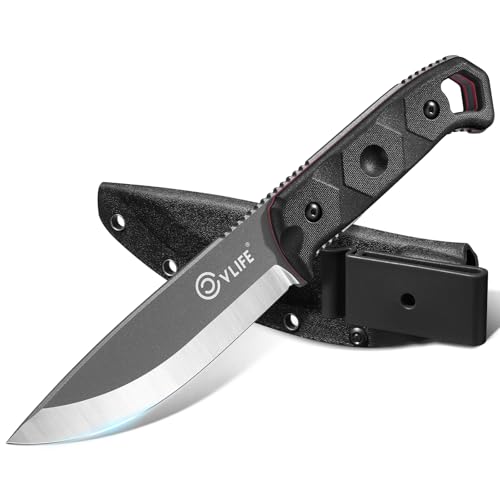
CVLIFE D2 Knife Review Summary
Buy the CVLIFE D2 Steel Fixed Blade Knife if you want a rugged, full-tang outdoor knife that favors function over flash.
It is especially well suited to buyers who process wood, prep camp tasks, and need a blade that can handle hard use better than a lightweight general-purpose knife.
From a buyer’s perspective, the biggest appeal is the combination of D2 steel, a thick 4.7 mm spine, and a modified Scandi grind.
That mix points toward strong edge retention, dependable woodcraft performance, and enough backbone for batoning and chopping.
The included sheath system also improves the value proposition because it gives you multiple carry setups right out of the box.
If you are asking is CVLIFE D2 Steel Fixed Blade Knife worth it, the answer depends on how you use your gear.
For campers, bushcrafters, hikers, and hunters who actually want a working knife, it looks like a smart buy.
For buyers who prefer low-maintenance stainless steel or a light casual carry blade, it may be more knife than necessary.
Scorecard
| Category | Score | Why it matters |
|---|---|---|
| Blade performance | 9.0 | D2 steel and modified Scandi geometry support edge retention, feather sticking, carving, and camp cutting. |
| Durability | 9.0 | Full-tang construction and a thick spine are built for batoning, chopping, and hard outdoor use. |
| Grip and handling | 8.0 | Layered handle construction aims to reduce hot spots and improve control in wet or muddy conditions. |
| Sheath and carry | 8.0 | Adjustable retention and a 360-degree rotating clip give you flexible field carry options. |
| Versatility | 8.0 | Useful for bushcrafting, camping, fishing, hiking, hunting, shelter building, and firewood prep. |
| Maintenance | 7.0 | D2 is high-performing but semi-stainless, so it needs occasional care to reduce corrosion risk. |
Bottom line: this is a hard-use outdoor knife for buyers who value cutting performance, durability, and practical carry more than ultralight convenience.
Key Features and Specifications of CVLIFE D2 Knife
The specifications tell you a lot about the intended use case.
The CVLIFE D2 Steel Fixed Blade Knife is built around a 5.2-inch blade and an overall length of 10.1 inches, which puts it firmly in the camp knife and bushcraft category rather than the EDC category.
| Brand | CVLIFE |
|---|---|
| Blade length | 5.2 inches |
| Overall length | 10.1 inches |
| Blade material | D2 steel / high carbon steel |
| Blade shape | Drop point |
| Blade edge | V-grind |
| Special grind | Modified Scandi with reinforced micro-bevel |
| Hardness claim | 59-61 HRC |
| Spine thickness | 0.18 inch / 4.7 mm |
| Construction | Full tang |
| Handle material | Glass reinforced nylon, dual G10 liners, high-traction nylon-fiberglass scales |
| Color / style | Black, modern |
| Hand orientation | Ambidextrous |
| Included | Weather-resistant polymer sheath |
| Carry features | Adjustable retention screw, 360-degree rotating clip |
Those specs matter because they explain the knife’s personality.
The 5.2-inch D2 blade gives you enough reach for camp chores without feeling unwieldy, while the thick full-tang build is the main reason this knife can be used for heavier work like batoning and chopping.
The design also shows careful category thinking.
A drop-point shape is a practical choice for general outdoor use, and the reinforced micro-bevel is there to help reduce chipping when you are working wood or pushing the edge through tougher material.
That is a smart compromise between aggressive cutting and real-world durability.
The handle is another important decision point.
CVLIFE uses a layered construction with G10 liners and high-traction outer scales, which is a sensible approach for buyers who may work in rain, mud, or cold weather.
In the field, grip stability can matter as much as steel quality.
Pros and Cons of CVLIFE D2 Knife
Every outdoor knife has tradeoffs, and the CVLIFE D2 Steel Fixed Blade Knife pros and cons are worth weighing before you buy.
Pros
- Excellent edge retention potential thanks to D2 steel.
- Full-tang construction inspires confidence for harder outdoor tasks.
- Modified Scandi grind is well suited to wood carving and feather sticking.
- Thick 4.7 mm spine adds strength for batoning and chopping.
- Comfort-focused handle design helps reduce hot spots during long use.
- Versatile sheath system supports multiple carry positions.
- Ambidextrous carry setup is useful for more users.
Cons
- D2 is not fully stainless, so it requires basic maintenance.
- Heavier-duty design may be unnecessary for casual users.
- Sheath setup matters more than on a simple pocket knife, so setup should be checked before field use.
- Not the best choice for zero-maintenance buyers who want stainless convenience.
For the right buyer, the strengths are more important than the weaknesses.
The downsides are real, but they are typical of a work-focused fixed blade designed for outdoor abuse rather than daily desk or urban carry.
How the Scandi Grind Performs in the Field
The modified Scandi-style grind is one of the most important design choices here.
In practical terms, it helps the knife bite into wood cleanly, which is exactly what you want for feather sticking, carving tent stakes, shaping tinder, and drilling bow-drill divots.
Compared with slicier general-purpose grinds, a Scandi-style edge is often favored by bushcrafters because it is easier to control when making precise cuts.
That control can make a big difference if you are preparing firewood kindling or shaping a piece of green wood in the field.
The reinforced micro-bevel is also a smart addition.
It suggests CVLIFE is trying to balance a woodcraft-friendly geometry with a little extra toughness at the edge.
That matters because a pure Scandi can be more delicate under hard lateral pressure.
Here, the design looks better suited to real outdoor work and less likely to punish the user if technique is not perfect.
For batoning, the grind and spine thickness should combine well.
You still should not treat any knife like a machete or an axe, but this one appears designed to tolerate heavier camp abuse better than many lighter fixed blades.
Sheath Retention and Carry Options
The included polymer sheath is a meaningful part of the overall package, not just an accessory.
Outdoor users often overlook the sheath until they are trying to attach the knife to a pack, belt, or chest setup, and then it becomes one of the most important features.
Here, the adjustable retention screw should help the knife feel secure in transit, while the 360-degree rotating clip makes it easier to position the sheath vertically, canted, or horizontally.
That flexibility is especially useful for bushcraft and hiking, where carry comfort can vary depending on pack straps, belt setup, and dominant-hand preference.
Because the knife is marketed as ambidextrous, the sheath matters even more.
Left-handed users and people who switch carry positions for different tasks should appreciate that versatility.
For a camp knife in this class, that is a genuine advantage over simpler fixed-blade sheaths that only support one configuration.
My main caution is straightforward: check the retention and clip setup before relying on it in the field.
That is good advice for any fixed blade, but especially for one intended for hard outdoor movement and active use.
Handle Comfort During Heavy Chores
The handle design is clearly aimed at reducing fatigue during longer jobs.
With dual G10 liners and high-traction nylon-fiberglass scales, the knife is trying to balance grip security with comfort and durability.
That matters in real scenarios.
If you are whittling tinder, splitting small rounds, or processing food at camp, a handle that creates hot spots quickly becomes annoying.
If you are working in cold conditions, sweaty weather, or damp gloves, grip texture becomes even more important.
The good news is that this construction should provide a secure feel without being overly slick or fragile.
The layered build also suggests the knife is intended to stay comfortable in the hand when you are applying repeated pressure during cutting chores.
What I like most for buyers: this does not look like a showpiece knife with a fancy handle that sacrifices field usability.
It looks like a tool designed to keep your hand stable when the work gets repetitive or dirty.
Best Uses for Camping, Hunting, and Bushcraft
The CVLIFE D2 Steel Fixed Blade Knife is best understood as a primary camp knife or a heavy-duty backup to a hatchet.
That positioning makes sense given the blade length, full-tang build, and wood-focused grind.
Here are the use cases where it should make the most sense:
- Bushcraft — carving, feather sticking, and shelter prep.
- Camping — food prep, fire prep, cord cutting, and general campsite chores.
- Hunting — field dressing support and utility cutting.
- Hiking — emergency utility tasks and backcountry cutting.
- Fishing — line work, bait prep, and camp-side utility tasks.
It is less compelling for users who just need a lightweight knife for occasional package opening or casual everyday carry.
This is a field tool first, and that is exactly why many buyers will want it.
If you are comparing it to something like a Morakniv bushcraft knife, the CVLIFE looks tougher and more carry-flexible, while Mora options often win on simplicity and proven field reputation.
Against a Buck fixed blade hunting knife, the CVLIFE may offer a more aggressive bushcraft orientation, whereas Buck knives often appeal to traditional hunters who want a classic profile.
A Cold Steel outdoor fixed blade knife is another relevant benchmark if you want a similarly hard-use mindset.
For a simpler and lighter option, the Morakniv Companion knife remains a strong reference point.
If you want to compare alternatives on Amazon, look at these broad search links:
- Morakniv bushcraft knife
- Buck fixed blade hunting knife
- Cold Steel outdoor fixed blade knife
- Morakniv Companion knife
D2 Steel Care and Maintenance Tips
D2 steel is a major selling point here, but it also comes with a responsibility: it is only semi-stainless.
That means the blade can perform very well, but it needs a little attention if you want it to stay in good shape over time.
That does not make it high maintenance, but it does mean you should build a few habits into your routine:
- Wipe the blade clean after use, especially after cutting wet wood or processing food.
- Dry it thoroughly before storing it in the sheath.
- Apply a light coat of oil when the knife will sit unused for a while.
- Inspect the edge periodically if you use it for batoning or harder camp work.
- Check the sheath for moisture retention after wet outings.
For buyers who already maintain tools, this is not a problem.
In fact, many outdoor users prefer D2 because the improved cutting performance is worth a little extra care.
But if your priority is a blade you can forget about, stainless steel may be the better fit.
Who Should Buy CVLIFE D2 Knife?
The CVLIFE D2 Steel Fixed Blade Knife is a good match for anyone who wants a tough, field-ready knife that can do more than simple slicing.
It is especially suitable for:
- Campers who need one reliable knife for fire prep and campsite tasks.
- Bushcrafters who value woodcraft-friendly edge geometry.
- Hunters who want a durable utility blade.
- Hikers looking for a robust backup knife for emergencies.
- Buyers comfortable maintaining D2 steel with basic cleaning and oiling.
Who should skip it?
If you want a light carry knife, a low-maintenance stainless blade, or a simple all-around tool for occasional use, this may be overbuilt for your needs.
The knife is designed to be used hard, and that is both its strength and its main tradeoff.
Is CVLIFE D2 Knife Worth It?
Yes, for the right buyer. The CVLIFE D2 Steel Fixed Blade Knife looks worth it if you want a tough outdoor work knife with real bushcraft capability, a strong full-tang structure, and a practical sheath system.
It is built around the kind of features that matter in the field: edge retention, spine strength, grip security, and carry flexibility.
The value case is strongest for campers, hunters, and bushcrafters who will actually use it for wood processing, shelter work, and general camp chores.
Those buyers are most likely to appreciate the D2 blade, 59-61 HRC hardness claim, thick spine, and modified Scandi grind.
The knife’s weaker point is also clear: you must be willing to maintain D2 steel.
If you want a knife that feels purpose-built rather than generic, this one makes sense.
If you want a low-effort stainless option, look at Morakniv or other mainstream outdoor fixed blades instead.
But if your priority is a rugged tool that can be a legitimate camp companion, the CVLIFE D2 Steel Fixed Blade Knife review points to a strong, practical buy.
Final buying advice: choose the CVLIFE D2 Steel Fixed Blade Knife if you want a hard-use outdoor knife with serious cutting potential and flexible carry.
Skip it only if you prefer a lightweight, low-maintenance blade for casual use.