Choosing the right sleeping bag can make or break a backpacking trip. The best option balances warmth, weight, packed size, and comfort for the conditions you actually face.
Below, we focus on sleeping bags for backpacking that offer the most useful mix of performance and value, whether you want a lightweight down bag, a roomy synthetic pick, or a budget-friendly all-around option.
Best 10 Sleeping Bags for Backpacking Picks for 2026
Premium Ultralight Down Pick
Kelty Cosmic 20 Down Mummy Sleeping Bag

- 550 fill power down packs down well for the trail.
- Recycled fabrics and PFAS-free DWR support lower-impact materials.
- About 2 lb. 6 oz. with a compact stuffed size.
Best For: Backpackers who want a lightweight, compressible down mummy bag for 3-season use.
Wide Mummy Trail Pick
OneTigris Bushcrafter’s Sleeping Bag

- Wide mummy cut offers extra room without going rectangular.
- Water-repellent shell and quick-dry performance suit outdoor use.
- YKK anti-snag zippers and a compact stuff sack improve convenience.
Best For: Backpackers who want a roomier mummy sleeping bag for 3-season trips.
Roomiest Value Pick
VENTURE 4TH Backpacking Sleeping Bag

- XXL 90 x 39 inch size gives lots of room.
- Breathable 3-season design covers 30 to 70°F.
- Compression sack and water-resistant shell add practicality.
Best For: Tall users who want a roomy sleeping bag for camping and backpacking.
Ultralight Down Pick
Naturehike 650FP Semi-Rectangular Bag

- 2 lb down bag packs small for backpacking.
- 650FP duck down with 40.4℉ comfort rating.
- Semi-rectangular cut adds a bit more room.
Best For: Backpackers who want an ultralight, compact down bag with extra legroom.
Warm Synthetic Choice

- +20F synthetic mummy bag for cooler nights.
- Roomy footbox and draft tube improve comfort.
- Stuff sack included; lifetime warranty noted.
Best For: Backpackers who want a warmer synthetic bag with a classic mummy fit.
Compact Budget Pick
Naturehike 59℉/32℉ Envelope Bag

- Weighs 1.68 lbs and compresses small.
- Roomy envelope shape is easy to move in.
- Best for milder backpacking and travel use.
Best For: Backpackers who want a lightweight, roomy bag for warm to moderate conditions.
3-Season Lightweight Pick
PTEROMY 3-Season Water-Resistant Sleeping Bag

- 50°F-80°F comfort range for spring through fall
- Machine washable with hollowfiber cotton filling
- 1.35 kg with compression bag and water-resistant shell
Best For: Backpackers needing a roomy, easy-care bag for mild weather
Winter Warmth Upgrade
QEZER 0°F Down Mummy Sleeping Bag
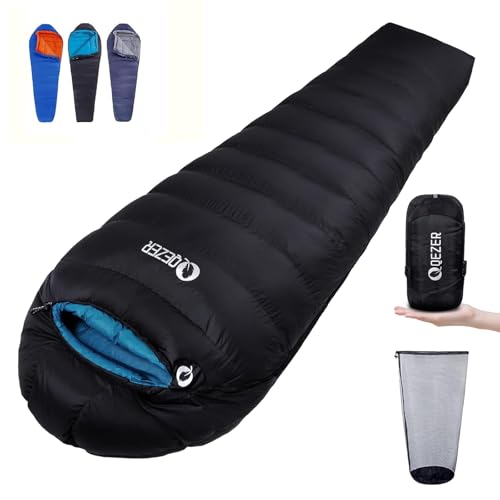
- 600 fill power duck down for high warmth
- 0°F-18°F comfort range for winter use
- Compact 17.32" x 8.66" storage size
Best For: Cold-weather backpackers who need a warm, packable down bag
Budget-Friendly All-Rounder
MalloMe 3-Season Waterproof Sleeping Bag

- 50°F-77°F rating for three-season trips
- Waterproof shell with compressible storage sack
- Machine washable and easy to clean
Best For: Budget-minded backpackers wanting a simple, low-maintenance bag
Premium Ultralight Down Pick – Kelty Cosmic 20 Down Mummy Sleeping Bag
If you want sleeping bags for backpacking that balance comfort, packability, and sustainability, the Kelty Cosmic 20 is a strong all-around choice. Its 550 fill power down, recycled shell and liner fabrics, and compact stuffed size make it well suited to multi-day trips where space and weight matter.
Best For: Backpackers who want a lightweight, compressible down mummy bag with recycled materials and a 20-degree rating.
Pros:
- 550 fill power down is highly compressible for backpacking.
- Recycled nylon and polyester taffeta shell and liner help reduce landfill waste.
- PFAS-free DWR and RDS-certified traceable down add sustainability-minded details.
- About 2 lb. 6 oz. in regular size, with a compact 13 x 7 in. stuffed size.
Cons:
- Mummy shape is less roomy than rectangular sleeping bags.
- ISO limit rating of 21 degrees may feel narrow for colder conditions.
The Cosmic 20 is a practical pick if you want a proven backpacking bag with real sustainability credentials and easy carry. It is built more for efficient trail use than maximum interior space, which is exactly what many backpackers want.
Budget Roomy Option – SOULOUT 3-4 Season Sleeping Bag
For shoppers comparing sleeping bags for backpacking on a tighter budget, the SOULOUT 3-4 Season bag offers a simple, roomy design with a water-resistant shell. It is a practical envelope-style option for milder trips, car camping, and casual overnights where extra space matters more than low weight.
Best For: Campers and hikers who want a roomy, easy-care sleeping bag for mild-to-cool weather.
Pros:
- Envelope shape gives adults and teens more wiggle room.
- Water-resistant outer shell helps with light rain, moisture, and dew.
- Machine washable for easy cleaning after trips.
- Included stuff sack makes it simpler to pack and carry.
Cons:
- At about 4.5 pounds, it is heavier than more backpacking-focused bags.
- Polyester fill and rectangular shape are less compact than down mummy designs.
This bag makes sense if comfort and simplicity matter more than shaving every ounce. It is better suited to general outdoor use than to ultralight backpacking where pack size and weight are top priorities.
Wide Mummy Trail Pick – OneTigris Bushcrafter’s Sleeping Bag
If you are shopping sleeping bags for backpacking and want a wider mummy shape, the OneTigris Bushcrafter’s Sleeping Bag is built for comfort and versatility. It combines a 3-season temperature range with water-repellent materials, snag-free YKK zippers, and a compressible stuff sack for easier transport.
Best For: Backpackers and campers who want a wider mummy bag with quick-dry, water-repellent materials.
Pros:
- Wide 6.8 ft by 2.7 ft design gives more sleeping room than many mummy bags.
- Water-repellent 300T pongee shell and 190T lining add durability and splash resistance.
- Snag-free YKK zippers and cord-stopped hood improve everyday usability.
- Compresses into a small tube-shaped stuff sack for easier carry.
Cons:
- Temperature range is best suited to 3-season use, not deep cold.
- At 3.1 pounds, it is not the lightest option in the group.
This model is a solid middle ground for hikers who want extra space without giving up a mummy profile. It feels especially appealing for users who value quick-drying materials and a straightforward outdoor-ready design.
Roomiest Value Pick – VENTURE 4TH Backpacking Sleeping Bag
For sleeping bags for backpacking that prioritize space over minimalist weight, the VENTURE 4TH Backpacking Sleeping Bag is a practical oversized option. Its 90 x 39 inch envelope shape, breathable 3-season warmth, and included compression sack make it a versatile choice for travelers who dislike feeling cramped.
Best For: Tall campers and hikers who want a very roomy, easy-to-pack sleeping bag for 3-season use.
Pros:
- XXL 90 x 39 inch size offers plenty of stretch-out room.
- Breathable 3-season design helps balance warmth and airflow from 30 to 70°F.
- Water-resistant polyester shell is easy to clean and built for regular use.
- Compression sack and anti-snag zippers improve packing and handling.
Cons:
- At 4.4 pounds, it is relatively heavy for dedicated backpacking.
- Envelope shape is bulkier than a mummy bag for tight pack space.
This is the kind of bag to choose when comfort and room are the priorities. It is especially useful for taller users or anyone who wants a more relaxed sleep system on trail trips and camping nights.
Ultralight Down Pick – Naturehike 650FP Semi-Rectangular Bag
If you want sleeping bags for backpacking that shave weight without giving up warmth, this Naturehike down model is built around that balance. Its 650 fill power duck down, 3-season rating, and semi-rectangular shape make it a practical choice for hikers who want a compact bag that still allows a little extra room.
Best For: Backpackers who want an ultralight down bag with a roomier foot area and compact packed size.
Pros:
- Only 2 lbs, with a compressed size of 13.8″ x 7.1″ for easier packing.
- 650FP duck down and a 40.4℉ comfort rating support cooler 3-season use.
- Semi-rectangular design gives more room than a tight mummy bag.
- Uses 400T 20D ripstop nylon and YKK zippers for durability.
Cons:
- Warmth is rated for 40.4℉ comfort, so it is not a deep-cold option.
- Down insulation may require more care than synthetic fills.
- Size and warmth needs may vary by the user’s sleeping setup.
Overall, this is a strong pick if your priority is keeping pack weight down while still getting a reasonably warm, compressible backpacking bag. The shape and materials make it especially appealing for travelers and hikers who value portability.
Warm Synthetic Choice – Teton 20F Mummy Sleeping Bag
Among sleeping bags for backpacking, this Teton model stands out if you want a warmer synthetic option with a classic mummy shape. It uses microfiber insulation, a draft tube, and a roomy footbox, making it a straightforward pick for campers and hikers who want comfort and dependable compressibility.
Best For: Backpackers who prefer a warm synthetic mummy bag with a roomier footbox and easy stuffing.
Pros:
- +20F temperature rating gives it a warmer profile for cooler trips.
- Microfiber insulation is designed to pack down while keeping loft.
- Roomy footbox and zipper draft tube add comfort.
- Includes a stuff sack and lifetime warranty support.
Cons:
- At 2.9 pounds, it is heavier than some ultralight backpacking bags.
- Mummy shape is less roomy than a rectangular sleeping bag.
- Comfort still depends on using an insulated camp pad.
This is a practical choice if warmth and value matter more than cutting every ounce. It is especially appealing for backpackers who want a reliable synthetic bag that is easier to stuff and built for regular outdoor use.
Compact Budget Pick – Naturehike 59℉/32℉ Envelope Bag
If you are comparing sleeping bags for backpacking and want something light, roomy, and easy to carry, this Naturehike envelope bag is worth a close look. It weighs just 1.68 lbs, compresses small, and uses a wide rectangular shape that makes it easier to move around than a tighter mummy bag.
Best For: Backpackers and travelers who want a lightweight, roomy sleeping bag for milder conditions.
Pros:
- Very light at 1.68 lbs with a compact packed size.
- Roomy 80.7″ x 33.5″ shape is easy to get in and out of.
- Envelope design is more comfortable for changing positions.
- Includes a compression sack and has reinforced seams.
Cons:
- Temperature rating is better suited to milder use than serious cold.
- Envelope shape is less thermally efficient than a mummy bag.
- Warmth depends on the user’s setup and sensitivity to temperature.
This bag makes sense when comfort, low weight, and easy packing matter more than maximum cold-weather efficiency. For backpacking in warmer seasons or for travelers who like extra room, it is a flexible option.
3-Season Lightweight Pick – PTEROMY 3-Season Water-Resistant Sleeping Bag
If you want sleeping bags for backpacking that stay practical across spring, summer, and fall, this PTEROMY option is built around comfort and easy carry. It offers a 50°F to 80°F comfort range, a water-resistant outer, and a rectangular shape that gives adults a roomier feel than a tight mummy bag.
Best For: Backpackers who want a lightweight, machine-washable sleeping bag for mild-weather trips.
Pros:
- Lightweight at 1.35 kg and includes a compression bag for simpler transport
- Machine washable with hollowfiber cotton filling that keeps thermal efficiency after cleaning
- Water-resistant and windproof construction for added protection in changing conditions
- Head drawstring, inner Velcro pocket, and bottom zipper add useful everyday features
Cons:
- Temperature range is aimed at three-season use, not deep winter
- Rectangular shape may pack larger than a mummy-style bag
- At 3 pounds, it is not the lightest option in this roundup
Overall, this is a straightforward backpacking sleeping bag for travelers who value easy care, decent weather resistance, and a less confining fit. It makes the most sense when your trips stay in moderate temperatures.
Winter Warmth Upgrade – QEZER 0°F Down Mummy Sleeping Bag
For sleeping bags for backpacking in colder conditions, this QEZER down mummy bag is built to prioritize warmth and packability. It uses 600 fill power duck down, a snug mummy cut, and a compact storage size so it can fit cold-weather backpacking, climbing, and mountaineering trips.
Best For: Cold-weather backpackers who want a compact down sleeping bag with serious insulation.
Pros:
- 3.3 lb duck down fill with 600 fill power for strong heat retention
- Comfort rating of 0°F-18°F, with a limit temperature of -11°F
- 400T tear-resistant nylon shell is described as waterproof and windproof
- Compact storage size and included inner pocket add convenience for travel
Cons:
- Heavier than ultralight summer-oriented backpacking bags at 4.74 lb
- Mummy shape may feel snug compared with roomier rectangular designs
- Designed for winter, so it may be too warm for mild-weather trips
This is the most insulation-focused choice here, and it makes sense if your backpacking plans lean toward winter or alpine conditions. If warmth and compressibility matter more than minimum weight, it stands out.
Budget-Friendly All-Rounder – MalloMe 3-Season Waterproof Sleeping Bag
If you are comparing sleeping bags for backpacking and want something simple for most fair-weather trips, the MalloMe bag focuses on broad usability. It is rated for 50°F to 77°F, weighs about 3 lbs, and uses a waterproof outer shell with compressible storage for easy trail carry.
Best For: Budget-minded backpackers who want a lightweight, easy-to-clean 3-season bag.
Pros:
- Temperature rating of 50°F to 77°F suits spring, summer, and fall use
- Waterproof hex-tech outer shell with double-layer construction
- Compression sack included for more convenient packing
- Machine washable and easy to wipe clean for low-maintenance care
Cons:
- Rectangular design is less heat-trapping than a mummy shape
- At about 3 lbs, it is not the lightest backpacking option
- Comfort range is better for cool weather than true cold conditions
As a practical everyday backpacking sleeping bag, this one leans on ease of use more than specialized features. It is a sensible pick if you want a familiar shape, simple maintenance, and decent three-season performance.
How We Picked the Best Sleeping Bags for Backpacking
We looked for Sleeping Bags for Backpacking that stand out in the areas most buyers care about: temperature rating accuracy, packed size, carried weight, insulation type, shell durability, and overall value. We also considered whether a bag is better suited to three-season use, colder nights, or casual warm-weather trips.
Quick Comparison
In general, down sleeping bags pack smaller and weigh less, making them ideal for longer mileage and smaller packs. Synthetic options usually cost less, handle moisture better, and can be a smarter choice for humid climates, frequent condensation, or budget-conscious buyers. Mummy shapes tend to be the most efficient for warmth, while roomier cuts can feel better if you move around at night.
Key Buying Factors for Sleeping Bags for Backpacking
Temperature Rating
Match the bag to the coldest conditions you expect, not the warmest. For most backpackers, a true three-season bag is the sweet spot. If you sleep cold or camp at higher elevations, choose extra margin rather than cutting it close.
Insulation Type
Down offers the best warmth-to-weight ratio and compresses well, but it usually costs more and needs better moisture management. Synthetic fill is easier to care for and often better for damp environments, though it is typically heavier and bulkier.
Weight and Packed Size
For Sleeping Bags for Backpacking, every ounce matters. Ultralight options are easier on long hikes, but comfort and durability still matter. Check both total weight and compressed size to make sure the bag fits your pack and trip style.
Fit and Shape
Mummy bags maximize thermal efficiency, while semi-rectangular and envelope styles provide more wiggle room. Tall, broad, or restless sleepers should pay close attention to shoulder and footbox room so the bag does not feel restrictive.
Materials and Weather Resistance
Look for durable shells, quality zippers, and water-resistant finishes if you expect damp ground or condensation. A good sleeping pad also matters, since insulation beneath you is just as important as the bag itself.
Who Should Buy Which Sleeping Bags for Backpacking?
Choose a lightweight down mummy bag if you want the best performance for gram-counting trips. Pick a synthetic or roomier design if comfort, easier care, or a lower price matters more. If you are a casual camper who also backpacks occasionally, a versatile mid-weight bag is usually the safest all-around choice.
For most buyers, the best Sleeping Bags for Backpacking are the ones that fit your climate, sleep style, and pack weight goals without forcing you to overpay for features you will not use.