When cell service disappears, a compact satellite communicator can provide a vital link for messaging, location sharing, weather updates, and emergency help. The best option depends on how often you travel beyond coverage, whether you need smartphone pairing, and how much battery life and durability matter.
We compared 10 current satellite communicators and bundles across connectivity, safety features, portability, usability, and overall flexibility to help you choose a dependable device for hiking, camping, boating, travel, and other off-grid adventures.
Best 10 Compact Satellite Communicators Picks for 2026
Best Overall

- Global two-way and group messaging
- Interactive SOS and location sharing
- Up to 28 days of battery life
Best For: Extended trips and group communication
Best for Long Battery Life
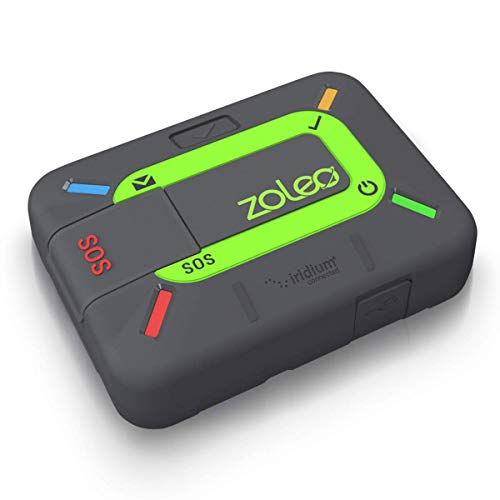
- Over 200 hours of battery life
- Satellite, cellular, and Wi-Fi messaging
- IP68-rated rugged construction
Best For: Long trips and frequent check-ins
Best for Navigation

- Two-way messaging and interactive SOS
- TracBack routing and digital compass
- Garmin Explore trip-planning integration
Best For: Backcountry navigation and communication
Best Bundle
ACR Bivy Stick 2-Way Communicator

- Global satellite communication
- SOS, check-ins, and GPS sharing
- Includes pouch, carabiner, and bottle holder
Best For: Remote travel with bundled accessories
Top All-Around Pick

- Iridium global messaging and interactive SOS
- IP67 touchscreen design with physical buttons
- Up to 350 hours of battery life
Best For: Hikers and travelers wanting a full-featured communicator
Best Lightweight Value

- Two-way satellite messaging through iOS or Android
- 2.5-ounce IP68-rated handheld design
- Unlimited SOS with every service plan
Best For: Smartphone users needing affordable satellite check-ins
Best for Media Sharing
Garmin inReach Mini 3 Plus Bundle

- Text, voice, group messaging, and photo sharing
- Interactive SOS with Garmin Response
- Includes cable, charger, and cleaning cloth
Best For: Remote users sharing richer trip and field updates
Best Compact All-Rounder
Garmin inReach Mini 2 Flame Red

- Two-way messaging and interactive SOS
- TracBack routing and digital compass
- Up to 14 days of battery life
Best For: Hikers wanting lightweight communication and navigation
Best for Rich Messaging

- Text, photo, and voice messaging
- Up to 25 days in tracking mode
- Wi-Fi and cellular fallback before satellite
Best For: Remote travelers sharing richer updates
Best Value Navigation Pick

- Two-way messaging and interactive SOS
- TracBack routing and digital compass
- App support for planning and topographical maps
Best For: Hikers seeking compact safety and navigation tools
Best Overall – Garmin inReach Messenger
The Garmin inReach Messenger is a strong choice among compact satellite communicators for travelers who want global two-way messaging, location sharing, and emergency support in areas without cellular coverage. It works with the Garmin Messenger app and offers up to 28 days of battery life in 10-minute tracking mode.
Best For: Extended outdoor trips, group communication, and Garmin users who prioritize battery life.
Pros:
- Supports global two-way and group messaging through the Garmin Messenger app.
- Includes interactive SOS monitoring through the 24/7 Garmin IERCC.
- Offers preset check-ins, location sharing, and cellular-to-satellite message optimization.
- Provides up to 28 days of battery life in 10-minute tracking mode.
Cons:
- An active satellite subscription is required for satellite features.
- Messaging features rely heavily on a paired smartphone for convenient use.
- Satellite communication devices may be regulated or prohibited in some jurisdictions.
With its long battery life, group messaging, and phone-charging capability, the inReach Messenger is a practical all-around option for staying connected beyond cell coverage.
Best for Long Battery Life – ZOLEO Satellite Communicator
The ZOLEO Satellite Communicator is a compact satellite communicator designed for smartphone-based messaging over satellite, cellular, or Wi-Fi networks. Its IP68-rated construction, dedicated SMS number, unlimited check-ins, and battery life exceeding 200 hours make it useful for remote travel.
Best For: Hikers, campers, and travelers who want long runtime and flexible messaging options.
Pros:
- Uses the lowest-cost available network among Iridium satellite, cellular, and Wi-Fi connections.
- Offers an assigned SMS number and email address for direct contact off the grid.
- Includes unlimited check-ins, SOS alerts, GPS location sharing, and 24/7 emergency monitoring.
- IP68-rated design provides durability, with over 200 hours of battery life.
Cons:
- A service plan is required.
- The device is designed for use with a smartphone app.
- Optional location-sharing add-ons and travel coverage cost extra.
ZOLEO stands out for its exceptionally long battery life and hybrid connectivity, making it a sensible pick when regular check-ins and dependable remote communication matter.
Best for Navigation – Garmin inReach Mini 2
The Garmin inReach Mini 2 combines compact satellite communication with navigation tools, making it a versatile choice for backcountry users. It supports global two-way messaging and interactive SOS, while TracBack routing, a digital compass, and Garmin Explore integration help with trip navigation.
Best For: Hikers and campers who want navigation features alongside satellite messaging.
Pros:
- Supports global two-way messaging and interactive SOS with an active subscription.
- Includes TracBack routing, a digital compass, and location sharing.
- Syncs with Garmin Explore for trip planning, topographical mapping, waypoints, and courses.
- Offers up to 14 days of battery life in 10-minute tracking mode.
Cons:
- Battery life is shorter than the Garmin inReach Messenger’s stated 28 days.
- An active satellite subscription is required for key communication and tracking functions.
- Some features are most convenient when paired with a compatible smartphone or Garmin device.
The inReach Mini 2 is a well-rounded option for users who want more than messaging, particularly those who value route-finding and Garmin ecosystem compatibility.
Best Bundle – ACR Bivy Stick 2-Way Communicator
NEW ACR Bivy Stick 2-Way Satellite Communicator with Carrying Case and Carabiner Bundle
Check Price On AmazonThe ACR Bivy Stick 2-Way Satellite Communicator bundle is a compact satellite communicator package that includes a protective pouch, belt attachment, carabiner, and bottle holder. It is built around smartphone connectivity and focuses on global communication, SOS assistance, check-ins, location sharing, and offline navigation.
Best For: Remote travelers who want a bundled communicator with carrying accessories and navigation support.
Pros:
- Provides global satellite communication without relying on cell coverage.
- Supports SOS emergency rescue, unlimited check-in messages, and GPS location sharing.
- Includes offline maps and navigation capabilities.
- Bundle includes a pouch with belt attachment and carabiner, plus a bottle holder.
Cons:
- The supplied notes do not specify battery life, dimensions, or service-plan details.
- Compatible smartphone use is indicated, so phone pairing may be necessary.
- The supplied connectivity specification lists RF without additional network details.
This ACR bundle is appealing when included carrying gear matters, but shoppers seeking detailed battery and subscription information should verify those specifications before buying.
Top All-Around Pick – Garmin inReach Mini 3
The Garmin inReach Mini 3 is a strong choice for shoppers seeking compact satellite communicators with global messaging, interactive SOS support, navigation tools, and a color touchscreen. It uses the Iridium network, but an active satellite subscription is required.
Best For: Hikers, campers, and travelers who want a rugged, feature-rich communicator with long battery life.
Pros:
- Interactive SOS connects with Garmin Response, a 24/7-staffed coordination center.
- Supports text messaging, LiveTrack, weather reports, and navigation when paired with compatible apps.
- Rugged IP67 design with a scratch-resistant touchscreen and physical buttons.
- Battery supports up to 350 hours with 10-minute tracking.
Cons:
- Requires an active satellite subscription for messaging and SOS features.
- Some jurisdictions regulate or prohibit satellite communication devices.
Its touchscreen, glove-friendly controls, global coverage, and extensive app support make it one of the most versatile compact options, though the subscription requirement adds ongoing cost.
Best Lightweight Value – Motorola Defy Satellite Link
The Motorola Defy Satellite Link is a lightweight option among compact satellite communicators, pairing with an iOS or Android phone for two-way satellite messaging and emergency SOS support. Service plans are required, with options starting at $4.99 per month for SOS satellite assistance.
Best For: Phone users who want an inexpensive, compact backup for check-ins and SOS alerts.
Pros:
- Supports two-way satellite-enabled messaging with compatible smartphones.
- Check-in button can send coordinates or messages to selected contacts.
- Unlimited SOS is included with every service plan.
- Lightweight 2.5-ounce design with IP68 dust and water resistance.
Cons:
- Requires a compatible iOS or Android smartphone for messaging functions.
- Requires a service plan.
- Four-day standby battery life is shorter than some dedicated communicators.
This is a practical, low-weight choice for travelers who already carry a smartphone and mainly need satellite check-ins, messaging, and SOS assistance rather than built-in navigation.
Best for Media Sharing – Garmin inReach Mini 3 Plus Bundle
The Garmin inReach Mini 3 Plus bundle expands compact satellite communicators with text, voice, and group messaging, plus photo sharing through the Garmin Messenger app when paired with a compatible smartphone. The bundle also includes a cleaning cloth, USB-C cable, and wall charger.
Best For: Backcountry users and field workers who need messaging, location sharing, and occasional media updates away from cell service.
Pros:
- Supports texts, voice messages, group messages, and app-enabled photo sharing.
- Interactive SOS provides two-way coordination with Garmin Response.
- IP67-rated design and battery life of up to 350 hours with 10-minute tracking.
- Includes LiveTrack, weather, trip-planning, voice commands, and preset messages.
Cons:
- The supplied dimensions and screen-size details are inconsistent, so verify fit and display expectations before buying.
- Messaging and SOS capabilities rely on satellite service and compatible app pairing for several features.
- The bundle weighs more than the standalone Mini 3 listing.
Choose this bundle if sharing richer updates matters more than minimizing every ounce. Its accessories and broader messaging support are useful for multi-day trips, remote work, and group travel.
Best Compact All-Rounder – Garmin inReach Mini 2 Flame Red
For hikers who want dependable communication without adding much bulk, this Garmin inReach Mini 2 is a strong compact satellite communicator. It combines two-way messaging, interactive SOS alerts, location sharing, TracBack routing, a digital compass, and up to 14 days of battery life in a lightweight, rugged design.
Best For: Camping and hiking trips where messaging, navigation, and emergency features matter.
Pros:
- Two-way messaging and interactive SOS alerts through a global satellite network
- Compact 100 g design with a rugged build
- TracBack routing, digital compass, location sharing, and weather support
- Up to 14 days of battery life
Cons:
- Small 0.9-inch screen may feel limited for detailed information
- Requires a compatible subscription for satellite communication services
The Mini 2 is a practical choice when you want a simple, lightweight device with both safety communication and basic navigation tools. Its small screen favors button-based operation and phone-assisted planning rather than detailed on-device mapping.
Best for Rich Messaging – Garmin inReach Messenger Plus
The Garmin inReach Messenger Plus stands out among compact satellite communicators for travelers who want more expressive communication beyond cell coverage. When paired with the Garmin Messenger app, it supports text, photo, and 30-second voice messaging, plus interactive SOS and location sharing.
Best For: Outdoor users who want to share photos, voice messages, and longer texts from remote areas.
Pros:
- Supports text messages up to 1,600 characters, photos, and 30-second voice messages
- Seamlessly uses Wi-Fi or a smartphone connection before switching to satellite
- Interactive SOS support with Garmin Response and live location sharing
- Up to 25 days of battery life in 10-minute tracking mode
Cons:
- Requires an active subscription for satellite features
- Rich messaging depends on pairing with a compatible smartphone and app
- At 116 g, it is slightly heavier than the Mini 2 models listed here
This is the most communication-focused option in the group. Its app integration and extended battery life are appealing for longer adventures, while the ability to send photos and voice messages makes it more versatile than a text-only communicator.
Best Value Navigation Pick – Garmin inReach Mini 2 Black
This black Garmin inReach Mini 2 is a compact satellite communicator built for straightforward backcountry safety and navigation. It provides two-way messaging, interactive SOS, location sharing, TracBack routing, and a digital compass, while connecting with the Garmin Explore app for trip planning and mapping.
Best For: Campers and hikers who want a lightweight communicator with dependable navigation features.
Pros:
- Two-way messaging and interactive SOS beyond cellular coverage
- TracBack routing helps navigate back to the starting point
- Digital compass provides heading information even when stationary
- Up to 14 days of battery life in 10-minute tracking mode
Cons:
- Requires an active satellite subscription
- Monochrome 1.27-inch display is designed for basic information rather than detailed maps
- Advanced trip planning and topographical mapping rely on the Garmin Explore app
The Mini 2 is a sensible choice for users who prioritize core satellite safety features and navigation over richer messaging. Its button control, compact size, and app support make it well suited to hiking and outdoor use.
How We Picked These Compact Satellite Communicators
We focused on devices that balance small size with practical satellite connectivity. Each product was considered for two-way messaging, SOS functionality, location sharing, tracking, smartphone compatibility, battery performance, network coverage, and everyday durability. We also included both standalone communicators and phone-connected options because different travelers have different priorities.
Subscription requirements and service availability can affect long-term value, so check the current plan details, activation terms, and coverage map before buying. Product bundles may include useful accessories such as carrying cases, carabiners, or charging equipment.
Quick Comparison
| Best For | What to Look For |
|---|---|
| Minimalist emergency backup | Small size, reliable SOS, and simple operation |
| Frequent two-way messaging | Comfortable app experience and efficient text handling |
| Detailed tracking | Long battery life and customizable tracking intervals |
| Phone-free communication | Built-in screen, controls, and standalone capability |
| Heavy-duty outdoor use | Rugged construction, water resistance, and dependable battery life |
Key Buying Factors for Compact Satellite Communicators
Satellite Network and Coverage
Confirm that the device’s satellite network supports the regions where you plan to travel. Coverage, message delivery, and performance can vary in steep terrain, dense forest, narrow canyons, or during storms. A clear view of the sky generally improves reliability.
Messaging and Smartphone Support
Some models are designed primarily to pair with an Android or iPhone app, while others include screens and controls for greater independence. Phone-connected devices are often easier for longer messages, but standalone models can be more useful when your phone battery is low, damaged, or packed away.
SOS, Tracking, and Location Sharing
Look for a dedicated SOS control, two-way emergency communication, and the ability to share your position with selected contacts. Tracking features are valuable for solo trips and group logistics, but they can consume more battery when used frequently.
Battery, Durability, and Size
Compare rated battery life under realistic tracking and messaging conditions rather than standby figures alone. Water resistance, impact protection, operating temperature, charging options, and glove-friendly controls also matter for demanding trips. The smallest device is not always the best choice if it sacrifices battery capacity or usability.
Who Should Buy Which Compact Satellite Communicators?
Choose a streamlined communicator if you mainly want emergency coverage and occasional check-ins without adding much weight. Frequent hikers, guides, and travelers who send regular messages should prioritize an intuitive app, strong battery life, and flexible tracking. If you often leave your phone inaccessible or want more independence, select a model with a usable screen and onboard controls.
For family adventures and mixed terrain, prioritize straightforward SOS access, location sharing, and durable construction. Buyers who want the broadest feature set should compare premium models and bundles, while occasional users should calculate subscription costs alongside the device price. Whichever model you choose, activate it before departure, test messaging outdoors, charge it fully, and learn the SOS procedure before relying on it in an emergency.