Reliable navigation matters most when you are far from roads, cell coverage, and dependable GPS signals. The best compasses for remote areas provide a durable, readable way to maintain direction, follow a bearing, and cross-check electronic navigation tools.
This roundup compares 10 options for hiking, camping, orienteering, survival, and backcountry travel, including compact baseplate designs, lensatic sighting compasses, and models with useful extras such as declination adjustment, inclinometers, and map scales.
Best 10 Compasses for Remote Areas Picks for 2026
Best Lightweight Map Compass

- Lightweight transparent baseplate
- Luminescent low-light markings
- Magnifying lens for maps
Best For: Hiking and orienteering with paper maps
Best Rugged Compass Kit
Sportneer Orienteering Compass

- Waterproof metal construction
- Rear sight lens for readings
- Includes strap and pouch
Best For: Camping, scouting, and rugged outdoor use
Best Simple Hiking Compass

- Ultra-light 1.1-ounce design
- Liquid-filled stable capsule
- Inch and centimeter scales
Best For: Recreational hiking and basic map navigation
Best Multifunction Lensatic Compass

- Inclinometer and slope chart
- Luminous liquid-filled dial
- Waterproof shockproof construction
Best For: Terrain assessment, mapping, and rugged field activities
All-Weather Pathfinder
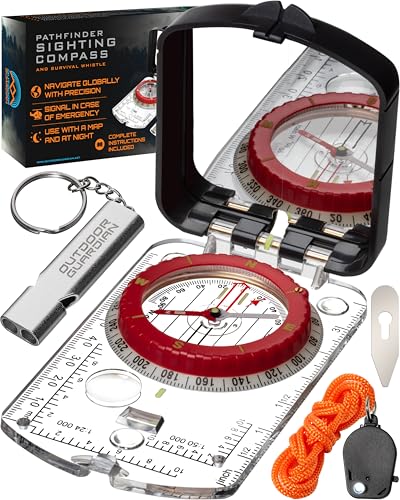
- Global needle with adjustable declination
- Luminous dial, LED, mirror, and whistle
- Includes map scales and clinometer
Best For: Hikers and survival-focused navigators
Military-Style Navigator

- Metal, liquid-filled, waterproof design
- Lensatic sighting with prism and magnifier
- Includes map measurer, pouch, and lanyard
Best For: Mapping and rugged outdoor navigation
Pocket Night Navigator

- Water-resistant aluminum construction
- Glow-in-the-dark interface for low light
- Includes prism lens, bubble level, and pouch
Best For: Portable hiking and nighttime navigation
Rugged Sighting Pick

- Metal, waterproof, and shakeproof construction
- Liquid-filled capsule with bubble level and sighting window
- Includes pouch, lanyard, and tripod mount
Best For: Demanding hiking, camping, hunting, and outdoor navigation
Group Navigation Value

- Includes four lightweight compasses
- Rotating bezel, ruler, and metric scale
- Lanyards support convenient carrying
Best For: Groups, families, classes, and shared outdoor kits
Advanced Terrain Pick
Eyeskey Military Sighting Compass

- Waterproof aluminum alloy body
- Built-in clinometer for slope and elevation readings
- Luminous dial, sighting lens, and tripod mount
Best For: Mountain hiking, backcountry skiing, scouting, and steep terrain
Best Lightweight Map Compass – SUUNTO A-30
For hikers seeking compasses for remote areas without adding much weight, the SUUNTO A-30 combines a compact transparent baseplate with a high-grade steel needle, metric scales, and a magnifying lens for map work. Its luminescent markings also help in low-light conditions.
Best For: Hiking, trekking, orienteering, and map-based navigation where low weight and simple operation matter.
Pros:
- Lightweight 1.6-ounce design with a transparent baseplate.
- Luminescent markings support low-light reading.
- Magnifying lens and metric scales aid map navigation.
- Requires no batteries.
Cons:
- Balanced for northern hemisphere use.
- Uses fixed declination rather than an adjustable setting.
The A-30 is a practical choice for remote-area hiking when portability and map readability are higher priorities than advanced sighting features.
Best Rugged Compass Kit – Sportneer Orienteering Compass
The Sportneer is a sturdy option for compasses for remote areas, pairing a metal base and cover with a rear sight lens, glow-in-the-dark markings, and a waterproof, shock-resistant build. A strap and carrying pouch make it convenient to pack or carry.
Best For: Camping, hiking, scouting, and outdoor users who want a durable compass with portable accessories.
Pros:
- Metal construction is designed to withstand shocks and wet conditions.
- Rear sight lens magnifies the dial for bearing readings.
- Fluorescent markings glow after exposure to light.
- Includes a strap and carrying pouch.
Cons:
- At 7.2 ounces, it is heavier than compact plastic baseplate models.
- Readings require keeping the compass level.
- No warranty is listed in the supplied details.
This model makes sense when rugged construction and included carry options are more important than minimizing pack weight.
Best Simple Hiking Compass – SUUNTO A-10
For straightforward compasses for remote areas, the SUUNTO A-10 offers a compact baseplate design, liquid-filled capsule, high-grade steel needle, and inch/centimeter scales. Its simple layout is suited to recreational navigation with a map.
Best For: Recreational hikers and beginners who want a lightweight, no-battery compass for basic map-and-compass navigation.
Pros:
- Very light 1.1-ounce portable design.
- Liquid-filled capsule supports stable operation.
- Includes inch and centimeter scales for map work.
- Simple operation and lanyard mounting.
Cons:
- Balanced for northern hemisphere use.
- Uses fixed declination.
- Does not list luminous markings or advanced sighting features.
The A-10 is a sensible minimalist pick for well-planned hikes where ease of use and low pack weight are the main considerations.
Best Multifunction Lensatic Compass – AOFAR AF-4074
The AOFAR AF-4074 is built for users who want feature-rich compasses for remote areas. Its zinc construction includes a liquid-filled luminous dial, adjustable prism lens, inclinometer, slope chart, magnifier, and tripod connection, along with waterproof and shockproof features.
Best For: Camping, hiking, mapping, geology activities, and terrain assessment requiring sighting and slope-measurement functions.
Pros:
- Combines compass readings with an inclinometer and slope chart.
- Luminous dial and aiming features support low-light use.
- Waterproof, shockproof zinc construction is designed for rugged conditions.
- Includes a bag, lanyard, and manual.
Cons:
- Its listed 74-pound weight appears unusually high and should be verified before purchase.
- More complex than a basic recreational baseplate compass.
- Supplied details do not identify a hemisphere-specific balancing system.
The AF-4074 is the most feature-packed option here, but buyers should confirm the weight listing and consider whether its extra functions fit their navigation needs.
All-Weather Pathfinder – Mirror Sighting Compass
For anyone comparing compasses for remote areas, the Pathfinder stands out as a feature-rich option for navigation, orienteering, and emergency signaling. Its global needle, adjustable declination, mirrored sighting design, luminous dial, and included LED support practical use in varied conditions.
Best For: Hikers, scouts, backpackers, and survival-focused users who want navigation and signaling features in one compact compass.
Pros:
- Global needle and adjustable declination support accurate readings in both hemispheres.
- Mirrored sighting design, rotating bezel, and six measurement scales aid navigation and map work.
- Includes a luminous dial, LED light, signal mirror, and emergency whistle.
- Lightweight, liquid-filled, and waterproof, with a one-year warranty against material and workmanship defects.
Cons:
- At 4.3 by 2.5 inches, its feature-rich design may be bulkier than a basic pocket compass.
- The listed materials include both metal and plastic, rather than an all-metal construction.
The Pathfinder is a versatile choice when remote-area navigation requires more than a directional needle. Its combination of declination adjustment, nighttime visibility, and emergency tools makes it especially useful for preparedness-minded outdoor users.
Military-Style Navigator – AF-4580 Lensatic Compass
When choosing compasses for remote areas, the AOFAR AF-4580 offers a rugged lensatic format with a liquid-filled capsule, luminous markings, and map-measuring functions. Its waterproof, shakeproof construction and carrying pouch make it suited to demanding camping, hiking, and mapping trips.
Best For: Outdoor users who prefer a military-style compass with sighting, distance-calculation, and tripod-mounting features.
Pros:
- Metal zinc construction and a thermoelastic liquid-filled capsule are designed for durable outdoor use.
- Lensatic sighting system includes an aiming line, prism lens, magnifier viewer, and reading eyepiece.
- Offers a 360-degree floating dial, map measurer, slope chart, and tripod connection.
- Includes a waterproof pouch and lanyard, plus a two-year warranty.
Cons:
- At 7.84 ounces, it is heavier than the smaller compasses in this roundup.
- The lensatic design may require more practice than a straightforward baseplate compass.
The AF-4580 is a strong fit for users who value a traditional military compass layout and built-in measuring tools. Its additional weight is a reasonable tradeoff for the metal body, sighting hardware, and included protective pouch.
Pocket Night Navigator – Lensatic Survival Compass
Compass, Hiking Compass for Survival with Lensatic – Water-Resistant Durable and Pocket-Sized
Check Price On AmazonFor compact compasses for remote areas, this pocket-sized lensatic model focuses on reliable direction readings, water resistance, and low-light visibility. Its prism lens, bubble level, fluorescent interface, and included carrying options give it practical appeal for hiking, camping, and mountaineering.
Best For: Travelers and hikers seeking a lightweight, water-resistant compass with lensatic and nighttime-reading features.
Pros:
- Lensatic function, prism lens, bubble level, and clear scales are designed to improve reading accuracy.
- Fluorescent details and a glow-in-the-dark interface support low-light navigation.
- Rugged aluminum construction is water-resistant and built for rough conditions.
- Compact design includes a carrying case, lanyard, or pouch for portability.
Cons:
- The listed warranty is 91 days, shorter than the warranties supplied for the other options.
- Its water-resistant rating is not described as fully waterproof.
- The supplied notes list the compass as 0.22 kg, so it may not be the lightest pocket option.
This compass is a practical middle ground for users who want a durable, portable instrument with nighttime visibility. Consider it when low-light readability and compact carrying matter more than advanced signaling or declination features.
Rugged Sighting Pick – Anbte Hiking Compass
For compasses for remote areas, the Anbte Hiking Compass offers a durable metal build, liquid-filled capsule, and sighting features suited to demanding outdoor navigation. Its waterproof, shakeproof construction and glow-in-the-dark details add practicality when conditions are less predictable.
Best For: Hikers, campers, hunters, and outdoor users who want a rugged sighting compass with tripod compatibility.
Pros:
- Zinc alloy body with a foldable metal lid and waterproof, shakeproof construction
- Liquid-filled capsule, bubble level, magnifying viewer, and sighting window support readable bearings
- Includes a canvas pouch and lanyard; tripod screw hole adds mounting flexibility
- Fluorescent design supports reading in dark environments
Cons:
- At 278 g, it is heavier than a basic plastic compass
- Must be kept away from phones, magnets, and other magnetic objects to avoid inaccurate readings
This is a strong choice when durability and sighting precision matter more than minimum weight. The metal housing and included carry accessories make it well suited to extended outdoor use.
Group Navigation Value – 4-Piece Outdoor Compass Set
For compasses for remote areas when several people need basic navigation tools, this four-piece set provides a practical, lightweight option. Each compass includes a rotating bezel, ruler, metric scale, and lanyard for map reading and easy carrying.
Best For: Hiking groups, outdoor instruction, families, or buyers who want multiple compact map-reading compasses.
Pros:
- Four compasses are included in the pack
- Rotating bezel and precise needle support directional guidance
- Built-in metric ruler and 1:50,000 map scale assist with map work
- Lightweight plastic design with lanyard mounting is easy to carry
Cons:
- Plastic construction may be less rugged than metal military-style compasses
- Includes basic map-navigation features rather than a sighting system or clinometer
This set makes sense when quantity, portability, and straightforward map reading are priorities. It is especially useful for shared gear, though users seeking maximum durability may prefer a metal-bodied model.
Advanced Terrain Pick – Eyeskey Military Sighting Compass
For compasses for remote areas involving steep terrain, the Eyeskey Multifunctional Military Sighting Compass adds a clinometer to its liquid-filled navigation design. Its aluminum alloy body, luminous dial, adjustable sighting line, and magnifying viewer provide a feature-rich setup for backcountry navigation.
Best For: Mountain hikers, backcountry skiers, scouts, and navigators who need slope-angle measurement as well as bearings.
Pros:
- Rugged, waterproof aluminum alloy construction
- Built-in clinometer measures slope, elevation, and potential avalanche hazards
- Liquid-filled compass with bubble level, luminous dial, magnifying viewer, and adjustable sighting lens
- Includes canvas pouch and lanyard and supports tripod mounting
Cons:
- More feature-heavy than a basic compass, which may require additional familiarization
- Compact aluminum construction still weighs 175 g
The clinometer distinguishes this compass for mountainous routes and steep-slope planning. Choose it when terrain assessment and precise sighting are more important than having the simplest possible compass.
How We Picked the Best Compasses for Remote Areas
We focused on the features that matter when navigation becomes dependent on a physical instrument: directional accuracy, readability, durability, portability, and ease of use. The selection includes simple recreational compasses for hikers who want dependable map navigation, as well as sighting models for users who need more precise bearings across open or difficult terrain.
We also considered practical details such as luminous markings, adjustable declination, waterproof or water-resistant construction, lanyards, protective pouches, rulers, magnifiers, map scales, and inclinometers. No compass replaces navigation practice, so we favored products whose layouts and controls are useful in realistic field conditions.
Quick Comparison
- Best for compact everyday hiking: SUUNTO A-30 or SUUNTO A-10.
- Best for simple orienteering: Sportneer Compass or the four-piece outdoor compass set.
- Best for sighting precision: Pathfinder Sighting Compass.
- Best for rugged lensatic use: AOFAR AF-4074, AOFAR AF-4580, or Eyeskey Multifunctional Military Sighting Compass.
- Best for a pocket-sized survival option: the water-resistant lensatic hiking compass.
- Best for a metal-bodied design: Anbte Hiking Compass.
Key Buying Factors for Compasses for Remote Areas
Compass Style and Accuracy
A baseplate compass is generally lighter and easier to use with a paper map. Lensatic and mirror compasses add sighting features that can help you take more precise bearings, but they may be heavier and require more practice. Look for a stable needle, clear degree markings, and a bezel that turns smoothly without excessive play.
Declination Adjustment
Magnetic north and true north are not always the same. Adjustable declination lets you account for local variation and reduces calculation errors, which is especially valuable on long routes or in unfamiliar regions. If the compass lacks this feature, learn how to apply the local correction manually.
Visibility and Construction
Luminous markings can help in low light, while a readable dial and contrasting needle are important in bright conditions. Waterproof, water-resistant, impact-resistant, or shakeproof construction is useful for wet weather, rough packs, and repeated outdoor use. A protective case or pouch can further reduce damage during transport.
Useful Extras
Rulers and map scales support route planning, while magnifiers help with small map details. An inclinometer can assist with slope assessment and terrain interpretation. These extras are helpful only if they do not make the compass too bulky for the way you travel.
Who Should Buy Which Compasses for Remote Areas?
Day hikers and beginners should choose a compact baseplate compass with clear markings and straightforward controls. Orienteering users may prefer a lightweight design with a lanyard, ruler, magnifier, and adjustable declination. Backcountry navigators should prioritize a dependable sighting system, luminous markings, and rugged construction. Campers, survival users, and field researchers may benefit from lensatic models with an inclinometer, distance scale, or protective pouch.
Before relying on any of these Compasses for Remote Areas, practice taking bearings, orienting a map, and correcting for declination in a familiar location. Carry a paper map and, when appropriate, a charged GPS device as complementary tools rather than treating any single navigation method as foolproof.