The best lightweight heart rate monitors make it easier to track workout intensity and key health readings without adding bulky equipment. This roundup includes chest straps, wearable trackers, handheld EKG devices, and fingertip pulse oximeters.
Choose based on the type of data you need, how often you will use it, and whether compatibility, waterproofing, battery life, or clinical-style readings matters most.
Best 10 Lightweight Heart Rate Monitors Picks for 2026
Most Accurate

- Highly accurate heart-rate sensor
- Bluetooth, ANT+, and 5 kHz connectivity
- Waterproof with up to 400-hour battery life
Best For: Athletes who want precise readings and broad compatibility
Best Garmin Value

- Real-time heart rate and HRV data
- Machine-washable adjustable strap
- Up to one year of battery life
Best For: Garmin users wanting simple, durable workout tracking
Most Comfortable

- Soft, breathable armband design
- Connects to up to three devices
- Wear detection with 38-hour operation
Best For: Workout users who prefer an armband over a chest strap
Best for Advanced Running Data

- Adds running dynamics to heart-rate data
- Records workouts without a watch
- Rechargeable battery lasts up to two months
Best For: Garmin athletes tracking detailed running and workout metrics
Best Everyday Tracker
Zeacool 24/7 Heart Rate Fitness Tracker

- Continuous heart-rate and multi-metric wellness tracking
- 25 sport modes with 5 ATM water resistance
- 10–14-day stated regular-use battery life
Best For: Everyday activity, sleep, and wellness tracking
Best for Spot Checks
KardiaMobile 1-Lead EKG Monitor

- 30-second single-lead EKG readings
- Detects normal rhythm, AFib, and arrhythmias
- Compact design with 12-month stated battery life
Best For: Portable, on-demand heart-rhythm checks
Best for Training
COOSPO H808S Bluetooth Chest Strap
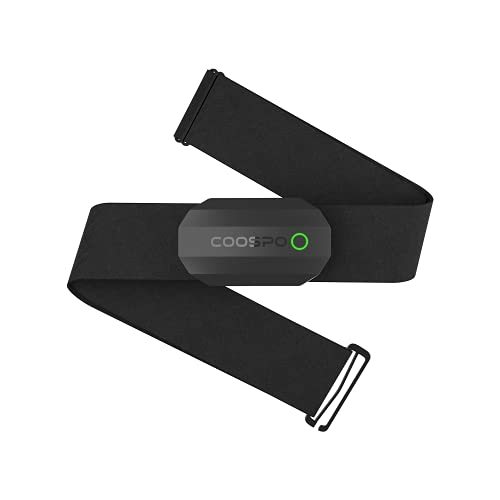
- Claims ±1 BPM real-time exercise accuracy
- Bluetooth and ANT+ connectivity
- 15 g sensor with 300-hour stated battery life
Best For: Connected workout and cycling heart-rate tracking
Premium Accuracy Pick

- Pulse and SpO2 readings
- Plethysmograph and perfusion index
- Alarm, batteries, and lanyard included
Best For: Sports, aviation, and home checks
Easy-Read Value
JKS50B Fingertip Pulse Oximeter

- Bright OLED display
- One-button operation
- Batteries and lanyard included
Best For: Simple everyday and outdoor checks
Accessory-Rich Choice
Zacurate 500 Series Pulse Oximeter

- Pulse, SpO2, and pulse strength
- User-facing LED display
- Silicone cover and warranty included
Best For: Fitness and outdoor spot checks
Most Accurate – Polar H10 Heart Rate Monitor
For shoppers comparing lightweight heart rate monitors, the Polar H10 stands out for its accuracy, broad connectivity, and waterproof chest-strap design. It supports Bluetooth, ANT+, and 5 kHz connections, with simultaneous Bluetooth and ANT+ use.
Best For: Athletes who prioritize precise readings and wide device compatibility.
Pros:
- Recognized for highly accurate heart-rate measurements.
- Supports Bluetooth, ANT+, and 5 kHz connections.
- Waterproof, with internal memory for multiple hours of data.
- Battery lasts up to 400 hours.
Cons:
- Chest-strap design may be less appealing than an armband.
- Uses a CR2025 button-cell battery rather than a rechargeable battery.
The Polar H10 is a strong choice when dependable readings and flexible connectivity matter more than having the smallest wearable format.
Best Garmin Value – Garmin HRM 200
The Garmin HRM 200 is a practical option among lightweight heart rate monitors, transmitting real-time heart rate and heart rate variability data to compatible Garmin devices, fitness equipment, apps, and smartphones. Its adjustable strap is available in two sizes and is machine washable.
Best For: Garmin users seeking a straightforward monitor with long battery life.
Pros:
- Transmits heart rate and HRV data in real time.
- Compatible with Garmin watches, cycling computers, equipment, apps, and smartphones.
- Machine-washable strap simplifies cleaning.
- User-replaceable battery lasts up to one year.
Cons:
- Its strongest compatibility is within the Garmin ecosystem and supported devices.
- Uses a replaceable battery instead of rechargeable power.
Choose the HRM 200 if you want a durable, low-maintenance chest strap for regular Garmin-connected workouts.
Most Comfortable – COROS Heart Rate Monitor
The COROS Heart Rate Monitor offers a soft, breathable armband alternative to traditional chest straps. This lightweight heart rate monitor uses Bluetooth, connects with up to three devices at once, and automatically powers on or off through wear detection.
Best For: Runners and cyclists who prefer a comfortable armband for workouts.
Pros:
- Soft, breathable band designed for comfortable wear.
- Pairs with up to three devices simultaneously.
- Wear detection automatically manages power and connections.
- Provides 38 hours of operation and up to 80 days of standby time per charge.
Cons:
- Bluetooth only; it is not compatible with ANT+.
- Designed for sports and activities rather than daily heart-rate tracking.
- Requires recharging after approximately 38 hours of operation.
The COROS model is a compelling pick for users who find chest straps restrictive and primarily need Bluetooth workout connectivity.
Best for Advanced Running Data – Garmin HRM 600
The Garmin HRM 600 is aimed at data-focused athletes who want more than basic heart-rate monitoring. Along with real-time heart rate and HRV, it supports running dynamics, stores workouts when a watch cannot be worn, and provides swim, treadmill, and indoor-track data for compatible Garmin devices.
Best For: Garmin athletes who want advanced running metrics and onboard workout recording.
Pros:
- Tracks heart rate and HRV in real time.
- Provides running dynamics such as stride length and vertical oscillation with a compatible smartwatch.
- Records workouts and syncs data to Garmin Connect when a watch is unavailable.
- Machine-washable strap with rechargeable battery lasting up to two months.
Cons:
- Many advanced metrics require a compatible Garmin smartwatch.
- Battery life is shorter than the HRM 200’s stated one-year life.
- Its feature set may be unnecessary for basic heart-rate tracking.
The HRM 600 makes the most sense for Garmin users who will use its extra running, swimming, and workout-recording capabilities rather than only monitor pulse.
Best Everyday Tracker – Zeacool 24/7 Heart Rate Fitness Tracker
If you want lightweight heart rate monitors for all-day wellness tracking, the Zeacool combines continuous heart-rate monitoring with blood oxygen, blood pressure, sleep, temperature, and activity features. Its 1.1-inch AMOLED display, 5 ATM water resistance, and stated 10–14-day typical battery life make it suited to routine wear.
Best For: Everyday users who want a lightweight fitness tracker with broad health and activity features.
Pros:
- Tracks heart rate continuously, along with blood oxygen, blood pressure, sleep, and temperature.
- Offers 25 sport modes and records steps, distance, and calories in the Keep Health app.
- 5 ATM waterproof construction and a stated 10–14-day regular-use battery life.
- Includes useful extras such as weather, sedentary, hydration, and menstrual reminders.
Cons:
- Requires a compatible iPhone or Android smartphone and the Keep Health app for expanded data.
- The supplied notes do not identify the device’s exact weight.
- Health readings are presented as monitoring features rather than a substitute for medical evaluation.
The Zeacool is the most versatile option here for users who want a wearable rather than a dedicated exercise sensor. Choose it for broad daily tracking, especially if water resistance and longer battery life matter.
Best for Spot Checks – KardiaMobile 1-Lead EKG Monitor
Among lightweight heart rate monitors, the KardiaMobile is designed for quick, focused rhythm checks rather than continuous wrist tracking. This compact, FDA-cleared personal monitor uses finger or thumb contact with its sensors and provides results in about 30 seconds without a subscription, Bluetooth, Wi-Fi, cords, or a computer.
Best For: Smartphone users who want a compact personal EKG monitor for on-demand rhythm checks.
Pros:
- Provides a 30-second, single-lead EKG reading.
- Designed to detect normal rhythm, AFib, and arrhythmias.
- Very compact and lightweight at approximately 0.02 kg.
- Uses a replaceable battery with a stated average life of 12 months.
Cons:
- It is an on-demand monitor, not a continuous heart-rate wearable.
- Works with most smartphones, so phone compatibility should be checked before purchase.
- A single-lead EKG is not a replacement for professional medical assessment.
KardiaMobile is the focused choice for portability and short rhythm recordings. Its small size makes it easy to carry, while the finger-contact design avoids the fit and charging demands of a watch or chest strap.
Best for Training – COOSPO H808S Bluetooth Chest Strap
For exercise-focused shoppers comparing lightweight heart rate monitors, the COOSPO H808S uses a chest strap to deliver real-time training data. It supports both Bluetooth 4.0 and ANT+ connections, claims ±1 BPM accuracy, and works with compatible sports watches, bike computers, and apps such as Strava, Peloton, Wahoo Fitness, Polar Beat, and Zwift.
Best For: Athletes and indoor or outdoor exercisers who need live heart-rate data across training devices and apps.
Pros:
- Claims ±1 BPM accuracy for real-time exercise heart-rate monitoring.
- Dual Bluetooth and ANT+ connectivity supports multiple compatible devices and apps.
- IP67 water resistance and a stated 300-hour battery life.
- Lightweight 15 g sensor design with a replaceable CR2032 battery.
Cons:
- The electrode zones should be moistened before use for proper operation.
- The strap is recommended for replacement every six months or 300 washes.
- It requires correct app pairing and is less convenient for casual all-day wear than a wrist tracker.
The H808S is the strongest fit for structured workouts where responsive data and broad device compatibility matter. Its chest-strap format prioritizes training feedback, while the replaceable battery reduces charging interruptions.
Premium Accuracy Pick – Innovo iP900AP Pulse Oximeter
For shoppers comparing lightweight heart rate monitors, the Innovo iP900AP is a compact fingertip option that also measures blood oxygen saturation. Its plethysmograph and perfusion index readings provide additional feedback, while the adjustable display and audible alerts make it practical for home or on-the-go checks.
Best For: Sports enthusiasts, aviators, and users who want added measurement feedback and alarm features.
Pros:
- Measures pulse rate and SpO2 with stated +/-2% accuracy.
- Plethysmograph and perfusion index help confirm reading quality.
- Includes adjustable brightness, auditory alarm, batteries, and lanyard.
- Compact design and 30-hour battery life support portable use.
Cons:
- It is a fingertip pulse oximeter rather than a continuous wearable monitor.
- Measurements require the user to remain still.
- Its SpO2 measuring range is listed as 70% to 100%.
The iP900AP stands out when reliability features matter more than smartwatch-style tracking. It is a sensible lightweight choice for occasional pulse and oxygen checks before or after activity.
Easy-Read Value – JKS50B Fingertip Pulse Oximeter
This JKS50B is a straightforward choice among lightweight heart rate monitors, displaying pulse rate alongside blood oxygen saturation on a bright OLED screen. Its one-button operation, compact size, and included batteries make it convenient for everyday wellness checks, workouts, and outdoor trips.
Best For: Users who prioritize simple operation, large digits, and portable pulse checks.
Pros:
- Large display shows SpO2, pulse rate, and signal strength.
- Waveform bar graph provides a visual indication of pulse strength.
- One-button operation and automatic power-off are easy to use.
- Includes two AAA batteries, lanyard, and instruction manual.
Cons:
- It is designed for spot checks, not continuous heart rate monitoring.
- The listed SpO2 range is 70% to 100%.
- It does not list Bluetooth connectivity or app features.
The JKS50B keeps the experience simple and portable. Choose it if you want an easy-to-read fingertip monitor for home, exercise, hiking, skiing, or high-altitude use without extra setup.
Accessory-Rich Choice – Zacurate 500 Series Pulse Oximeter
The Zacurate 500 Series is a compact fingertip option for shoppers seeking lightweight heart rate monitors with oxygen tracking. It displays pulse rate, pulse strength, and SpO2 in about 10 seconds, with a user-facing LED screen and accessories that help protect and carry the device.
Best For: Outdoor and fitness users who want a simple monitor with a protective cover and broad pulse-rate range.
Pros:
- Displays SpO2, pulse rate, and pulse strength on a large LED screen.
- Lists a pulse-rate range of 30 to 250 BPM and +/-2% measurement accuracy.
- Smart Spring System accommodates a wide range of finger sizes for ages 12 and above.
- Includes batteries, lanyard, silicone cover, and a 12-month warranty.
Cons:
- It provides fingertip spot measurements rather than continuous tracking.
- The product is intended for users age 12 and above.
- Its listed SpO2 range is 70% to 100%.
With its protective silicone cover and included carrying accessories, the Zacurate 500 Series is well suited to mobile use. It is a practical pick for quick readings during everyday activities or outdoor adventures.
How We Picked These Lightweight Heart Rate Monitors
We selected products across several common monitoring categories rather than treating every device as interchangeable. Chest straps are included for exercise-focused users who want continuous heart-rate data and broad app or equipment compatibility. Wearable trackers suit people who prefer automatic, all-day monitoring, while EKG monitors and pulse oximeters are designed for spot checks and specific health measurements.
Our comparison emphasizes sensor format, wearing comfort, connectivity, water resistance, battery expectations, display or app support, and the difference between general wellness tracking and medical-oriented readings. Always follow the manufacturer’s instructions and consult a healthcare professional about concerning symptoms or abnormal results.
Quick Comparison
| Device type | Best for | Typical strengths | Important limitation |
|---|---|---|---|
| Chest strap | Training and gym equipment | Responsive heart-rate data, secure fit, ANT+ or Bluetooth options | Requires wearing a strap around the chest |
| Wearable tracker | Everyday activity and sleep tracking | Automatic wear detection, multiple wellness metrics | Feature accuracy can vary by fit and activity |
| Portable EKG | Occasional rhythm checks | Records a single-lead electrocardiogram | Not a replacement for professional diagnosis |
| Pulse oximeter | Spot checks at home | Displays oxygen saturation and pulse quickly | Not intended for continuous exercise tracking |
Key Buying Factors for Lightweight Heart Rate Monitors
Choose the Right Sensor Format
For running, cycling, rowing, and structured training, a chest strap generally provides a stable fit and fast heart-rate response. A wrist or band-style tracker is more convenient for continuous daily measurements. Finger pulse oximeters are better suited to brief readings of pulse and blood oxygen, while an EKG device serves a different purpose by recording electrical heart rhythm.
Check Connectivity and Compatibility
Before buying, confirm whether the monitor works with your phone, smartwatch, fitness app, or exercise machine. ANT+ is useful with compatible bike computers and gym equipment; Bluetooth is common for phones and many training apps. Some devices may connect to only one type of system or limit simultaneous connections.
Prioritize Fit, Comfort, and Maintenance
A lightweight device is only useful if you will wear it consistently. Look for adjustable straps, automatic wear detection, soft contact materials, and a secure fit during movement. Water resistance can help with sweat and rain, but verify whether the rating supports swimming or only splash protection. Replaceable batteries and washable straps may also reduce long-term upkeep.
Understand What the Readings Mean
Heart rate, blood oxygen, blood pressure estimates, and EKG results are not interchangeable. Treat consumer readings as wellness information unless the product is specifically cleared for a medical use. Poor circulation, cold fingers, motion, an incorrect strap position, or a loose fit can affect results.
Who Should Buy Which Lightweight Heart Rate Monitors?
Choose a chest strap if training accuracy, low profile comfort, and compatibility with sports equipment are your priorities. These are usually the strongest choice for serious exercise monitoring.
Choose a wearable tracker if you want hands-off activity, sleep, and heart-rate trends throughout the day. This format is convenient for users who do not want to manage a chest strap.
Choose a portable EKG monitor if a clinician has recommended rhythm tracking or you want a dedicated tool for recording occasional heart-rhythm readings. Discuss unusual results with a qualified healthcare professional.
Choose a fingertip pulse oximeter if you need quick, simple spot checks of pulse and oxygen saturation at home or while traveling. For persistent symptoms, worsening readings, chest pain, breathing difficulty, or fainting, seek medical care rather than relying on a consumer monitor.