The best neoprene water shoes protect your feet from sharp rocks, hot sand, slippery surfaces, and cold water while staying flexible enough for swimming and active water sports.
We’ve compared barefoot aqua shoes, sand-resistant socks, and ankle-high neoprene boots to help you choose the right balance of grip, drainage, coverage, and comfort.
Best 10 Neoprene Water Shoes Picks for 2026
Best Lightweight Pick
Quick-Dry Barefoot Water Shoes

- Stretch mesh upper is breathable and flexible
- Drainage holes and rubber tread support wet-surface grip
- Lightweight, compressible design packs easily
Best For: Pool, beach, yoga, kayaking, and travel
Best for Warm-Water Diving

- 2mm neoprene adds warmth in warmer water
- Non-slip rubber sole supports wet-surface traction
- Lightweight low-cut design packs easily
Best For: Snorkeling, scuba diving, boating, and travel
Best Neoprene Sock

- 3mm neoprene helps retain warmth
- Coated sole adds abrasion resistance and grip
- Flexible pull-on design suits many water sports
Best For: Cooler-water activities, beaches, and water sports
Best Protective Design

- Thick sole and toe cap add foot protection
- 3D tread is designed for slippery surfaces
- Drainage system supports quick drying
Best For: Waterfall hikes, rafting, rocky shores, and outdoor adventures
Rugged Neoprene Boots
Cressi Minorca 3 mm Water Boots
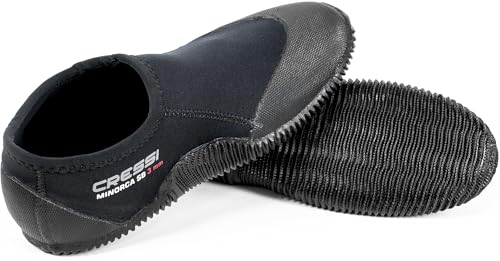
- 3 mm flexible neoprene construction
- Rubber sole for wet-surface traction
- Heel and toe caps add durability
Best For: Scuba diving, snorkeling, rafting, and fin use
Lightweight Aqua Socks
Athmile Quick-Dry Barefoot Water Shoes

- Breathable quick-dry elastic upper
- Anti-slip rubber sole for varied surfaces
- Lightweight, flexible, and foldable
Best For: Beach, pool, water park, and travel use
High-Cut Neoprene Socks
OMGear 3 mm Anti-Slip Water Socks

- Stretchy 3 mm neoprene construction
- High cut and adjustable strap help block sand
- Reinforced rubber sole improves traction
Best For: Snorkeling, scuba diving, and sandy beach activities
Best All-Around Pick

- Breathable quick-dry fabric
- Protective rubber sole
- Lightweight and foldable
Best For: Family trips and varied water activities
Best for Cold-Water Coverage
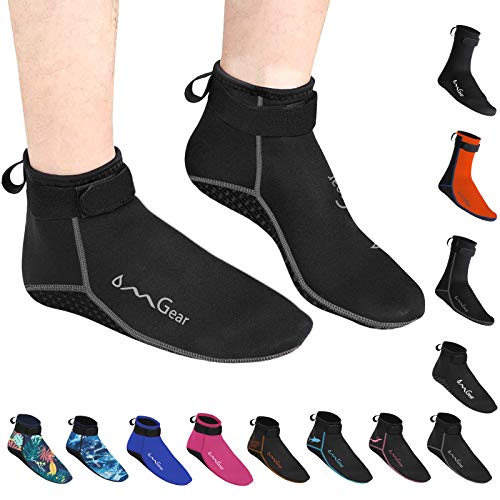
- 3mm neoprene construction
- Adjustable sand-blocking strap
- Reinforced anti-slip sole
Best For: Diving, fins, and cooler water
Best Slip-On Comfort

- Sock-like flexible fit
- Easy lace-free pull-on design
- Rubber sole with slip resistance
Best For: Pools, beaches, travel, and casual watersports
Best Lightweight Pick – Quick-Dry Barefoot Water Shoes
These lightweight neoprene water shoes are designed for swimmers, beachgoers, and travelers who want a flexible, sock-like fit. The stretch mesh upper, drainage openings, and speed-lace closure support quick drying and easy on-and-off use across wet and dry activities.
Best For: Pool, beach, yoga, kayaking, and general water activities where low weight and flexibility matter.
Pros:
- Stretchy mesh upper offers a snug, breathable feel.
- Rubber outsole includes drainage holes and an anti-slip tread.
- Elastic laces and collar make them easy to put on and adjust.
- Lightweight, flexible, and compressible for travel.
Cons:
- Moderate cushioning may feel minimal for extended rocky-terrain use.
- Mesh construction may provide less insulation than thicker neoprene footwear.
Choose this pair if you prioritize portability, ventilation, and versatile amphibious use. Its design is especially practical for pool decks, beaches, and casual water sports.
Best for Warm-Water Diving – Mares Equator 2mm Dive Boots
For shoppers specifically seeking neoprene water shoes with more thermal coverage, the Mares Equator uses 2mm neoprene to add warmth in warmer water. Its low-cut profile preserves mobility, while the rubber sole helps with traction on wet boat decks and rocky shores.
Best For: Snorkeling, scuba diving, boating, and warm-water travel.
Pros:
- 2mm neoprene provides thermal protection in warmer water.
- Non-slip rubber sole improves traction on wet surfaces.
- Low-cut design allows freedom of movement.
- Lightweight construction is convenient for packing.
Cons:
- Low-cut height provides less ankle coverage than taller dive boots.
- Designed around diving and boating rather than broad casual use.
This is the more specialized choice in the group. Select it when warmth, wet-surface traction, and compact dive footwear are more important than a barefoot-style mesh feel.
Best Neoprene Sock – 3mm Sand-Proof Water Socks
These 3mm neoprene water socks suit shoppers who want warmth and foot coverage without a conventional shoe structure. The nylon-reinforced neoprene blend, flat seams, and coated anti-slip bottom are aimed at beach and water activities, though the manufacturer notes they are not completely waterproof.
Best For: Cooler-water swimming, beach volleyball, snorkeling, kayaking, and walking on sandy shores.
Pros:
- 3mm neoprene helps insulate feet in cooler water.
- Coated sole is designed for abrasion resistance and traction.
- Flat seams and smooth openings help reduce irritation and water entry.
- Flexible pull-on construction works across several water sports.
Cons:
- These are socks rather than structured shoes, so protection is more limited.
- They are specifically described as not 100% waterproof.
- Hand-wash care is required.
Consider this pair when warmth and flexibility are your priorities, especially for beach activities and cooler water. For sharp, rough terrain, a more substantial rubber-soled water shoe may be preferable.
Best Protective Design – SEEKWAY Quick-Dry Aqua Shoes
SEEKWAY water shoes are a practical option for buyers who want more protection than a simple aqua sock. Thick rubber soles, a toe cap, drainage holes, and 3D tread combine with a flexible elastic vamp for use on beaches, trails, water parks, and other mixed wet-and-dry surfaces.
Best For: Waterfall hikes, rocky shorelines, rafting, hiking, and active outdoor water use.
Pros:
- Thick rubber sole and toe cap help protect against sharp objects.
- 3D non-slip tread is designed for slippery conditions.
- Drainage holes in the outsole and insole support quick water release.
- Elastic vamp and lightweight build encourage easy, flexible wear.
Cons:
- Minimal cushioning may not suit shoppers wanting a highly cushioned walking shoe.
- The protective build may feel less sock-like than simpler mesh styles.
This is a strong fit for active users who move between water and uneven ground. Choose it over a thinner aqua sock when toe coverage, outsole protection, and traction are central to your buying decision.
Rugged Neoprene Boots – Cressi Minorca 3 mm Water Boots
For shoppers seeking neoprene water shoes with a more boot-like build, the Cressi Minorca Short provides 3 mm neoprene, a closed toe, and a durable rubber sole. Its construction is suited to water sports where traction, fin control, and added coverage matter.
Best For: Scuba diving, snorkeling, rafting, windsurfing, swimming, and other water sports requiring a secure short boot.
Pros:
- 3 mm neoprene is flexible and designed for comfort.
- Rubber sole helps reduce slipping on wet or smooth surfaces.
- Rubber heel and toe caps add strength and durability.
- Designed to provide control when used with scuba diving fins.
Cons:
- The boot-style design may feel more substantial than lightweight aqua socks.
- Low-cut short boots offer less leg coverage than taller water footwear.
- Pull-on closure does not provide adjustable fastening.
The Cressi Minorca Short is a practical pick when you want neoprene water shoes that prioritize structure and grip over a minimalist barefoot feel. The included two-year limited warranty is an added consideration for frequent users.
Lightweight Aqua Socks – Athmile Quick-Dry Barefoot Water Shoes
These lightweight water shoes are a flexible alternative to traditional neoprene water shoes, with a quick-dry fabric upper, elastic fit, and rubber anti-slip sole. They fold easily for travel and are designed for use in water and on dry land.
Best For: Beaches, pools, water parks, kayaking, surfing, yoga, camping, and casual outdoor activities.
Pros:
- Breathable, quick-dry, elastic fabric supports flexible movement.
- Rubber sole helps protect against rocks, shells, gravel, and hot sand.
- Lightweight and foldable for convenient packing and carrying.
- Thick insole provides moderate cushioning.
Cons:
- The supplied sizing guidance recommends choosing a half size smaller.
- Fabric construction may provide less warmth and structure than neoprene boots.
- Elastic closure offers convenience but no adjustable strap.
The Athmile water shoes suit shoppers who value packability and a soft, sock-like feel. They are a versatile choice for general beach and pool use, though buyers wanting insulated or more structured footwear may prefer a neoprene boot.
High-Cut Neoprene Socks – OMGear 3 mm Anti-Slip Water Socks
For shoppers wanting neoprene water shoes with ankle coverage, the OMGear water socks combine 3 mm neoprene with a high-cut design, adjustable strap, and reinforced rubber-print sole. They are made for water sports and beach environments where sand, rough ground, and cooler water can be concerns.
Best For: Snorkeling, scuba diving, swimming, beach sports, and walking on sandy, rugged, or slippery surfaces.
Pros:
- Soft 3 mm neoprene with four-way-stretch nylon supports flexibility.
- High-cut design and adjustable strap help limit sand entry around the ankle.
- Reinforced anti-slip rubber sole resists abrasion and tearing.
- Flatlock stitching is designed for a flexible, durable fit.
Cons:
- Flatlock stitching is not glued, so it may allow more water entry than glued blind stitching.
- High-cut ankle coverage may feel warmer or less minimal than aqua socks.
- The listed version is a 3 mm model, so it may not provide the insulation of thicker 5 mm options.
The OMGear water socks are a strong middle ground between thin swim socks and full water boots. Their adjustable high-cut design is especially useful when keeping sand out and maintaining traction are priorities.
Best All-Around Pick – SIMARI Neoprene Water Shoes
For shoppers who want versatile neoprene water shoes for both wet and dry activities, the SIMARI Water Shoes combine a breathable quick-dry upper with a flexible rubber sole. They are designed for swimming, kayaking, yoga, beach outings, and everyday travel where lightweight protection matters.
Best For: Families and active users who need lightweight, foldable water shoes for varied beach, pool, boating, and outdoor activities.
Pros:
- Breathable, elastic, quick-drying fabric with moderate cushioning.
- Rubber sole helps protect against rocks, shells, gravel, and hot sand.
- Slip-resistant tread supports balance on slippery surfaces.
- Lightweight, flexible, foldable, and available in sizes for adults and children.
Cons:
- The pull-on design does not offer a separate adjustable fastening system.
- Its low-profile construction may provide less structure than a traditional water shoe.
The SIMARI is a practical all-purpose option when portability and flexibility are priorities. Its combination of cushioning, rubber traction, and quick-drying fabric makes it especially convenient for family trips and mixed water-and-land use.
Best for Cold-Water Coverage – OMGear Neoprene Water Socks
These OMGear neoprene water shoes use 3mm neoprene with a stretchy nylon laminate to add warmth and foot protection in the water. The low-cut shape, adjustable strap, and reinforced rubber-printed sole make them a focused choice for diving, fins, sand, and rugged or slippery surfaces.
Best For: Divers and watersports users who want neoprene coverage, a secure ankle fit, and protection from cold water, abrasions, and rough ground.
Pros:
- 3mm neoprene helps protect feet from cold water, cuts, punctures, and scratches.
- Adjustable strap helps keep sand and small debris out.
- Reinforced, abrasion-resistant rubber sole provides anti-slip traction.
- Elastic heel loop simplifies putting them on and attaching them to fins or a wall.
Cons:
- Minimal cushioning may feel less supportive for extended land walking.
- Flatlock stitching is intended for spring, summer, and autumn use rather than maximum cold-weather sealing.
- The low-cut design may provide less coverage than taller water footwear.
Choose the OMGear when neoprene insulation and durable foot protection matter more than plush cushioning. The adjustable strap and anti-slip sole also make it more specialized for diving and fin use than general beach footwear.
Best Slip-On Comfort – SEEKWAY Quick-Dry Water Shoes
The SEEKWAY Water Shoes are a sock-like option for shoppers seeking flexible neoprene water shoes with easy slip-on convenience. Their quick-drying spandex upper, smooth elastic neck, and rubber outsole are suited to pool, beach, river, boating, yoga, and other active settings.
Best For: Users who prioritize a snug, sock-like fit and fast on-and-off wear for recreational water activities and travel.
Pros:
- Soft, elastic upper provides a flexible fit and dries quickly.
- Lace-free pull-on design makes them easy to put on and remove.
- Rubber outsole helps guard against sharp objects, hot sand, and slippery surfaces.
- Smooth elastic neck helps reduce chafing and slipping during exercise.
Cons:
- The lightweight design may offer less structure than sturdier footwear.
- It uses moderate cushioning rather than a heavily cushioned insole.
- The supplied notes identify the material as polyester/spandex-style fabric rather than neoprene specifically.
The SEEKWAY stands out for comfort, flexibility, and easy transitions between water and dry land. It is a strong fit for casual users who want a barefoot feel and broad activity coverage without laces.
How We Picked the Best Neoprene Water Shoes
We grouped these Neoprene Water Shoes by the jobs they are designed to handle: casual beach and pool use, barefoot-style movement, sandy activities, paddling, hiking, snorkeling, and scuba-related use. We prioritized features that matter in wet environments, including secure fit, quick drainage, flexible construction, outsole traction, foot coverage, and ease of putting them on and taking them off.
We also considered the difference between lightweight aqua socks and more structured neoprene boots. Socks are generally better for swimming, beach walking, and yoga, while boots offer more protection and support for fins, rocky entries, and demanding water sports. Check each listing carefully for sizing guidance, thickness, and intended activity.
Quick Comparison
| Type | Best For | Main Advantage | Potential Trade-Off |
|---|---|---|---|
| Lightweight aqua shoes | Pool, beach, travel, casual swimming | Fast drying and easy packing | Less protection from rocks |
| Barefoot water shoes | Kayaking, paddleboarding, walking, yoga | Flexible, natural-feeling movement | Usually thinner underfoot |
| 3mm–5mm neoprene socks | Sand, fins, beach sports, cooler water | Warmth and sand resistance | Can feel warmer and tighter |
| Ankle-high water boots | Scuba, snorkeling, rafting, rocky shorelines | Greater coverage and durable traction | Bulkier than aqua socks |
Key Buying Factors for Neoprene Water Shoes
Fit and Closure
A close fit helps prevent slipping, blisters, and sand entry. Slip-on styles are convenient, while adjustable openings or secure ankle collars can provide a more stable fit during paddling and current-heavy activities. Use the manufacturer’s size chart rather than relying only on your usual shoe size.
Grip and Sole Design
Look for a rubberized or textured outsole if you’ll walk across wet decks, rocks, boat ramps, or pool surrounds. A thin sole improves flexibility but offers less protection; a thicker sole is preferable for rough shorelines and repeated walking.
Neoprene Thickness and Coverage
Thicker neoprene can add warmth, cushioning, and abrasion resistance, but it may dry more slowly and feel less streamlined. Low-cut shoes suit warm-water swimming, while ankle-high boots are more appropriate for fins, diving, and rugged entries.
Drainage and Drying
Mesh panels, perforations, and drainage channels help water escape quickly. After use, rinse away salt, chlorine, and sand, then air-dry the shoes fully to reduce odor and preserve the materials.
Who Should Buy Which Neoprene Water Shoes?
For Pools, Beaches, and Vacations
Choose lightweight, quick-drying aqua shoes that pack easily and provide basic traction. These are practical for families, resort travel, and swimming areas with smooth surfaces.
For Kayaking, Paddleboarding, and River Walks
A flexible barefoot-style pair with a dependable non-slip sole is usually the best balance of control, drainage, and comfort. Prioritize a secure fit if you’ll be stepping in and out of a boat.
For Sand-Heavy Activities
Choose neoprene socks or sand-resistant water footwear with a snug opening. These are useful for beach volleyball, fin use, and shoreline activities where loose sand can cause rubbing.
For Scuba, Snorkeling, or Rocky Entries
Pick ankle-high neoprene boots with a structured anti-slip sole. They provide more protection and work better with fins than thin swim socks, though they require more space in luggage and may feel warmer.