Manually inflating a stand-up paddleboard can take time and energy before you even reach the water. The right electric pump makes setup easier by handling high-pressure inflation, automatic shutoff, and—on select models—deflation.
This roundup compares 10 paddleboard pumps under $300, covering cordless rechargeable options, 12V car-powered pumps, and models with useful accessories for different paddling routines.
Best 10 Paddleboard Pumps Under 300 Picks for 2026
Fastest Rechargeable Pick

- Inflates a 10.6-foot SUP to 15 PSI in about 3:50
- 74Wh battery supports up to four SUPs per charge
- 20 PSI maximum with auto shutoff and eight nozzles
Best For: Multiple-board sessions and remote paddling trips
Lightweight Battery Pick

- Weighs about 2.5 pounds with a built-in handle
- Inflates a 10.5-foot SUP to 12 PSI in about five minutes
- Includes dual-stage operation, seven nozzles, and a storage bag
Best For: Portable cordless inflation for small group outings
Best Car-Powered Value

- Runs from a vehicle cigarette-lighter outlet
- 20 PSI maximum with digital pressure display
- Includes inflation, deflation, and six adapters
Best For: Drive-up launches with a nearby vehicle
Most Portable Cordless Pick

- Lightweight 1.1 kg cordless design
- Inflates to 12 PSI in about five minutes
- Three 10.6-foot SUPs per charge from 0 to 12 PSI
Best For: Beach trips, camping, and compact gear bags
Best 12V Value
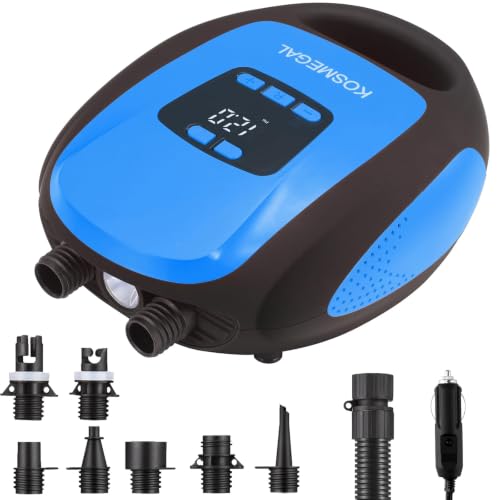
- 12V car-powered operation
- Automatic pressure shutoff
- Six nozzles and deflation function
Best For: Car-based paddleboard launches
Best Fast Inflation
GICLE 22 PSI Electric SUP Pump

- Dual-motor inflation system
- Inflates to 12 PSI in about 6 minutes
- Digital display with auto-off
Best For: Fast car-powered SUP inflation
Best Cordless Option
WEOLULI 22 PSI Rechargeable Pump

- 7,800mAh battery plus 12V backup
- Inflation and deflation functions
- Seven nozzles and automatic shutoff
Best For: Remote launches and group outings
Best Car-Powered Pick
FBSPORT 20PSI Electric SUP Pump

- Dual-stage inflation reaches up to 20 PSI.
- LCD display and auto-shutoff simplify setup.
- Includes deflation, six nozzles, and a 3.4-meter cord.
Best For: Vehicle-based SUP inflation and everyday water-sport use
Best Heavy-Duty Pick

- 10,000mAh battery is rated for up to four boards.
- Adds 12V backup and Type-C charging.
- Includes tire, deflation, LED, and seven-nozzle functions.
Best For: Cordless multi-board inflation and versatile outdoor trips
Best Long-Cord Value

- 50 PSI output handles SUPs and tire inflation.
- Three modes include SUP, tire, and deflation.
- 10-foot cord and eight adapters improve reach and compatibility.
Best For: Vehicle-based users needing one pump for boards and tires
Fastest Rechargeable Pick – OutdoorMaster Shark 3
For shoppers comparing paddleboard pumps under 300, the OutdoorMaster Shark 3 stands out for its fast inflation, large battery, and broad accessory compatibility. It can inflate a 10.6-foot, 15 PSI SUP in about 3 minutes 50 seconds and supports pressures up to 20 PSI.
Best For: Paddlers who need a high-capacity cordless pump for multiple boards and remote outings.
Pros:
- 74Wh battery can inflate up to four 10.6-foot, 15 PSI SUPs per charge.
- Fast inflation and deflation, with automatic shutoff at the selected pressure.
- Supports Type-C and 12V/15.8V DC input, plus emergency phone charging.
- Includes eight nozzles for SUPs, kayaks, boats, beds, tents, and more.
Cons:
- At 3.64 kg, it is heavier than the other rechargeable options listed.
- High-pressure operation can reach 88 dB.
The Shark 3 is a strong choice when battery endurance and speed matter more than minimizing carry weight. Its vehicle-input option also provides a backup when the internal battery runs low.
Lightweight Battery Pick – Hydrohero 20 PSI SUP Pump
Among paddleboard pumps under 300, the Hydrohero is a practical lightweight option with rechargeable power, dual-stage inflation, and a compact body. It reaches 12 PSI on a 10.5-foot SUP in about five minutes and offers a 20 PSI maximum.
Best For: Paddlers who want a portable cordless pump for small group outings.
Pros:
- Weighs about 2.5 pounds and includes a built-in nylon handle.
- 38.48Wh battery can inflate three boards to 12 PSI or two to 15 PSI per charge.
- Dual-stage operation combines 400 L/min speed with 100 L/min high-pressure output.
- Includes seven nozzles, a waterproof storage bag, and a two-year manufacturer guarantee.
Cons:
- Charging plug is not included.
- Battery capacity is lower than the OutdoorMaster Shark 3.
The Hydrohero balances useful battery life and portability well. Its screen, selectable modes, and automatic shutoff make it straightforward for paddlers who want less setup work without carrying a bulky pump.
Best Car-Powered Value – 12V Electric SUP Pump
For anyone comparing paddleboard pumps under 300 and planning to inflate beside a vehicle, this 12V electric pump offers a simple corded solution. It connects to a car cigarette lighter, reaches 20 PSI, and includes inflation and deflation functions.
Best For: Drivers who want an affordable pump powered directly from a vehicle rather than a rechargeable battery.
Pros:
- 3.4-meter car power cord provides useful reach around a vehicle.
- Digital display shows current pressure during inflation.
- Automatic operation supports inflation up to 20 PSI and deflation.
- Includes six adapters for paddleboards, mats, boats, and other inflatables.
Cons:
- Requires access to a 12V car outlet.
- At about 4 pounds, it is heavier than the compact rechargeable models.
- Listed inflation time is approximately 10–15 minutes for a regular SUP.
This pump makes the most sense for drive-up launches where a car is always nearby. It avoids battery charging concerns, though it is less flexible for beaches or locations away from the vehicle.
Most Portable Cordless Pick – TOPUMP Electric SUP Pump
The TOPUMP is a compact choice among paddleboard pumps under 300, combining cordless operation with dual-stage inflation and one-touch deflation. Its rechargeable battery can handle three 10.6-foot SUPs from 0 to 12 PSI per charge, while the pump reaches a maximum of 20 PSI.
Best For: Beachgoers and campers who prioritize low weight and cordless portability.
Pros:
- Weighs about 1.1 kg and has a compact gear-bag-friendly design.
- Inflates to 12 PSI in about five minutes with 400 L/min and 100 L/min stages.
- Automatically stops at the preset pressure and offers one-touch deflation.
- Includes seven nozzles and a two-year warranty with 24/7 support.
Cons:
- Its stated three-board capacity applies to inflation from 0 to 12 PSI.
- Rechargeable operation requires charging before use.
The TOPUMP is a well-suited option when packability matters. It delivers the key conveniences—cordless use, automatic shutoff, and deflation—without the added weight of a larger high-capacity pump.
Best 12V Value – KOSMEGAL 20 PSI SUP Pump
If you need paddleboard pumps under 300 for vehicle-supported launches, the KOSMEGAL offers automatic inflation up to a stated 20 PSI maximum. It uses a 12V car connector, so the vehicle must be running during operation.
Best For: Paddleboarders who want a compact, car-powered pump with automatic shutoff and multiple adapters.
Pros:
- Preset pressure and automatic shutoff for inflation.
- Supports PSI, KPa, BAR, and KG/CM² pressure units.
- Includes six nozzles for SUPs, kayaks, mattresses, tents, and other inflatables.
- LCD display, flashlight, carry bag, and deflation function.
Cons:
- Not rechargeable; it requires a running vehicle and 12V cigarette-lighter connection.
- The notes recommend 10 PSI and list 15 PSI as the maximum recommended SUP pressure, despite the 20 PSI stated pump maximum.
This is a practical choice for paddlers who keep their board near the car and value straightforward controls, portability, and broad valve compatibility.
Best Fast Inflation – GICLE 22 PSI Electric SUP Pump
Among paddleboard pumps under 300, the GICLE stands out for its dual-motor design and stated inflation times. This corded 12V pump is designed to inflate a board to 12 PSI in about six minutes and to 15 PSI in about eight minutes.
Best For: Paddlers who prioritize faster vehicle-powered inflation for SUPs, boats, kayaks, and other inflatables.
Pros:
- Dual motors support quick inflation.
- 22 PSI maximum pressure with digital pressure monitoring.
- Preset pressure and automatic shutoff simplify operation.
- Includes multiple nozzles, spare fuses, a spare gasket, and an air tube.
Cons:
- Requires a 12V car power connection rather than battery operation.
- At about 3.4 to 3.5 pounds, it is heavier than the listed WEOLULI pump.
The GICLE is a sensible option when quick inflation matters more than cordless convenience, particularly for users already planning to launch beside a vehicle.
Best Cordless Option – WEOLULI 22 PSI Rechargeable Pump
For paddleboard pumps under 300 that can work away from an outlet, the WEOLULI combines a 7,800mAh battery with direct 12V car power. Its compact design, automatic shutoff, and stated ability to handle up to eight boards in one session make it suited to group outings.
Best For: Paddlers who want cordless flexibility with a 12V backup option and broad inflatable compatibility.
Pros:
- Dual power supply: built-in battery or 12V vehicle connection.
- 22 PSI maximum pressure and automatic shutoff.
- Deflation function, seven nozzle adapters, flashlight, and emergency charging port.
- Lightweight 2.73-pound body with a carry handle and storage bag.
Cons:
- The stated 8.5-minute inflation time is for a 10.5-foot SUP to 12 PSI, so results may vary by board.
- The pressure sensor may need calibration if it shows a nonzero reading without a tube connected.
The WEOLULI is the most flexible of this group for remote launches, while its car-power backup helps reduce concern about exhausting the rechargeable battery.
Best Car-Powered Pick – FBSPORT 20PSI Electric SUP Pump
For shoppers comparing paddleboard pumps under 300, the FBSPORT 20PSI Electric Paddle Board Pump is a straightforward car-powered option for typical high-pressure SUP inflation. Its dual-stage design, LCD display, auto-shutoff, and included adapters make it practical for beach and lake trips.
Best For: Paddleboard owners who want a compact 12V pump for standard SUPs, kayaks, and other inflatables.
Pros:
- Dual-stage inflation reaches up to 20 PSI for most paddle boards.
- LCD pressure display and automatic shutoff support more precise inflation.
- Includes inflation and deflation functions, six nozzles, and a 3.4-meter vehicle cord.
- Compact 4-pound design works well for vehicle-based outdoor use.
Cons:
- Requires a 12V car outlet rather than an internal rechargeable battery.
- Its 20 PSI maximum is lower than the 50 PSI alternatives in this roundup.
The FBSPORT is a sensible choice when you mainly inflate from your vehicle and do not need cordless operation. It covers the core SUP-pump features without adding a larger battery system.
Best Heavy-Duty Pick – 50PSI Rechargeable SUP Pump
Among paddleboard pumps under 300, this 50PSI rechargeable model stands out for flexible power options. Its 10,000mAh battery can inflate up to four paddle boards per charge according to the supplied specifications, while 12V DC backup power keeps it useful on longer outings.
Best For: Paddlers who want cordless inflation, multi-board capability, and one pump for SUPs, kayaks, tires, and other inflatables.
Pros:
- 10,000mAh battery supports cordless use and is rated for up to four boards per charge.
- Offers 12V DC backup power and Type-C charging.
- Inflates, deflates, and includes separate SUP and tire modes.
- Large LED display, auto-off, emergency lighting, and seven adapters add versatility.
Cons:
- Recharge time is listed at approximately 3.5 to 4.5 hours.
- Its broader feature set may be more than needed for users who only inflate one SUP at home or by the car.
This is the most flexible pick of the three for remote launches because it does not depend solely on a vehicle outlet. The battery, tire mode, deflation function, and emergency light make it a particularly versatile adventure companion.
Best Long-Cord Value – 50PSI 12V SUP Pump
For buyers seeking paddleboard pumps under 300 with strong pressure and simple vehicle operation, this 50PSI 12V model is a capable all-purpose option. It combines SUP, tire, and deflation modes with a long 10-foot power cable and eight adapters.
Best For: Drivers and paddlers who want one corded pump for paddle boards, car tires, bicycles, and other inflatables.
Pros:
- 50 PSI maximum pressure supports both SUP inflation and tire-related tasks.
- Three modes cover SUPs, car tires, and deflation.
- Auto-off, selectable PSI/BAR units, and real-time LED readings aid setup.
- Includes a 10-foot power cable, tire hose, and eight universal adapters.
Cons:
- Operates from a 12V cigarette-lighter socket and has no stated internal battery.
- Deflation mode automatically shuts off after 150 seconds, which may require restarting for larger items.
This model makes sense if you already plan to inflate near your vehicle and value reach and accessory coverage. It offers the higher 50 PSI ceiling of the rechargeable model while keeping the operating setup corded and uncomplicated.
How We Picked the Best Paddleboard Pumps Under 300
We focused on the features that matter most at the launch site: maximum pressure, power source, inflation speed, portability, automatic shutoff, and included adapters. The selection includes both battery-powered pumps for flexible use and 12V models that can run from a vehicle. We also considered whether a pump supports deflation, how easy it should be to transport, and whether its pressure range suits typical inflatable SUP requirements.
Because manufacturer specifications and real-world performance can vary, confirm the recommended pressure for your board before buying. A pump should reach that pressure reliably without being operated beyond its intended limits.
Quick Comparison
| Feature | Why It Matters | Best For |
|---|---|---|
| Rechargeable battery | Works away from a vehicle | Remote launches and travel |
| 12V DC power | Provides continuous vehicle-based power | Car-accessible beaches and ramps |
| 20–22 PSI rating | Matches many inflatable paddleboards | Standard SUP inflation |
| Up to 50 PSI rating | Offers a higher pressure ceiling | Users with multiple inflatables |
| Auto shutoff | Stops at the selected pressure | Consistent, hands-off inflation |
| Deflation mode | Removes air during pack-up | Faster storage and transport |
Key Buying Factors for Paddleboard Pumps Under 300
Power and Battery Capacity
Rechargeable pumps are convenient, but runtime depends on battery size, pressure, temperature, and the number of boards inflated. A larger-capacity battery can be useful for multiple boards, while a 12V pump is often the safer choice for repeated use near a vehicle.
Pressure, Speed, and Cooling
Most inflatable SUPs require high pressure rather than simply high airflow. Look for a two-stage design, clear pressure controls, and thermal protection or an appropriate duty cycle. Faster inflation is helpful, but the pump should not be run continuously beyond the manufacturer’s stated limit.
Connections and Portability
Check that the included hose and adapters fit your board valve. Compact dimensions, an integrated handle, and organized cable storage make a noticeable difference when carrying gear. If you paddle in remote areas, consider whether the pump can be recharged in the car or used while connected to a power source.
Auto-Off and Deflation
Automatic shutoff helps prevent overinflation when the target pressure is set correctly. Deflation is not essential, but it can make rolling a board tighter and reduce packing time.
Who Should Buy Which Paddleboard Pumps Under 300?
Choose a rechargeable model if you regularly launch away from outlets or want fewer cables around your gear. Choose a 12V car-connected pump if dependable, extended operation matters more than cordless convenience. A 20 PSI model is generally appropriate for standard SUP use, while a higher-rated 50 PSI pump may suit households with several inflatable products—but only when its pressure controls are used correctly.
For occasional paddlers, prioritize simplicity, auto shutoff, and a complete adapter kit. Frequent paddlers should look more closely at battery capacity, inflation time, cooling performance, and warranty support. In every case, match the pump to your board’s valve and recommended PSI before making a purchase.