Rocky rivers demand more than ordinary fishing footwear. Uneven riverbeds, slick stones, cold water, and long approaches make traction, support, and dependable waterproof construction essential.
We selected 10 wading boots covering felt, rubber, cleated, and hybrid-style soles, along with lightweight and more rugged designs. Use the guide below to match your conditions, fishing style, and budget with the right pair.
Best 10 Wading Boots for Rocky Rivers Picks for 2026
Versatile River Traction
FROGG TOGGS Hellbender Cleated Wading Boot

- Cleated sole for wet rocks, gravel, mud, and debris
- Water-draining mesh and PVC upper with protective caps
- Cushioned midsole and supportive wide wading last
Best For: Anglers seeking lightweight cleated boots with quick, secure lacing
Stud-Ready Stability
Paramount Outdoors Deep Eddy Cleated

- Includes removable studs for adjustable traction
- Stiff reinforced midsole creates a stable footbed
- Reinforced toe, heel, and gravel-guard attachment point
Best For: Anglers needing configurable traction on slick rocks and muddy banks
Lightweight Trail-to-River Comfort
Foxelli Rubber Sole Wading Boots

- Lightweight 1.3-pound-per-boot construction
- Slip-resistant rubber tread for wet, uneven surfaces
- Drain ports, OrthoLite insoles, and EVA midsoles
Best For: Anglers combining river wading with longer hikes and approaches
Felt-Focused Grip
Simms Tributary Felt Wading Boot
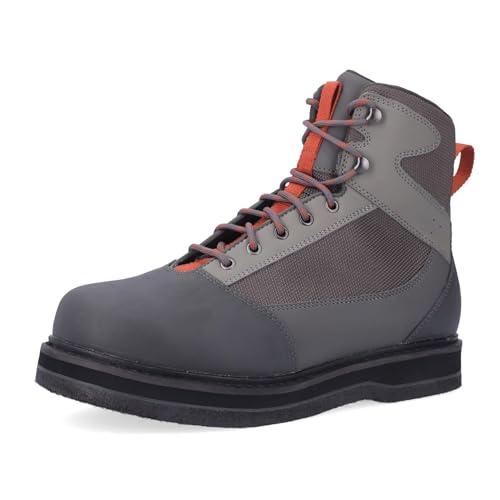
- 12 mm synthetic felt outsole for felt-sole traction
- Rugged upper with scratch-rubber overlays
- Gusseted tongue and neoprene lining help with debris and entry
Best For: Anglers wanting a robust felt-soled boot for demanding wading
Adaptive Traction Pick

- Interchangeable OmniTrax sole system
- Internal drainage reduces retained water
- Abrasion-resistant construction
Best For: Anglers needing adaptable traction for changing conditions
Rock-and-River Protection Pick
Paramount Stonefly Wading Shoe
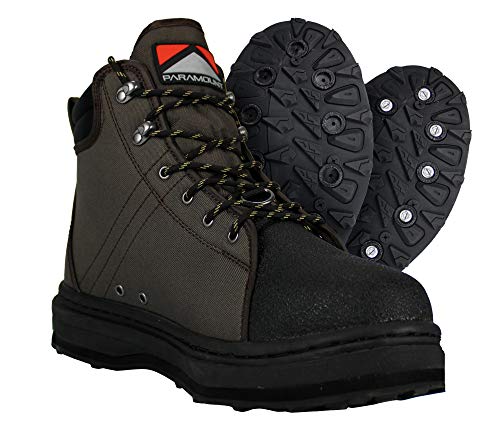
- Cleated rubber outsole with included steel studs
- Reinforced toe cap and stiff midsole
- Designed for stockingfoot wader booties
Best For: Stockingfoot-wader users fishing slick, rocky banks
Lightweight Drainage Pick
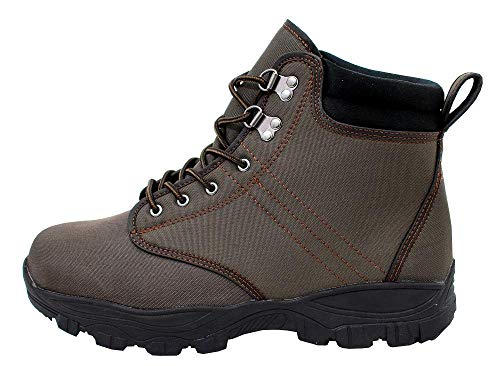
- Available with felt or lugged outsoles
- Water-draining 1000-denier nylon upper
- Speed-lace system with padded collar
Best For: Anglers wanting drainage and quick fit adjustment
Lightweight Rock Grip

- Sticky rubber grip for wet and dry rock
- Boa fit system for quick adjustment
- Hydrophobic materials support faster drying
Best For: Lightweight rocky-river wading with flexible movement
Supportive Rubber Sole

- Lightweight 44-ounce pair in size 8
- Rubber outsole with a fish-logo grip pattern
- Drainage holes and removable insoles ease drying
Best For: General wading with ankle support and easy care
Flexible Sole Choice
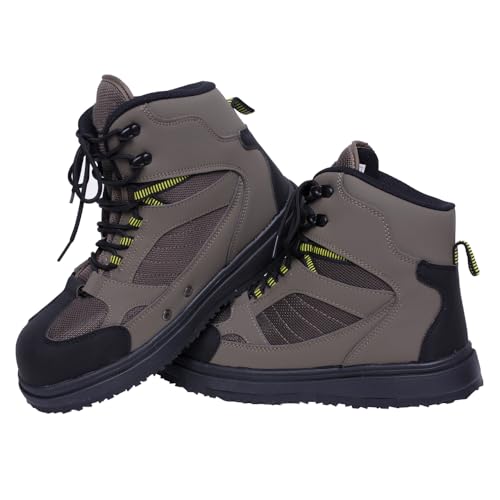
- Felt option targets slick algae-covered rocks
- Rubber option suits gravel, mud, and trails
- Drainage ports and reinforced toe and heel
Best For: Mixed river terrain requiring a choice of sole type
Versatile River Traction – FROGG TOGGS Hellbender Cleated Wading Boot
For anglers comparing wading boots for rocky rivers, the FROGG TOGGS Hellbender offers a choice between cleated and felt soles. This cleated version combines a water-draining mesh and PVC upper with toe and heel caps for protection around rocks, gravel, mud, and debris.
Best For: Anglers who want a lightweight, cushioned cleated boot with ankle support and quick-adjust speed laces.
Pros:
- Cleated sole is designed for traction on wet rocks, gravel, mud, and debris.
- Mesh and PVC upper helps drain water while toe and heel caps add protection.
- Polyurethane midsole, padded ankle collar, and wide wading last support extended wear.
- Speed laces with a locking clip make fit adjustment fast and secure.
Cons:
- This listing is the cleated version, so it does not provide the felt-sole option.
- The stated water-resistance level is not waterproof.
The Hellbender is a practical choice when traction, drainage, and cushioning matter more than full waterproofing. Its ankle-height design and supportive fit suit active river days.
Stud-Ready Stability – Paramount Outdoors Deep Eddy Cleated
The Paramount Outdoors Deep Eddy is built for anglers who need dependable footing when choosing wading boots for rocky rivers. Its cleated sole accepts the included removable studs, while a reinforced midsole provides a firm platform on slick rocks and muddy banks.
Best For: River anglers who want adjustable stud traction, a stiff underfoot feel, and reinforced protection.
Pros:
- Recessed stud inserts and included removable studs help adapt traction to slippery surfaces.
- Stiff reinforced midsole provides a solid footbed while wading.
- Reinforced toe cap and rubber heel support durability and easier riverside removal.
- Gravel guard D-ring connects to a wader lace hook for a snug fit.
Cons:
- The stated water-resistance level is not waterproof.
- Its stiff midsole may feel less flexible than a lighter, more flexible boot.
The Deep Eddy stands out when customizable traction and underfoot stability are priorities. Included studs add versatility for changing river conditions, while speed laces simplify setup.
Lightweight Trail-to-River Comfort – Foxelli Rubber Sole Wading Boots
Foxelli Wading Boots – Lightweight Fly Fishing Boots for Men, Rubber Sole Wading Shoes
Check Price On AmazonFor anglers looking for wading boots for rocky rivers that are also comfortable on the hike in, Foxelli combines a lightweight build with slip-resistant rubber outsoles. Mesh drain ports release water, while reinforced stitching, rubber rands, and an abrasion-resistant upper help handle rocks, gravel, and brush.
Best For: Hikers and anglers who prioritize low weight, flexible movement, drainage, and all-day comfort.
Pros:
- Lightweight construction is listed at 1.3 pounds per boot.
- Slip-resistant rubber tread channels water and debris on uneven surfaces.
- Mesh drain ports help release water after wading.
- Removable OrthoLite insoles, EVA midsoles, and a roomy toe box support comfort.
Cons:
- The boots are not insulated or fully waterproof.
- They are designed to pair with neoprene booties, so cold-weather users may need additional layers.
- Thicker 4–5 mm socks may require ordering one size up.
Foxelli is a strong fit for long approaches and moderate-weather wading, especially when reducing boot weight matters. Its rubber sole and drainage-focused design balance trail mobility with river functionality.
Felt-Focused Grip – Simms Tributary Felt Wading Boot
The Simms Tributary Felt is a substantial option for anglers considering wading boots for rocky rivers where felt traction is appropriate. Its 12 mm synthetic felt outsole is paired with rugged synthetic leather and mesh, scratch-rubber overlays, and a fully gusseted tongue to help manage demanding wading conditions.
Best For: Anglers seeking a felt-soled boot with reinforced high-abuse areas and a secure, debris-resistant design.
Pros:
- 12 mm synthetic felt outsole is designed for felt-sole traction.
- Synthetic leather and mesh construction includes scratch-rubber overlays in high-abuse areas.
- Fully gusseted tongue helps limit debris entering the boot.
- Full neoprene lining supports durability and easier on-and-off use.
Cons:
- At 2.12 kg, the listed weight is considerably heavier than the lightweight options in this roundup.
- Felt soles may not be suitable where local regulations restrict their use.
- The mid-calf profile may feel less compact than ankle-height alternatives.
The Tributary Felt emphasizes grip and rugged construction over minimal weight. Check local felt-sole rules before buying, then consider it when reinforced materials and a debris-blocking tongue are priorities.
Adaptive Traction Pick – Korkers Wading Boots
For anglers comparing wading boots for rocky rivers, the Korkers Wading Boots stand out for their interchangeable OmniTrax sole system, which lets you adapt traction to changing fishing conditions. Hydrophobic materials and internal drainage also help reduce drying time, retained water, and unnecessary weight.
Best For: Anglers who want adaptable traction and faster-drying construction for varied fishing conditions.
Pros:
- Interchangeable OmniTrax sole system adapts traction to different conditions.
- Internal channels and midsole ports help drain excess water and weight.
- Hydrophobic materials can shorten drying times.
- Abrasion-resistant materials and strategic seams are designed to minimize wear.
Cons:
- The traditional lace-and-web-loop closure takes more hands-on adjustment than speed-lace systems.
- The supplied details identify a felt sole, so sole selection may be less flexible than the interchangeable-system name suggests.
The combination of adjustable traction, drainage, and abrasion-focused construction makes this a versatile choice when river conditions vary. Its traditional lacing is straightforward but may not be the quickest option for repeated changes on the bank.
Rock-and-River Protection Pick – Paramount Stonefly Wading Shoe
Paramount Outdoors Stonefly Cleated Sole Wading Boot, Rubber Bottom Wading Shoe (14)
Check Price On AmazonThe Paramount Outdoors Stonefly is built for anglers seeking wading boots for rocky rivers, with a cleated rubber outsole, included steel studs, and a reinforced toe and midsole. Its design is intended for use with stockingfoot wader booties, while the padded collar and heel pull add practical comfort and convenience.
Best For: Stockingfoot-wader users who prioritize traction and protection around slick rocks and muddy river banks.
Pros:
- Cleated rubber outsole and included steel studs target traction in moving water and on slick rocks.
- Studs can be worn with or without steel wading studs.
- Reinforced Rock Jam toe cap and stiff midsole provide added protection.
- Heel pull, padded collar, and gravel-guard attachment point support convenient fitting.
Cons:
- It is designed to be worn with stockingfoot wader booties rather than as a standalone boot.
- The supplied specifications list it as not water resistant.
With configurable stud use and reinforced impact areas, the Stonefly focuses on grip and protection where rocky river crossings are demanding. Confirm compatibility with your wader booties before choosing a size.
Lightweight Drainage Pick – Frogg Toggs Rana Elite
FROGG TOGGS Men's Rana Elite Waterproof Wading Boots for Fishing in Felt or Lugged Waders
Check Price On AmazonFor anglers shopping for wading boots for rocky rivers, the Frogg Toggs Rana Elite offers a choice between felt and lugged outsoles, along with a water-draining 1000-denier nylon upper. A padded collar, EVA midsole, and speed-lace system are aimed at keeping the boot comfortable, supportive, and secure on the move.
Best For: Anglers who want selectable outsole styles, a draining upper, and quick lace adjustment.
Pros:
- Available with felt or lugged outsoles for different traction preferences.
- Water-draining nylon upper helps keep the boot light and nimble.
- Protective internal toe cap, padded collar, and EVA midsole add support and comfort.
- Polymer lace loops and brass speed hooks create a snug fit with less fuss.
Cons:
- The supplied specifications list the boot as not water resistant.
- Its listed weight is 1.56 kg, which may feel substantial to anglers seeking the lightest option.
The Rana Elite balances outsole choice, drainage, and convenient speed lacing in an ankle-high design. It is a practical option for anglers who value mobility and fit adjustment, provided the selected sole matches their river conditions.
Lightweight Rock Grip – Korkers Chrome Lite
For anglers seeking wading boots for rocky rivers, the Korkers Chrome Lite combines a lightweight build with a sticky Kling-On Rock rubber outsole designed for grip on wet and dry rock. Its flexible construction and quick-fit system also suit anglers who value mobility and convenient changes on the water.
Best For: Lightweight river wading on rocky terrain, especially when flexible movement and fast boot adjustment matter.
Pros:
- Kling-On Rock outsole provides grip on wet and dry rock.
- Boa M4 Fit System supports quick on/off and adjustable fit.
- Hydrophobic materials promote faster drying and may help reduce invasive-species spread.
- Exo-Tec protection adds molded abrasion resistance without a bulky feel.
Cons:
- Xtra-Bite and other compatible cleats are sold separately.
- The listed water-resistance level is not water resistant.
- At about 4 pounds, it is heavier than some minimalist options.
The Chrome Lite is a strong choice when rock traction, flexibility, and drying speed take priority. Its cleat compatibility adds upgrade potential, but the base boot is best suited to shoppers comfortable with a rubber outsole rather than a felt sole.
Supportive Rubber Sole – BASSDASH Wading Boots
BASSDASH Men’s Wading Boots Lightweight Anti-Slip Rubber Sole Fly Fishing Wading Shoes
Check Price On AmazonThe BASSDASH wading boots are a practical option for anglers comparing wading boots for rocky rivers on a budget-conscious, lightweight platform. Their patterned rubber outsole, reinforced toe and heel, drainage holes, and padded ankle collar are designed for support during outdoor wading.
Best For: Anglers wanting lightweight rubber-sole boots with drainage features, ankle cushioning, and reinforced impact zones.
Pros:
- Specially patterned rubber outsole is designed for grip while wading.
- Lightweight construction weighs about 44 ounces per pair in size 8.
- Reinforced toe and heel caps add protection around rough terrain.
- Integrated drainage holes and removable insoles simplify drying and care.
Cons:
- They use a rubber sole rather than felt or interchangeable soles.
- The lace-up closure takes longer to adjust than a turn-lock or dial system.
- Buyers need to consult the size guide before ordering.
With a rubber outsole and supportive EVA midsole, this model balances traction-related features with comfort and easy maintenance. It is worth considering for rocky approaches and general wading, provided the sizing guide matches your stockingfoot setup.
Flexible Sole Choice – Raprance Fishing Wading Boot
The Raprance fishing boot gives shoppers considering wading boots for rocky rivers a choice between felt and rubber cleated outsoles. Felt is positioned for slick, algae-covered rocks, while rubber is intended for gravel, mud, and rocky trails, making the sole selection central to this boot’s appeal.
Best For: Anglers who want to choose between felt traction for slick rocks and rubber traction for mixed river terrain.
Pros:
- Felt and rubber cleated outsole options cover different river conditions.
- Lightweight mesh and PVC upper supports quick drying.
- Drainage ports help water escape after entering the river.
- Reinforced toe cap and heel guard protect against rocks and submerged obstacles.
Cons:
- The supplied details do not specify which sole option comes with a particular listing.
- It is available in men’s US sizes 8 through 14 only.
- The outer-material listing is unclear in the supplied specifications.
The Raprance stands out for its terrain-specific sole choice and wader-oriented fit. Confirm the selected outsole and size before buying, especially if your river alternates between algae-covered rock, gravel, and muddy access points.
How We Picked the Best Wading Boots for Rocky Rivers
We focused on the features that matter most when crossing uneven riverbeds and standing in moving water: outsole traction, ankle support, construction quality, fit, weight, drainage, and ease of cleaning. The lineup includes established fishing footwear brands as well as budget-friendly alternatives, giving you options for occasional trips and frequent use.
Because river regulations vary, we also considered sole versatility. Felt can provide excellent grip on smooth, algae-covered rocks, while rubber and cleated soles are often more practical for mixed terrain, hiking, and areas where felt is restricted.
Quick Comparison
| Best For | Recommended Sole Type | What to Prioritize |
|---|---|---|
| Slick, smooth river rocks | Felt or stud-compatible rubber | Wet traction and secure ankle support |
| Mixed hiking and wading | Cleated rubber | Durability, grip, and walking comfort |
| Lightweight day trips | Light rubber | Low weight, quick drainage, and flexible fit |
| Changing river conditions | Interchangeable or versatile sole | Adaptability and replacement-sole availability |
Key Buying Factors for Wading Boots for Rocky Rivers
Traction and Sole Design
Look beyond the word “cleated.” Large, well-spaced lugs can shed mud and provide useful purchase on gravel, while smaller studs may perform better on hard, slick rock. Felt can excel on wet stone but may be prohibited in some waterways. Check local rules before buying or traveling.
Support and Fit
A secure heel and supportive ankle reduce foot movement inside the boot and help you stay balanced on irregular bottoms. Try boots with the exact waders and socks you plan to wear. A little room is useful for insulation, but excessive space can cause blisters and make edging on rocks less stable.
Durability, Drainage, and Maintenance
Reinforced uppers and protected toe areas withstand repeated contact with rocks. Drainage matters because waterlogged boots become heavy and uncomfortable. After each trip, rinse away grit, allow the boots to dry fully, and follow local biosecurity practices to avoid transporting invasive organisms.
Weight and Walking Comfort
Heavier boots may offer more protection and structure, but lightweight models are easier on long approaches. If you frequently hike between pools, prioritize flexible construction and manageable weight without sacrificing sole security.
Who Should Buy Which Wading Boots for Rocky Rivers?
Choose felt-soled boots if you primarily fish rocky streams where felt is legal and maximum wet-rock grip is the priority. Choose cleated rubber for a more versatile option that handles trails, gravel, and varied river terrain. Choose interchangeable-sole designs if you fish different waters and want to adapt traction to local conditions. Choose lightweight rubber boots for occasional anglers, warm-weather trips, and long walks where reduced fatigue matters most.
Before ordering, confirm sizing, sole restrictions, stud compatibility, and return policies. The best Wading Boots for Rocky Rivers should fit securely with your waders, provide confident traction in your regular waters, and be practical to clean and dry after every outing.