Choosing the right charge controller can make or break a home backup solar setup. The best models protect your batteries, improve charging efficiency, and help your system run safely during outages.
This roundup of the best solar charge controllers for home backup in 2026 focuses on practical performance, battery compatibility, input limits, and features that matter when reliability is the priority.
Best 10 Solar Charge Controllers for Home Backup Picks for 2026
Smart MPPT Controller
Victron SmartSolar MPPT 100V 50A

- Fast MPPT tracking improves solar harvest in shade.
- VictronConnect app adds monitoring and easy setup.
- Can synchronize with other SmartSolar controllers.
Best For: Compact home backup systems needing app-based control and efficient charging.
Hybrid Power Center
SUMRY 4000W 24V Inverter with 140A MPPT

- Combines a 4000W inverter with a 140A MPPT controller.
- Pure sine wave output suits sensitive appliances.
- LCD controls simplify setup and status checks.
Best For: 24V home backup setups that want an all-in-one inverter/charger.
Rugged Rover MPPT
Renogy Rover 40A 12/24V Controller

- 98% conversion and 99% tracking efficiency.
- Works with Gel, AGM, Flooded, and Lithium batteries.
- Includes temperature sensor and protection features.
Best For: Durable backup systems in challenging climates.
Expandable Hybrid Inverter
PROSOLI 6500W 48V with Dual MPPT
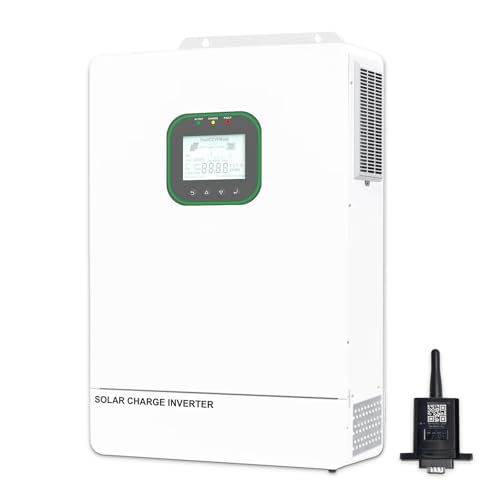
- Dual MPPT controllers support efficient solar input.
- Parallel up to 6 units for bigger backup systems.
- Touch screen helps manage charging and output priorities.
Best For: Large 48V backup systems that may need future expansion.
Compact 10A Starter Pick
Renogy Wanderer 10A PWM Solar Charge Controller 12/24V
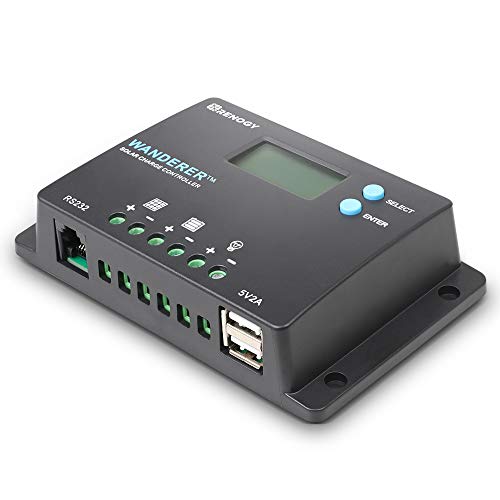
- 4-stage charging for common battery types
- LCD readout with voltage and current display
- Compact 10A controller for 12V/24V systems
Best For: Small backup systems, RVs, and marine installs
All-in-One Heavy Duty Option
SUNGOLDPOWER 10000W 48V Solar Inverter with MPPT

- 10,000W inverter with built-in dual MPPT controllers
- Supports split-phase 120V/240V output
- Works with 48V battery banks and multiple charging modes
Best For: Large home backup systems needing an all-in-one inverter-charger
High-Output 12V Choice
Renogy Wanderer Li 30A PWM Solar Charge Controller

- 30A output for larger 12V battery banks
- Supports LiFePO4, AGM, Gel, and Flooded batteries
- Optional Bluetooth app monitoring and temp compensation
Best For: 12V home backup systems needing more charging capacity
Simple Lead-Acid Controller
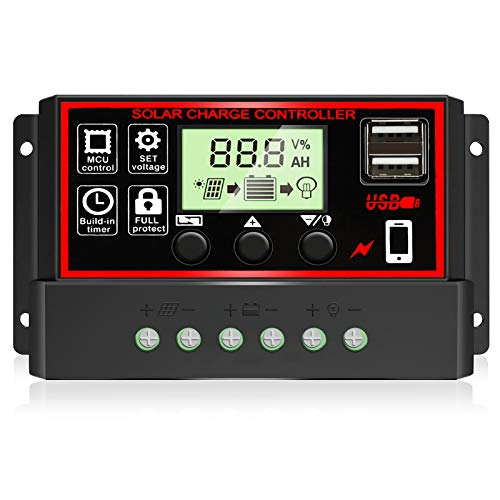
- 12V/24V PWM regulation with memory
- Dual USB ports and LCD display
- Lead-acid only: AGM, GEL, OPEN
Best For: Budget backup setups using lead-acid batteries
High-Capacity Backup Controller
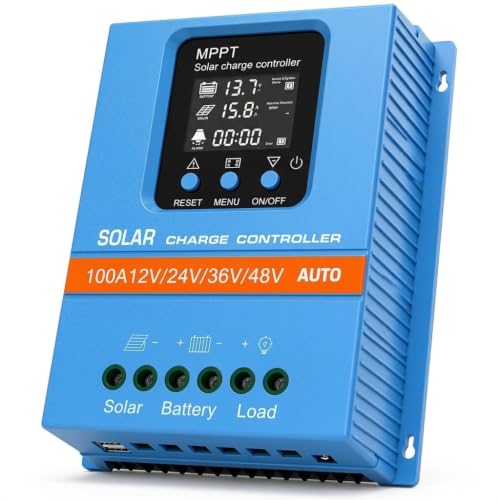
- 12V/24V/36V/48V auto recognition
- 100A rating for larger systems
- Supports LiFePO4 and lead-acid batteries
Best For: Large backup systems needing multi-voltage support and high amperage
Smart MPPT Controller – Victron SmartSolar MPPT 100V 50A
If you’re comparing solar charge controllers for home backup, the Victron SmartSolar MPPT 100V 50A is a strong fit for smaller 12V/24V battery systems that need efficient charging and good system visibility. It uses fast MPPT tracking to harvest more power from your panels, even when some are shaded, and the VictronConnect app makes setup and monitoring straightforward.
Best For: Home backup systems that need smart monitoring, app-based configuration, and efficient MPPT charging.
Pros:
- Fast optimum power point tracking helps maximize output from available sunlight.
- VictronConnect app provides real-time data, 30-day history, alarms, and firmware updates.
- Synchronizes with other SmartSolar MPPT controllers for coordinated charging.
- Intelligent load output can disconnect loads automatically if battery voltage drops too low.
Cons:
- No built-in display on the unit itself.
- Designed for 12/24V systems, so it is not a fit for higher-voltage battery banks.
- Installation and configuration may be more involved than basic PWM controllers.
This is a practical pick for backup setups where charging efficiency and app control matter more than a built-in screen. It is especially appealing if you want a controller that can grow with a more advanced solar system.
Hybrid Power Center – SUMRY 4000W 24V Inverter with 140A MPPT
For buyers comparing solar charge controllers for home backup, this SUMRY hybrid inverter bundles a powerful 140A MPPT controller with a 4000W pure sine inverter in one unit. It is built for 24V systems and can run from PV alone during the day when conditions allow, making it useful for backup-oriented setups that want charging, conversion, and load management together.
Best For: Home backup users who want an all-in-one inverter and high-capacity MPPT controller for 24V systems.
Pros:
- Built-in 140A MPPT controller supports up to 5600W of PV input.
- Pure sine wave output is better for sensitive appliances.
- Can work without a battery in daytime under the stated PV conditions.
- LCD display and buttons make it easier to review and adjust settings.
Cons:
- Requires careful load and voltage planning because it is a 24V, 4000W unit.
- Battery-less operation depends on PV voltage and grid conditions.
- May be more complex than a standalone controller for simple systems.
This model makes sense if you want a backup power hub rather than a separate controller plus inverter. Its appeal is the combined feature set, but it works best for users comfortable sizing the system correctly.
Rugged Rover MPPT – Renogy Rover 40A 12/24V Controller
If you need solar charge controllers for home backup that can handle harsh conditions, the Renogy Rover 40A is built around MPPT efficiency, wide battery compatibility, and protective features. Its 12V/24V auto-detection, app connectivity, and temperature sensor make it a sensible choice for off-grid backup systems that need dependable charging over time.
Best For: Backup solar setups in extreme climates that need robust protection and lithium/lead-acid compatibility.
Pros:
- MPPT technology is rated for 98% conversion and 99% tracking efficiency.
- Supports Gel, AGM, Flooded, and Lithium batteries.
- Built for wide temperature operation with low-temperature protection.
- Includes a remote temperature sensor and app-based monitoring support.
Cons:
- App connectivity requires the BT-2 accessory, sold separately.
- Only 40A output, so it is best suited to smaller or mid-size arrays.
- Uses RS485 communication for app features, which adds setup steps.
This is a solid controller if durability and battery flexibility matter more than sheer output size. It is especially useful for home backup owners building a reliable, weather-tolerant system.
Expandable Hybrid Inverter – PROSOLI 6500W 48V with Dual MPPT
When your home backup plan needs a larger, more scalable power center, this PROSOLI all-in-one unit stands out because it combines two MPPT solar controllers with a high-power 48V inverter. It is designed to prioritize household loads, support multiple battery types, and expand through parallel operation, making it a flexible option for bigger solar-backed backup systems.
Best For: Larger home backup installations that need dual MPPT input, parallel expansion, and 48V battery support.
Pros:
- Built-in 2 MPPT solar charge controllers with up to 99% efficiency.
- Supports up to 6 units in parallel for expanded capacity.
- Handles multiple battery types, including AGM, gel, flooded, and lithium.
- Touch screen interface makes it easier to adjust charging and output priorities.
Cons:
- Single-unit output is 120V; 220V requires parallel operation.
- Large 48V system is more complex than a basic backup setup.
- At 50 pounds, it is bulkier than smaller controllers or inverters.
This is a good match for homeowners who want a scalable backup platform instead of a simple charger. Its dual-MPPT design and parallel support make it better suited to serious energy storage and load management plans.
Compact 10A Starter Pick – Renogy Wanderer 10A PWM Solar Charge Controller 12/24V
If you want a straightforward solar charge controllers for home backup option for a small battery bank, the Renogy Wanderer 10A is built around simple, reliable charging. It supports 12V/24V systems, uses 4-stage charging, and includes protections that help keep a backup setup safer during everyday use.
Best For: Small home backup systems, RVs, and marine installs that need a compact 10A PWM controller with basic monitoring.
Pros:
- 4-stage charging for AGM, Gel, Flooded, and Lithium batteries
- LCD display shows voltage, current, and system status
- Multiple load control modes: manual, automatic, and timed
- Includes overcharge, short-circuit, reverse-polarity, and temperature compensation features
Cons:
- 10A output is best suited to smaller systems
- PWM design is less feature-rich than larger hybrid units
- Bluetooth monitoring requires a separate BT-1 module
This controller makes sense when you need a compact, protective charger for a modest backup array rather than a high-capacity whole-home solution. For smaller emergency power builds, it covers the essentials without adding complexity.
All-in-One Heavy Duty Option – SUNGOLDPOWER 10000W 48V Solar Inverter with MPPT
For larger solar charge controllers for home backup setups, this SUNGOLDPOWER unit goes far beyond a basic controller by combining a 10,000W inverter, dual MPPT solar controllers, and battery charging in one system. It supports 48V batteries, split-phase 120V/240V output, and multiple charging modes, making it a serious option for a full-featured backup installation.
Best For: Whole-home style backup builds that need an all-in-one inverter-charger with built-in MPPT controllers and 48V battery support.
Pros:
- Built-in 2 MPPT solar controllers for integrated solar charging
- Supports split-phase 120V/240V or single-phase 120V output
- Max 200A battery charging with four charging/output modes
- Compatible with 48V AGM, Gel, Flooded, Lithium, and battery-free operation
Cons:
- Much larger and heavier than a standard charge controller
- Designed for 48V systems, so it is not a fit for smaller 12V setups
- Installation will be more involved than a standalone controller
This is the most capable option in the group if your backup plan centers on a high-power inverter-charger with solar input built in. It is best treated as the core of a larger backup system rather than a simple add-on controller.
High-Output 12V Choice – Renogy Wanderer Li 30A PWM Solar Charge Controller
Among solar charge controllers for home backup, the Renogy Wanderer Li 30A is a practical step up for a 12V system that needs more charging capacity. It supports LiFePO4, AGM, Gel, and Flooded batteries, offers chemistry-specific charging, and adds monitoring features through an optional Bluetooth module.
Best For: 12V backup systems that need a higher-current PWM controller with lithium support and flexible battery settings.
Pros:
- 30A output gives more headroom than smaller 10A models
- Supports LiFePO4, AGM, Gel, and Flooded batteries
- 4-stage charging with temperature compensation support via BT-2 module
- LED indicators and DC Home App monitoring with separate Bluetooth module
Cons:
- PWM design is less advanced than MPPT-based alternatives
- Bluetooth monitoring requires a separate module
- Built for 12V systems only
This controller fits users who want a dependable 12V backup charger with better current capacity and lithium compatibility. It is a sensible choice when your home backup setup is small to medium in scale but still needs room to grow.
Bluetooth MPPT Pick – Redodo 24V 40A Bluetooth MPPT
If you’re comparing solar charge controllers for home backup, this Redodo MPPT is a strong fit for systems that need efficient charging and easy monitoring. It supports 12V/24V auto voltage detection, uses MPPT tracking up to 99%, and includes built-in Bluetooth plus an LCD screen for checking live system status.
Best For: Home backup and off-grid users who want MPPT efficiency, battery flexibility, and phone-based monitoring.
Pros:
- MPPT tracking efficiency up to 99% and peak conversion efficiency up to 98%
- Built-in Bluetooth and RS485/RJ12 support for remote monitoring
- Works with LiFePO4 by default and can be adjusted for sealed, gel, and flooded batteries
- Built-in protections for reverse connection, overpower, overvoltage, short-circuit, and over-temperature
Cons:
- Only supports 12V/24V systems, so it is not a fit for higher-voltage battery banks
- Plastic housing is used instead of a fully metal enclosure
This is a practical controller if you want a smarter monitoring setup and efficient charging without moving to a more complex high-voltage unit. For home backup builds in the 12V or 24V range, it offers a useful balance of features and protection.
Simple Lead-Acid Controller – Upgraded 30A PWM Controller
For basic solar charge controllers for home backup, this upgraded 30A PWM model is a straightforward option if you only need simple battery regulation and a low-cost display. It supports 12V/24V systems, includes dual USB outputs, and provides LCD readouts plus automatic parameter memory for easier day-to-day use.
Best For: Simple lead-acid backup setups that need an affordable 12V/24V controller with USB charging.
Pros:
- Supports 12V/24V systems with automatic operation and memorized settings
- Dual USB outputs rated at 5V/2.5A max for small device charging
- LCD display makes status and parameter changes easy to check
- Built-in protections for overcurrent, short circuit, reverse connection, low voltage, and overcharge
Cons:
- PWM design is less advanced than MPPT controllers for solar harvesting efficiency
- Only supports lead-acid batteries: OPEN, AGM, and GEL
- Not suitable for lithium battery systems
This controller makes sense when simplicity and price matter more than maximum solar efficiency. It’s best viewed as a basic lead-acid regulator for smaller home backup setups rather than a premium all-battery solution.
High-Capacity Backup Controller – SA100A Intelligent Controller
If you need solar charge controllers for home backup with more voltage flexibility, this 100A unit is built for larger systems and mixed battery planning. It automatically recognizes 12V, 24V, 36V, and 48V systems, uses MPPT-style tracking, and adds LCD monitoring for voltage, current, temperature, and error codes.
Best For: Larger home backup or hybrid systems that need 12V to 48V compatibility and high current capacity.
Pros:
- Automatically recognizes 12V/24V/36V/48V systems
- 100A capacity suits larger backup or hybrid installations
- Supports sealed, GEL, flooded, and LiFePO4 batteries
- LCD display shows PV input, battery data, temperature, and error codes
Cons:
- The technical description notes a hybrid MPPT/PWM-style execution approach, which may be less straightforward than a pure MPPT design
- High-capacity unit may be more than needed for small home backup builds
- Large current hardware can require careful wiring and space planning
As a high-capacity controller, this model is aimed at users who want broad battery compatibility and room to grow. It stands out for larger backup systems where monitoring, flexibility, and higher amperage are more important than compact size.
How We Picked the Best Solar Charge Controllers for Home Backup
We prioritized controllers and hybrid inverter systems that suit real home backup use, with attention to battery voltage support, solar input range, charging method, build quality, and monitoring options. For Solar Charge Controllers for Home Backup, consistent charging behavior and proper system matching matter more than flashy specs.
Quick Comparison
In this list, MPPT models are the strongest choice for efficiency and cold- or low-light performance, especially on larger rooftops or mixed-panel arrays. PWM controllers are better for smaller, budget-focused setups where panel voltage closely matches battery voltage. Hybrid inverters make sense if you want an all-in-one backup platform with charging, inversion, and sometimes Wi-Fi monitoring in one enclosure.
Key Buying Factors for Solar Charge Controllers for Home Backup
Battery Voltage and Chemistry
Make sure the controller matches your battery bank voltage, whether 12V, 24V, 36V, or 48V. Also confirm support for your battery chemistry, such as flooded lead-acid, AGM, gel, or lithium, since charging profiles affect battery life and usable capacity.
PV Input and Charge Current
Check both maximum solar input voltage and maximum charging amps. Oversizing panels without enough controller headroom can cause shutdowns or damage, while undersizing wastes available solar production. For larger home backup systems, higher-voltage MPPT options usually offer more wiring flexibility.
MPPT Vs PWM
MPPT controllers generally extract more power from solar panels and are the better long-term choice for most home backup systems. PWM controllers can still work well for smaller arrays, simple sheds, cabins, or budget backup kits where efficiency gains are less critical.
Monitoring and Safety Features
Bluetooth, LCD screens, remote monitoring, temperature compensation, and built-in protections for overcharge, reverse polarity, and short circuits all improve usability. These features are especially helpful when the system may need to run unattended for long periods.
Who Should Buy Which Solar Charge Controllers for Home Backup?
If you want maximum efficiency and app-based visibility, choose an MPPT controller with monitoring. If you are building a low-cost starter backup system, a straightforward PWM controller can be enough. If you need whole-home resilience with AC output, battery charging, and solar management in one unit, a hybrid inverter may be the better fit than a standalone controller.
For most buyers, the best Solar Charge Controllers for Home Backup are the ones that leave room for future expansion, match the battery bank cleanly, and offer dependable charging without complicated setup.